Pest control businesses thrive on good lead generation. In a crowded field, you need a steady stream of potential customers to expand and succeed. This post walks through smart ways for pest control companies to generate leads and build a bigger customer base. We'll cover a range of tactics, from search engine optimization to networking, with tips you can act on to win more sales and revenue.
Good lead generation is the lifeblood of a pest control business. Without a steady flow of leads, it's hard to keep growth and profit going in a market this crowded. Strong lead-generation strategies don't just open up more sales. They also help you build ties with potential customers, and that leads to long-term success.
In this post, we'll lay out a full set of ways to generate leads for pest control companies. They cover many digital marketing channels: search engine optimization (SEO), pay-per-click (PPC) advertising, social media marketing, email marketing, content marketing, referral programs, local listings, and networking. Each section gives you hands-on tips and best practices to get the most out of your lead generation.
Best Ways to Generate Pest Control Leads
Using a mix of pest control marketing strategies often works best because it widens the net to catch more potential clients. Maybe you put money into online ads, make sure your website works well on phones, or add keywords to your website's landing pages. Either way, the goal stays the same: bring homeowners and businesses to your pest control business website and turn them into lifelong customers. Here are the top eight ways to do just that.
Search Engine Optimization (SEO) for Pest Control Lead Generation
Search engine optimization (SEO) goes a long way toward making sure potential customers find your pest control business when they're searching online for pest control services. Tune your website for the right keywords and help it show up higher on search engine results pages (SERPs). Then you'll pull in qualified leads who are already looking for what you do.
Here are some key SEO strategies for pest control lead generation.
- Keyword Research: Conduct thorough keyword research to identify the terms and phrases that potential customers use to search for online pest control services. Focus on keywords with high search volume and relevance to your business, such as “pest control services near me,” “exterminator,” and “pest removal.”
- On-Page Optimization: Optimize your website's on-page elements, including title tags, meta descriptions, headers, and content, to incorporate your target keywords naturally. Ensure your website provides valuable and informative content addressing common pest control concerns and solutions.
- Local SEO: Use local SEO tactics to target customers in your service area. Optimize your Google Business Profile with accurate business information, including your address, phone number, and business hours. Encourage satisfied customers to leave positive reviews, as they can enhance your visibility in local search results.
- Content Creation: Create high-quality, informative content that addresses common pest control issues, offers helpful tips and advice, and showcases your expertise in the field. Publish blog posts, articles, case studies, and how-to guides that provide value to your target audience and help establish your authority in the industry.
- Mobile Optimization: With an increasing number of users accessing the internet via mobile devices, ensuring that your website is responsive or mobile-friendly and provides a seamless browsing experience across all devices is essential. Google prioritizes mobile-friendly websites in its search rankings, so optimizing for mobile can improve your visibility and attract more leads.
Pay-Per-Click (PPC) Advertising for Pest Control Lead Generation
PPC ads give you a flexible way to put your pest control services in front of motivated potential customers. As soon as someone searches a term tied to what you offer, your ad can show up at the top of Google, right along with the organic results.
In other words, PPC lets you place ads up top on search engine results pages (SERPs) and other online sites. You reach potential customers at the very moment they're searching for pest control services. According to surveyed brands, paid search ads make up 93% of PPC campaigns and have a 65% effectiveness rating. (Source: Push-Pull Associates)
Here are some effective PPC strategies for pest control lead generation.
- Targeted Keyword Selection: Similar to SEO, keyword selection is key in PPC advertising. Conduct keyword research to identify relevant terms and phrases that potential customers are using to search for pest control services. Choose keywords with high search volume, low competition, and strong commercial intent to maximize your campaign's effectiveness.
- Geotargeting: Use geotargeting features to focus your PPC ads on specific geographic areas where your pest control services are available. This ensures that your ads are displayed to users in your service area, increasing the likelihood of attracting qualified leads who are more likely to convert.
- Compelling Ad Copy: Craft compelling and engaging ad copy that highlights the unique selling points of your pest control services. Clearly communicate your value proposition, special offers, and call-to-action to entice users to click on your ads and learn more about your services.
- Landing Page Optimization: Create dedicated landing pages for your PPC campaigns that are optimized for conversion. Ensure that your landing pages are relevant to the ad content, user-friendly, and designed to encourage visitors to take action, such as requesting a quote or scheduling a service appointment.
- Ad Extensions: Take advantage of ad extensions to provide additional information and enhance the visibility of your ads. Include location extensions to display your business address, call extensions to encourage phone calls, and site link extensions to direct users to specific pages on your website, such as your services or contact page.
- Monitoring and Optimization: Continuously monitor the performance of your PPC campaigns and make adjustments as needed to improve their effectiveness. Track key metrics such as click-through rate (CTR), conversion rate, and cost per lead (CPL), and make data-driven decisions to optimize your campaigns for better results.
Social Media Marketing for Pest Control Lead Generation
Posting relevant, fun content on social media is a big chance to drive new pest control leads. But a Facebook page by itself won't bring in leads. You need to be strategic.
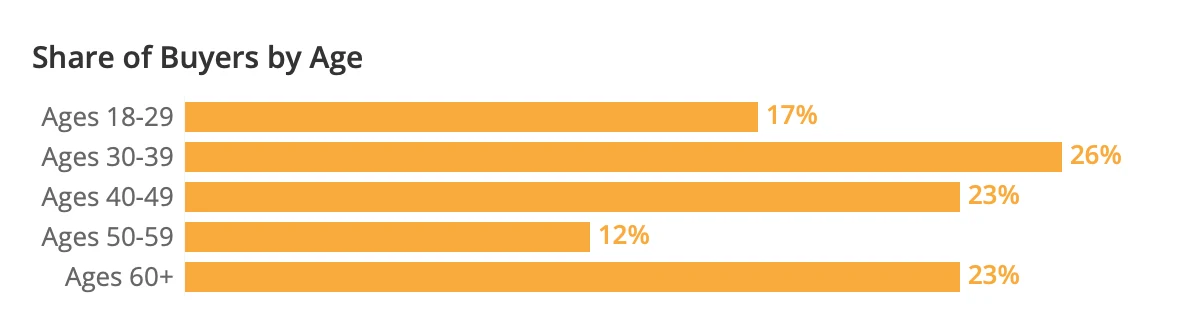
(Image Source: Zillow Consumer Housing Trends Report 2021)
According to Zillow's 2021 Consumer Housing Trends Report, the median homebuyer was 43, and Millennials (then ages 27 to 41) made up the largest group of buyers, at 37%. Now pair that with research by the Pew Research Center. Its 2026 survey found that 91% of adults ages 30 to 49 use YouTube and 78% use Facebook.
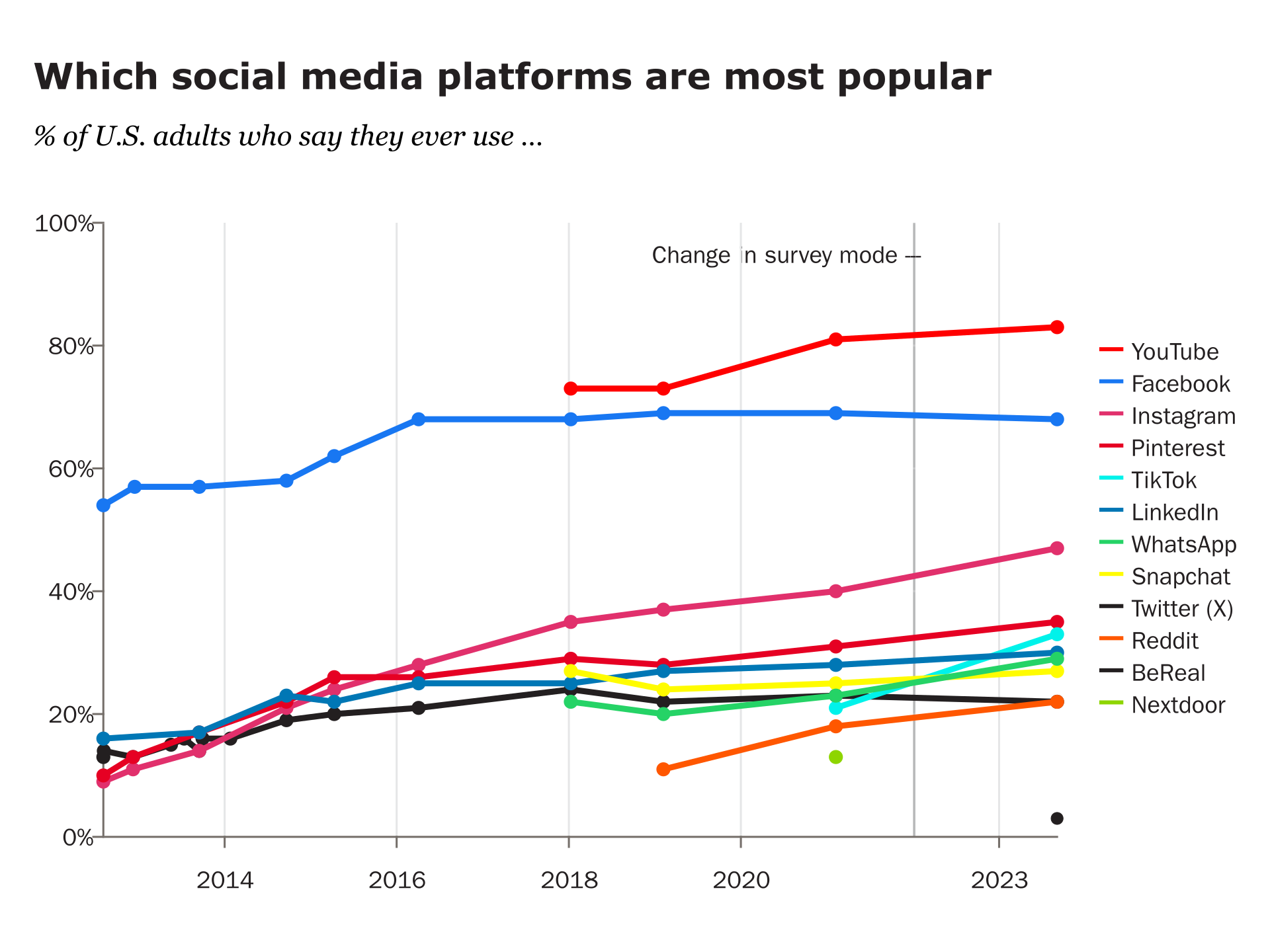
(Chart Source: Pew Research Center )
Who uses each social media platform?
Use of the big online platforms varies by age, gender, and level of formal schooling.
% of U.S. adults who say they ever use __ by Age
|
Ages 18-29 |
30-49 |
50-64 |
65+ |
|
|
YouTube |
95 |
91 |
85 |
65 |
|
|
69 |
78 |
71 |
59 |
|
|
79 |
64 |
41 |
21 |
|
TikTok |
65 |
45 |
31 |
11 |
|
|
37 |
39 |
36 |
20 |
|
|
41 |
37 |
32 |
13 |
|
Snapchat |
56 |
33 |
13 |
4 |
|
|
40 |
35 |
18 |
6 |
|
X (formerly Twitter) |
31 |
20 |
17 |
7 |
|
Nextdoor |
10 |
21 |
19 |
18 |
|
Truth Social |
1 |
3 |
6 |
4 |
Note: Respondents who did not give an answer are not shown. Source: Survey of U.S. adults conducted Jan. 30-June 18, 2026.
(Table Source: Pew Research Center )
Facebook, Instagram, TikTok, LinkedIn, and X (formerly Twitter) have billions of active users. That makes social media marketing a strong way for pest control businesses to reach potential customers, build brand awareness far and wide, and bring in inbound sales leads. But to show off your services well, you have to know who uses each platform and shape your content to fit. One size doesn't fit all here.
Here are some effective social media marketing strategies for pest control lead generation.
- Targeted Advertising: Use social media advertising features, such as Facebook Ads, to target specific demographics, interests, and behaviors relevant to your target audience. Create targeted ad campaigns that highlight your pest control services, special offers, and promotions to attract potential customers.
- Engaging Content: Create engaging and informative content that resonates with your target audience on social media. Share tips for pest prevention, behind-the-scenes glimpses of your team in action, customer testimonials, and educational videos to showcase your expertise and build trust with potential customers.
- Interactive Posts: Encourage engagement and interaction with your audience by posting interactive content, such as polls, quizzes, contests, and surveys. This increases brand visibility and helps you gather valuable insights about your audience's preferences and needs.
- Customer Engagement: Actively engage with your audience by responding to comments, messages, and inquiries in a timely and personalized manner. Use social media as a platform to address customer questions, concerns, and feedback, demonstrating your commitment to excellent customer service.
- Local Community Involvement: Participate in local community events, sponsorships, and partnerships to increase your visibility and connect with potential customers in your area. Share photos and updates from community events on social media to showcase your involvement and commitment to serving the local community.
- Influencer Partnerships: Collaborate with influencers and industry experts in the home services or pest control niche to expand your reach and credibility on social media. Partnering with influencers can help you tap into their existing audience and use their authority to effectively promote your pest control services.
Email Marketing for Pest Control Lead Generation
For pest control businesses, email marketing is still one of the best ways to nurture leads and turn them into customers. According to Litmus, email has one of the highest ROIs of any online marketing channel. It averages $36 back for every $1 spent, which makes it a smart way to generate pest control leads. Build an email list of interested prospects and send them useful, targeted content right to their inbox. You'll stay top-of-mind with potential customers and nudge them toward conversion.
Here are some effective email marketing strategies for pest control lead generation.
- Free Resources: Offer valuable resources, such as eBooks, guides, checklists, or webinar recordings related to pest control topics. Post them free on your website, with no form to fill out. Then add a simple newsletter sign-up for readers who want more pest tips in their inbox.
- Segmented Email Lists: Segment your email list based on factors such as location, interests, or stage in the customer journey to deliver more personalized and targeted email campaigns. By sending relevant content to specific segments of your audience, you can increase engagement and conversion rates.
- Educational Content: Provide educational and informative content in your email campaigns that address common pest control concerns, offer helpful tips and advice, and showcase your expertise in the field. Use compelling subject lines and clear calls to action to encourage recipients to open and engage with your emails.
- Promotional Offers: Include special promotions, discounts, or seasonal offers in your email campaigns to incentivize recipients to take action. Limited-time offers and exclusive deals can create a sense of urgency and encourage leads to schedule pest control services or request a quote.
- Automated Follow-Up Sequences: Set up automated email follow-up sequences to nurture leads and guide them through the customer journey. Send a series of targeted emails that provide additional value, address objections, and encourage leads to take the next step toward booking your pest control services.
- Customer Reviews and Testimonials: Share positive customer reviews, testimonials, and success stories in your email campaigns to build trust and credibility with potential customers. Social proof can reassure leads that your pest control services are reliable and effective, increasing their likelihood of conversion.
- Monitoring and Optimization: Track key metrics such as open rates, click-through rates, and conversion rates for your email campaigns, and use this data to optimize your email marketing strategy over time. Experiment with different subject lines and content formats, and send times to identify what resonates best with your audience.
Content Marketing for Pest Control Lead Generation
Content marketing is a strong way to draw in and engage potential customers. You do it by sharing useful, helpful content about pest control.
Take a look at these stats.
- Content marketing generates three times as many leads as traditional outbound marketing but costs 62% less. (Source: Content Marketing Institute (CMI))
- 93% of marketers at companies that blog rate blogging as important or very important to their marketing strategy, and 50% saw a higher ROI (return on investment) from blogging in 2024 than in 2023. (Source: HubSpot State of Blogging Report)
- Over 41% of marketers measured the success of their content marketing strategy through sales in 2024. (Source: HubSpot State of Marketing Report, 2024)
- Blogging is still common: 65% of marketers work at companies that keep a blog. (Source: HubSpot State of Blogging Report)
- 80% of U.S. internet users interact with social media sites and blogs. (Source: Demand Metric, 2013)
- 59% of B2B marketers consider blogs the most valuable channel. (Source: Demand Metric, 2013)
- Websites with active blogs have 434% more indexed pages and 97% more inbound links than those without. (Source: BKA Content)
- Companies with blogs produce an average of 67% more leads monthly than companies that don't blog. (Source: Demand Metric, 2013)
Put out high-quality content on a steady basis across your channels. That's how your pest control business becomes a trusted name in the industry and attracts leads who want to fix their pest problems.
Here are some effective content marketing strategies for pest control lead generation.
- Blogging: Maintain a blog on your website and regularly publish articles, guides, tips, and how-to posts related to pest control. Use keyword research to identify topics that are relevant to your target audience and address common questions and concerns they may have. Optimize your blog posts for search engines to increase visibility and attract organic traffic.
- Visual Content: Incorporate visual content such as infographics, videos, and images into your content marketing strategy to enhance engagement and appeal to different types of learners. Visual content is highly shareable on social media platforms and can help increase brand awareness and attract new leads.
- Case Studies and Success Stories: Showcase your expertise and track record by sharing case studies and success stories highlighting real-life examples of how your pest control services have helped customers solve their problems. Include before-and-after photos, testimonials, and metrics to demonstrate the effectiveness of your services.
- Educational Resources: Create comprehensive educational resources such as eBooks, whitepapers, checklists, and FAQs that provide in-depth information on pest control topics. Post them free on your website, with no form to fill out, so potential customers can find answers and get to know your business.
- Guest Blogging and Thought Leadership: Collaborate with industry influencers, local publications, and relevant websites to contribute guest blog posts and establish yourself as a thought leader in the pest control industry. You can increase brand visibility and attract new leads by sharing your expertise and insights with a wider audience.
- Email Newsletters: Use email newsletters to share your latest blog posts, content updates, special offers, and industry news with your email subscribers. Provide valuable content that educates and informs your audience while subtly promoting your pest control services and encouraging recipients to take action.
- Social Media Sharing: Promote your content on social media platforms such as Facebook, X (formerly Twitter), LinkedIn, and Instagram to reach a larger audience and drive traffic back to your website. Use engaging visuals, compelling headlines, and relevant hashtags to maximize visibility and encourage social sharing.
Win Free Leads Through Customer Referrals
Referral programs work very well for pest control businesses that want to generate leads and win new customers through word-of-mouth marketing. So well, in fact, that a 2013 Nielsen global survey found the advice of family and friends (77%) was the most persuasive source of information about new products. SalesRabbit also said that “78% of B2B marketers say that referral programs generate good or excellent leads.” It credits Social Media Today, which reported in 2014 that 60% of marketers say referral programs generate a high volume of leads and 54% say they have a lower cost per lead. That shows how well customer rewards can work in pest control lead generation. Give existing customers, partners, and other contacts a reason to refer their friends, family, and coworkers to your pest control services. You'll tap into their networks and expand your customer base.

78% of B2B marketers say that referral programs generate good or excellent leads.

60% of marketers say that referral programs generate a high volume of leads.

54% say that referral programs have a lower cost-per-lead than other channels.
Here are some effective referral program strategies for pest control lead generation.
- Customer Incentives: Offer rewards or incentives to existing customers who refer new clients to your pest control business. This could include discounts on future services, gift cards, or other valuable rewards that motivate customers to actively promote your services to others.
- Partner Referral Programs: Establish partnerships with related businesses, such as real estate agents, property managers, home service providers, and local businesses, and create referral programs to mutually benefit from each other's networks. Offer incentives to partners for referring customers to your pest control services, and reciprocate by referring clients to their businesses when relevant.
- Referral Tracking and Management: Implement a system for tracking and managing referrals to ensure that both referrers and new customers receive their rewards promptly and accurately. Use customer relationship management (CRM) software or referral tracking tools to monitor referrals, attribute them to the appropriate referrer, and track the success of your referral program.
- Promotional Materials: Provide referrers with promotional materials, such as referral cards, flyers, or digital assets, that they can share with their networks to promote your pest control services. Include clear instructions on how to refer new customers and highlight the benefits of choosing your business.
- Customer Satisfaction and Engagement: Focus on delivering exceptional service and customer satisfaction to encourage positive word-of-mouth referrals. Engage with your existing customers through follow-up communications, surveys, and feedback requests to ensure their satisfaction and encourage them to refer others to your pest control services.
- Referral Contests and Events: Host referral contests, giveaways, or events to incentivize and reward customers for referring new clients to your pest control business. Offer prizes or exclusive rewards to customers who refer the most new customers within a specific time frame or for a particular promotion.
- Thank You Gestures: Express gratitude to customers who refer new clients to your pest control business by sending personalized thank-you notes, emails, or small tokens of appreciation. Showing appreciation for their support and loyalty can encourage repeat referrals and strengthen customer relationships.
Local Listings for Pest Control Lead Generation:
Local listings are a big part of how pest control businesses get seen and pull in leads from the areas they serve. When we looked at 18 of the Google Business Profiles (GBPs) we manage for clients, they averaged 143 interactions a month, including 48 calls and 59 clicks to the website. That shows how much GBP work matters for lead generation. Make sure your business is listed right, and up front, on online directories, review sites, and map services. Then you'll reach potential customers who are searching for pest control services near them right now.
Here are some effective local listing strategies for pest control lead generation.
- Google Business Profile (GBP) Optimization: Claim and verify your Google Business Profile (GBP), formerly known as the Google My Business listing, to ensure that your pest control business appears prominently in local search results and Google Maps. Optimize your GBP with accurate business information, including your business name, address, phone number, website URL, and business hours. Encourage satisfied customers to leave positive reviews, as they can enhance your visibility and credibility in local search results.
- Local Directory Listings: Ensure that your pest control business is listed accurately on popular online directories, such as Yelp, Yellow Pages, Angie's List, and HomeAdvisor. Consistent NAP (name, address, phone number) information across these directories can improve your local search rankings and make it easier for potential customers to find and contact your business.
- Niche Directories: Explore niche directories and industry-specific platforms where potential customers may be searching for pest control services. Look for directories related to home services, pest management associations, local chambers of commerce, and neighborhood business groups. Ensure that your business is listed in relevant categories and subcategories to increase visibility among your target audience.
- Location-Based Keywords: Incorporate location-based keywords into your website content, meta tags, and online listings to optimize for local search queries. Include your city, neighborhood, or service area in your website's title tags, meta descriptions, and content to improve your chances of appearing in local search results when users search for pest control services in your area.
- Consistent Branding: Maintain consistent branding across all local listings, ensuring that your business name, address, phone number, and website URL are consistent and accurate. Inaccurate or inconsistent information can confuse potential customers and negatively impact your local search rankings. Regularly audit your local listings to identify and correct any discrepancies.
- Local Citations: Earn local citations from reputable websites, blogs, and online publications to build authority and credibility for your pest control business in your local area. Participate in local events, sponsorships, and community initiatives to earn mentions and backlinks from local sources. Monitor online reputation. Address any negative reviews or feedback promptly to maintain a positive image.
Networking for Pest Control Lead Generation
Networking helps pest control businesses generate leads and build ties with potential customers, others in the trade, and local influencers. To nurture those leads and lock in long-term partners, you have to follow up with your contacts, keep those ties strong, and give great customer service every time. Show up at networking events, trade shows, industry groups, and community clubs. You'll widen your circle, earn referrals, and make your pest control business a trusted name in the field.
Here are some effective networking strategies for pest control lead generation.
- Industry Associations and Events: Join industry associations, such as the National Pest Management Association (NPMA) or local pest control associations, to connect with fellow professionals, stay updated on industry trends, and access valuable resources. Attend industry conferences, trade shows, and networking events to meet potential customers, partners, and suppliers and showcase your pest control services.
- Local Chamber of Commerce: Become a member of your local chamber of commerce or business association to network with other businesses and professionals in your community. Attend chamber events, networking mixers, and business luncheons to meet local business owners, homeowners, and property managers who may require pest control services.
- Business Networking Groups: Join business networking groups like BNI (Business Network International) or local referral groups to exchange referrals and leads with other professionals in complementary industries. Build relationships with real estate agents, property managers, home inspectors, and contractors who frequently interact with homeowners and may refer clients to your pest control business.
- Online Networking Platforms: Participate in online networking platforms and social media groups related to pest control, home services, or local business communities. Join LinkedIn groups, Facebook communities, and online forums where professionals share industry insights, ask questions, and seek recommendations for pest control services.
- Community Involvement: Get involved in community events, sponsorships, and volunteer activities to increase your visibility and build goodwill in your local area. Participate in neighborhood clean-up initiatives, sponsor local sports teams or events, and offer educational workshops or seminars on pest control topics to engage with community members and potential customers.
- Referral Partnerships: Build referral partnerships with complementary businesses and professionals who cater to similar target markets or share common customers. Establish relationships with landscapers, home inspectors, insurance agents, and property managers who can refer clients to your pest control services and vice versa.
- Follow-Up and Relationship Building: Follow up with contacts promptly after networking events or meetings to nurture relationships and stay top-of-mind. Send personalized follow-up emails, connect on social media platforms, and schedule one-on-one meetings or phone calls to discuss potential collaboration opportunities and explore ways to support each other's businesses.
Measuring Effectiveness of Lead Generation Campaigns
Once you've put some lead generation strategies to work for your pest control business, you need to measure how well your campaigns do. That's how you'll see what's working and where there's room to improve. Track key metrics and study how each campaign performs. Then you can make data-driven calls that sharpen your lead generation and get the most from your return on investment (ROI). Here are some key metrics to consider when you measure how your lead-generation campaigns are doing.
- Lead Quality: Assess the quality of leads generated through your campaigns by evaluating factors such as their level of interest, relevance to your target audience, and likelihood of conversion. Monitor lead sources, demographics, and behavior to identify high-quality leads that are more likely to become paying customers.
- Conversion Rate: Measure the conversion rate of your lead generation campaigns to evaluate their effectiveness in converting leads into customers. Track the percentage of leads that take desired actions, such as requesting a quote, scheduling a service appointment, or signing up for a newsletter. Analyze conversion rates across different channels and campaigns to identify which ones are performing best.
- Cost Per Lead (CPL): Calculate the cost per lead (CPL) for each of your lead generation campaigns to assess their cost-effectiveness and ROI. Divide the total cost of the campaign by the number of leads generated to determine the average cost per lead. Compare CPL across different channels and campaigns to identify the most efficient and cost-effective lead generation strategies.
- Return on Investment (ROI): Evaluate the overall return on investment (ROI) of your lead generation efforts by comparing the revenue generated from converted leads to the total cost of your marketing campaigns. Calculate the ROI ratio by subtracting the total campaign costs from the total revenue generated and dividing the result by the total campaign costs. Aim to maximize your ROI by investing in strategies that yield the highest returns.
- Customer Acquisition Cost (CAC): Determine the customer acquisition cost (CAC) for your pest control business by dividing the total marketing and sales expenses by the number of new customers acquired within a specific time period. Compare CAC to the lifetime value of a customer (LTV) to ensure that your customer acquisition costs are sustainable and profitable in the long run.
- Lead Attribution: Track and attribute leads to specific marketing channels, campaigns, and touchpoints to understand which sources are driving the most valuable leads for your pest control business. Use analytics tools, tracking codes, and attribution models to accurately measure the contribution of each marketing channel to lead generation and conversion.
- Feedback and Insights: Solicit feedback from customers, leads, and internal stakeholders to gain insights into the effectiveness of your lead generation campaigns. Conduct surveys, interviews, and focus groups to gather feedback on campaign messaging, offers, and user experience. Use this feedback to iterate and improve your campaigns over time.
Measure these key metrics and study how your campaigns perform. Then you can sharpen your lead generation, spend your budget more wisely, and get better results for your pest control business. Keep watching and fine-tuning your strategies based on what the data tells you. That's how you drive steady growth and success that lasts.
Conclusion
Bottom line: good lead generation is key to the growth and success of a pest control business. Pest control companies can use a mix of strategies: SEO, PPC advertising, social media marketing, email marketing, content marketing, referral programs, local listings, and networking. With that mix, they can attract qualified leads, expand their customer base, and increase revenue. These strategies let businesses reach potential customers at each stage of their buying journey, from first research to the moment they decide to buy.
Measuring how well your lead generation campaigns work is key to sharper marketing and the best ROI. Track key metrics like lead quality, conversion rate, CPLs, ROI, CAC, and lead attribution. You'll learn a lot about how each campaign performs and make data-driven calls that improve results over time.
In a crowded market, pest control businesses have to keep fine-tuning their lead generation strategies, adjust as buyer habits change, and stay ahead of the competition. Keep up with industry trends, use the latest digital marketing tools and tech, and give customers a great experience. That's how pest control companies stand out and set themselves up for long-term success.
At Cube Creative Design, we know the unique challenges and chances pest control businesses face, and we're here to help you sharpen your lead generation. Need help with SEO, PPC advertising, social media marketing, email campaigns, content creation, or referral programs? Our team of experts is here to help you hit your business goals.
If you're ready to take your pest control business to the next level and drive more leads and revenue, contact me today to learn more about our services and how we can help you succeed. We can build a custom lead-generation strategy that fits your business goals and delivers results you can measure. Let's work together to expand your pest control business and reach new heights of success.