Ever feel like you're playing hide-and-seek with potential customers while your competitors seem to have night-vision goggles? A thorough market analysis might just be the flashlight you need to illuminate your path to pest control success. And let's be honest, in this business, we already know a thing or two about finding things that are hiding!
The pest control industry is crawling with opportunity—and I promise that's the only pest pun I'll make in this section. With the U.S. professional pest control market valued at approximately $24.9 billion in 2023 and projected to grow at a compound annual growth rate (CAGR) of 5.7% over the next five years." (Source: PestControlJobs.com), reaching $42.5 billion by 2032." (Source: Allied Market Research), there's plenty of room for strategic players to expand their territory.
But success doesn't come to those who simply show up with a spray can and a dream. It comes to those who understand the landscape, identify opportunities, and strategically position themselves to meet evolving customer needs. That's where market analysis crawls in. Effective pest control marketing services are essential for companies looking to gain this competitive edge.

Written By: Chad J. Treadway | June 30, 2025
Chad is a Partner and our Chief Smarketing Officer. He will help you survey your small business needs, educating you on your options before suggesting any solution. Chad is passionate about rural marketing in the United States and North Carolina. He also has several certifications through HubSpot to better assist you with your internet and inbound marketing.
Is your pest control operation crawling along instead of soaring? You might need to exterminate some inefficiency in your team structure! Sorry, I couldn't resist that one. But here's the real point: a good organizational structure isn't just a list of job titles. It's the framework that lets your team operate at full speed while delivering great service to your customers.
The economics of pest control still look strong. "The pest control market is expected to grow by nearly $7 billion by 2026," according to BookCleanGo. (Source: BookCleanGo) That's a lot of new business heading your way. So the right team structure isn't just nice to have. You need it to capture your share.
Maybe you're running a small operation with a few technicians, or maybe you oversee dozens of employees across several departments. Either way, this guide will help you design a team structure that evolves as your business does. That's what sets you up for the long haul. And when it comes to pest control team structure, you don't want to just wing it. (Another bug joke. I promise they'll get better.)
The Evolution of Pest Control Business Organization
An ant colony starts small, then divides its workers into specialized jobs. Your pest control business works the same way, and your organizational structure has to change as the operation expands. In a small operation, everyone wears a lot of hats. Once you add employees, specialized roles start to matter more.
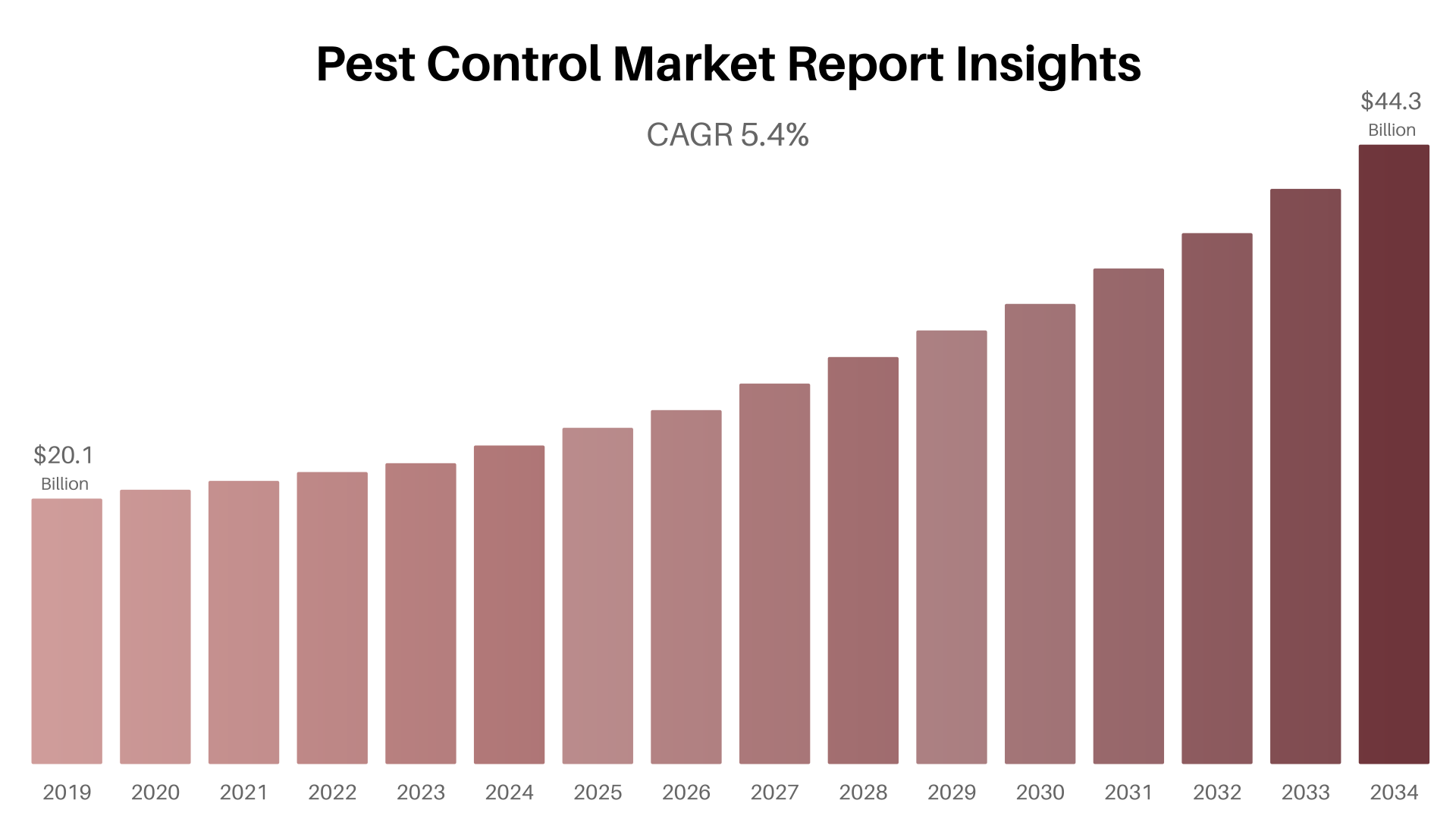
The pest control services market is rising fast, and it should hit $42.5 billion by 2032, according to Allied Market Research. With gains that consistent, now is a fine time to refine your organizational structure.
Common organizational mistakes during an expansion include:
- Failing to delegate as the business expands
- Not creating clear reporting structures
- Waiting too long to hire specialized roles
- Maintaining outdated processes that don't scale
Signs your current structure is limiting the business:
- Frequent communication breakdowns
- Increased customer complaints
- High employee turnover
- Missed deadlines and appointments
- Declining profit margins despite increased business
Most pest control operations hit a transition point at these employee counts:
- 5-10 employees: Transitioning from startup to established business
- 11-30 employees: Moving to departmental specialization
- 31-50+ employees: Developing a multi-tiered management structure
Remember, if your business structure is bugging you, it's probably time for a change!
Foundation Roles in Every Pest Control Business
Every pest control operation needs a few core roles, and they're the backbone of the business. They make sure the work gets done right and your customers stay satisfied.
Pest control is more than killing bugs. It's about building trust with customers, and about teaching them how to keep pests out of their homes and businesses. Many pest control companies run full training programs that mix classroom time with on-the-job learning.
Here are the core positions every pest control business needs:
1. Pest Control Technicians
Your technicians are the face of the business, and they need both bug knowledge and people skills.
Skills and licenses required:
- State-required pest control licensing
- Knowledge of pest biology and behavior
- Application techniques for various treatments
- Safety protocols and regulatory compliance
- Strong communication skills
The U.S. Bureau of Labor Statistics says most pest control workers start out as technicians, learning on the job in specialties like rodent control, termite control, and fumigation. Training covers general pesticide use and safety. Most technicians finish it in less than three months.
2. Administrative Support
Your office staff handle scheduling, customer calls, billing, and other paperwork.
Key responsibilities:
- Managing customer appointments and technician schedules
- Processing payments and handling accounts
- Responding to customer inquiries
- Maintaining regulatory documentation
- Supporting technicians with information and resources
3. Management
Even a small operation needs someone steering the business plan and the daily work.
Core functions:
- Business planning and goal setting
- Staff supervision and development
- Quality control and service standards
- Customer relationship management
- Financial oversight and budgeting
When you weigh hiring for a position against outsourcing it, consider:
- Volume of work required
- Specialized expertise needed
- Cost comparison between employment and contracting
- Consistency and control are required
Remember, a well-structured team doesn't just happen by accident. Unlike those ants that keep finding their way into your kitchen! (I'm really trying here, folks.)
Small Pest Control Business Structure (5-10 Employees)
You're just past the owner-operator stage, so efficiency and flexibility matter most. Most of your team still wears a lot of hats, but some specialized roles start to show up.
The pest control industry holds up well when the economy dips, which makes it a stable business to invest in and build. With the right team structure, even a small operation can be highly profitable.
A pest control business with 5-10 employees usually needs an org chart like this:
- Owner/General Manager
- Oversees all aspects of the business
- Handles major client relationships
- Manages finances and business strategy
- Lead Technician/Field Supervisor
- Performs pest control services
- Trains and supports other technicians
- Handles complex or specialized treatments
- Pest Control Technicians (2-5)
- Perform standard treatments and services
- Build relationships with regular customers
- Document treatments and follow protocols
- Office Manager/Administrator
- Manages scheduling and dispatching
- Handles customer calls and inquiries
- Processes invoices and payments
- Maintains compliance documentation
- Sales/Customer Service Representative
- Responds to new customer inquiries
- Provides estimates for new services
- Follows up on renewals and additional services
At this size, everyone still juggles tasks. The owner may run routes when the phones blow up, and the office manager may handle basic marketing. Keep each person's responsibilities clear, but leave some flexibility in them.
The U.S. pest control industry is thriving. So a small operation can still carve out a niche and prosper. It just needs the right organizational structure.
The hires that pay off most at this stage:
- A dedicated office manager to free up the owner for growth activities
- A lead technician who can train others and handle complex cases
- A part-time sales representative to focus on new customer acquisition
What's the difference between a small pest control business and a small family of ants? One has a queen and workers all doing specific jobs... and so does the other! (I warned you about the dad jokes.)
Mid-Size Pest Control Team Structure (11-30 Employees)
Once you're between 11 and 30 employees, the operation gets far more complicated. This is the stage where informal habits have to become written procedures, and real departments start to form.
At this size, your organizational chart should evolve to include:
- Owner/President
- Strategic planning and company vision
- Major business relationships and partnerships
- Overall financial oversight
- Final decision-making authority
- Operations Manager
- Daily business operations oversight
- Staff scheduling and resource allocation
- Service quality and consistency
- Field team management
- Equipment and inventory management
- Service Department
- Service Manager supervising field operations
- Team Leaders (1 per 5-7 technicians)
- Specialized Technicians (residential, commercial, termite, etc.)
- General Technicians
- Administrative Department
- Office Manager
- Customer Service Representatives
- Scheduling Coordinator
- Accounts Receivable/Billing Specialist
- Sales Department
- Sales Manager
- Sales Representatives
- Estimators for commercial work
Middle managers matter a lot at this stage. Most operations add them at around 15 employees. Team Leaders supervise small groups of technicians and keep the quality high. The Service Manager holds the line on overall service standards.
Digital tools are now a must for pest management professionals who want to stay ahead of the competition. Customer software can track leads, send automatic follow-ups, and analyze your sales data. That helps your sales team close more deals with less effort.
Technology that helps the team coordinate at this stage:
- Field service management software for scheduling and routing
- Customer relationship management (CRM) systems
- Digital documentation for treatments and compliance
- Communication platforms for team coordination
- Inventory management systems
Why did the mid-sized pest control company invest in better software? Because they were tired of letting inefficiency take a "bite" out of their profits! (That one was a stretch, I know.)
Larger Pest Control Operation Structure (31-50 Employees)
Past 30 employees, you'll need a much fuller organizational structure. Roles get more specialized, and it takes more than one layer of managers to keep the operation sharp.
In 2023, over 33,000 pest control businesses were open in the U.S., and together they point to industry revenue of $17.4 billion. (Source Statista) Larger companies with a clean org chart are set up to grab a large slice of that.
A pest control company with 31-50 employees usually splits into these groups:
- Executive Leadership
- CEO/President
- Chief Operations Officer
- Chief Financial Officer (or Financial Controller)
- Human Resources Director
- Operations Division
- Operations Director
- Regional Managers (if multiple locations)
- Service Managers
- Team Leaders/Supervisors
- Specialized and General Technicians
- Quality Assurance Specialists
- Training Coordinator
- Administrative Division
- Administrative Director
- Customer Service Manager
- Customer Service Representatives
- Dispatch Coordinator
- Accounts Payable/Receivable
- Compliance Coordinator
- Sales and Marketing Division
- Sales/Marketing Director
- Marketing Specialist
- Commercial Sales Manager
- Residential Sales Manager
- Sales Representatives
- Customer Success Manager
- Technical Services
- Technical Director
- Research and Development
- Special Projects Team
- Integrated Pest Management Specialists
Keep your support staff ratios tight. Enough to maintain efficiency, not enough to bloat your overhead. As a general rule, aim for:
- 1 supervisor for every 5-8 technicians
- 1 customer service rep for every 300-400 active accounts
- 1 administrative staff member for every 10-12 field employees
Companies that understand what customers want attract new ones, keep their loyal ones, and earn more. Hard spots in the pest control industry can turn into opportunities to do things better, and the right team structure is what makes that turn.
Advancement paths matter a lot at this size, because they keep good people and keep what those people know in house. Build clear career ladders that show employees how to climb from an entry-level position to a manager's chair.
I told my technicians we were redoing the organizational chart. They said they were getting antsy about it. But I promised them it would help us make more "buzz" in the industry! (I'll see myself out.)
Specialized Roles That Drive Growth
As your pest control business expands, a few specialized roles can speed up your expansion a lot. Each one owns a piece of the business. They drive revenue, improve how the operation runs, or keep customers satisfied.
Pest pros who improve their operations and service quality end up with happier customers and a bigger book of business. A written plan is how you protect it for the long haul.
Here's when to add each of these positions:
Sales Team (10+ Employees)
A dedicated sales team lets you go out and find new customers instead of waiting for the phone to ring. As the operation expands, add one specialist for residential accounts and one for commercial work.
Marketing Specialist (15+ Employees)
A marketing professional builds your brand and generates leads. They also run campaigns that explain why you're the better choice, and that matters more every year as more companies compete for the same calls.
Since the pandemic began, 82% of people think more carefully about how they clean their homes. That's an opportunity for pest control companies with a marketing specialist. Someone has to tell that story: a clean house is a house with fewer pests.
Operations Manager (12+ Employees)
This role coordinates technician schedules and routes and keeps the work flowing. The goal is fewer wasted miles and more satisfied customers. They also connect the field crew to the office.
HR and Training Coordinator (25+ Employees)
As your team expands, someone needs to own recruiting, onboarding, and employee development. Skip that, and service quality slips while good people walk out the door.
Customer Success Team (20+ Employees)
This team keeps the customers you already have. They spot add-on sales and keep satisfaction high. They own renewals, customer education, and the day-to-day relationship.
Technical Directors (30+ Employees)
These senior specialists develop your service protocols and train staff on emerging pest threats. They also keep your methods current as the industry shifts.
How can you tell your pest control company has gotten too big without these specialized roles? When your technicians feel like they've bitten off more than they can chew, and they're not the ones who are supposed to be doing the biting! (That's a real pest of a joke, I know.)
Team Communication and Workflow Optimization
Communication Frameworks for Pest Control Teams
Communication is the glue that holds your pest control operation together. As you add employees, establish clear channels for it. Skip that, and information gets stuck in one corner while service quality starts to drift.
Digital tools help your team stay in touch, and they help you plan technician routes better. That reduces travel time and fuel costs, and it fits more appointments into each day.
For good team coordination, set up these habits:
Meeting Cadence by Team Size and Role:
Small Teams (5-10 Employees):
- Daily morning huddles (15 minutes)
- Weekly all-hands meeting (1 hour)
- Monthly planning session (2 hours)
Mid-Size Teams (11-30 Employees):
- Daily department check-ins (15 minutes)
- Weekly leadership team meeting (1 hour)
- Bi-weekly all-hands meeting (1 hour)
- Monthly department deep dives (2 hours)
- Quarterly business reviews (4 hours)
Larger Teams (31+ Employees):
- Daily team leader briefings (15 minutes)
- Weekly department meetings (1 hour)
- Monthly leadership summit (2 hours)
- Quarterly all-hands meeting (2 hours)
- Quarterly regional/divisional reviews (4 hours)
Technology Tools for Field and Office Communication:
Pest control companies now use advanced tools like the Internet of Things (IoT), data analytics, and remote monitoring to improve operations. (Source: WorkWave) That technology gives an owner-operator a clear view of what's happening each day. You can monitor progress at several job sites at once. You can also capture the details that help you bid the next job.
Essential communication tools include:
- Field service management software with mobile apps
- Instant messaging platforms for team coordination
- Video conferencing for remote meetings
- Digital knowledge bases for procedures and protocols
- Automated customer notification systems
- GPS tracking for real-time field team location
Documentation Systems for Protocols and Procedures:
- Standard operating procedures for all common services
- Treatment protocols by pest type
- Safety and compliance documentation
- Customer communication templates
- Training materials and certification records
Decision-Making Frameworks by Organizational Level:
- Technicians: Empowered to make on-site treatment adjustments within protocols
- Team Leaders: Authority over daily scheduling and routine customer issues
- Managers: Budget allocation within departments and significant operational changes
- Directors/Executives: Strategic decisions, major investments, and company policies
Information Flow Between Departments:
- Service to Admin: Treatment documentation, customer feedback, scheduling needs
- Admin to Service: Customer requests, scheduling changes, payment status
- Sales to Service: New customer information, service specifications
- Service to Sales: Upsell opportunities, service expansion possibilities
- Management to All: Company updates, performance metrics, strategic initiatives
I tried to roll out a new communication system for my pest control team, but it had too many bugs in it. Good thing we're experts at eliminating those! (I'll be here all week, folks.)
Compensation Structures and Incentives
A smart pay plan attracts good people and keeps them. It also ties what each person does to what the company wants. A well-designed bonus plan lifts output and sales. It lifts customer satisfaction across your pest control operation, too.
The U.S. Bureau of Labor Statistics puts the median annual wage for pest control workers at $43,470 in May 2023. Those who service the real estate industry tend to earn more.
Base vs. Variable Compensation Approaches by Role:
Technicians:
- Base: 70-80% of total compensation
- Variable: 20-30% based on productivity, customer satisfaction, and upselling
Sales Representatives:
- Base: 40-60% of total compensation
- Variable: 40-60% based on new customer acquisition, contract value, and retention
Customer Service:
- Base: 80-90% of total compensation
- Variable: 10-20% based on customer satisfaction scores and retention rates
Management:
- Base: 70-80% of total compensation
- Variable: 20-30% based on team performance, profit margins, and growth metrics
Performance Metrics for Different Positions:
Technicians:
- Stops per day
- Callback rates (lower is better)
- Customer satisfaction ratings
- Additional service sales
- Compliance with protocols
Sales Team:
- New accounts generated
- Contract value
- Closing ratio
- Retention rate of assigned accounts
- Profit margin of sold services
Customer Service:
- First-call resolution rate
- Average handle time
- Customer satisfaction scores
- Renewal conversion rate
- Upselling success rate
Operations Management:
- Route efficiency
- Team productivity
- Service quality metrics
- Cost control
- Safety compliance
Team vs. Individual Incentive Structures:
Both approaches have their place in a pest control business:
- Individual incentives drive personal performance and accountability
- Team incentives promote teamwork and full-picture customer care
- Consider a hybrid approach with 70% individual and 30% team-based incentives
The pest control industry is adding jobs quickly. Employment should rise 3% from 2022 to 2032. That gives companies with strong pay plans a chance to hire and keep the best people.
Benefit Progression as an Organization Grows:
Small Operations (5-10 employees):
- Competitive base pay
- Performance bonuses
- Flexible scheduling
- Paid industry certifications
Mid-Size Operations (11-30 employees):
- Health insurance contributions
- Retirement savings options
- Paid time off structure
- Vehicle usage policies
Larger Operations (31+ employees):
- Comprehensive health benefits
- 401(k) matching
- Career advancement programs
- Extended leave policies
- Profit-sharing opportunities
You know your compensation plan works when your competitors start trying to poach your employees. Talk about a whole different kind of pest problem! (Sorry, couldn't resist one more.)
Building Culture Through Structure
Creating a Winning Pest Control Company Culture
Your organizational structure does more than say who reports to whom. It shapes your culture, and it shapes how each day feels for your employees. A strong culture keeps people, improves service, and in the end earns you more.
The work your pest control pros do matters. Public health officials credit the quality of life we enjoy today to three things: better sanitation, better medicine, and better pest control.
How Organizational Design Impacts Company Culture:
How you structure your pest control business says a lot about what you value:
- Flat structures with minimal hierarchy promote autonomy and initiative
- Matrix organizations emphasize collaboration and knowledge sharing
- Divisional structures build deep expertise and clear accountability
- Rigid hierarchies provide clarity but may limit innovation
- Open-door policies at all levels foster transparency and trust
Embedding Values in Reporting Relationships:
Your org chart should reflect your core values:
- If you value customer service excellence, have technicians report to customer success managers
- If you value innovation, create direct lines between field staff and technical directors
- If you value community impact, include community liaison roles in your structure
- If you value employee development, ensure training specialists have authority in the organization
Recognition Systems at Different Organizational Levels:
Integrated Pest Management (IPM) uses current facts about pest life cycles and how pests act in the environment. The goal is to hold down pest damage at low cost, with little risk to people, property, and the environment. Reward systems built around that approach make your culture stronger.
Build recognition at every level:
- Peer-to-peer recognition for daily collaboration
- Team leader's acknowledgment for exceptional service
- Management awards for consistent performance
- Executive recognition for innovation and leadership
- Public celebration of certification achievements and educational milestones
Technology Implementation by Business Size
Add the right tech at the right stage, and your operation runs much better. Add it too soon, and you pay for tools you can't use yet. "In 2024, consumers expect advanced technologies from pest control companies, preferring service providers that deliver innovative strategies." (Source: WorkWave)
Technology needs change with the size of the operation, and they shift again as you expand.
Small Operations (5-10 Employees):
At this stage, stick to foundational tools that speed up core operations:
- Basic Field Service Software: Look for affordable solutions with essential features like scheduling, basic routing, and customer information management
- Mobile App for Technicians: Simple apps that allow for job updates, photo documentation, and treatment recording
- QuickBooks or Similar Accounting: Basic financial tracking integrated with your service software
- Simple CRM System: Customer relationship management for tracking interactions and service history
- Chemical Tracking Solution: Basic system for maintaining compliance with regulations
Perfect tech fit: solutions like GorillaDesk, PestRoutes (for small operations), or Jobber. They cover the essentials without a steep learning curve.
Mid-Size Operations (11-30 Employees):
As your team expands, your tech has to handle more moving parts:
- Comprehensive Field Service Platform: Advanced scheduling, optimized routing, and fuller customer management
- Integrated Communications System: Team messaging and customer notification capabilities
- Enhanced Mobile Applications: Stronger field tools with treatment options, upsell capabilities, and customer signature capture
- Financial Management Systems: More sophisticated accounting with job costing and financial analysis
- Digital Training Platforms: Online learning tools for consistent employee development
- Marketing Automation: Email marketing, review generation, and lead tracking tools
Perfect tech fit: FieldRoutes, ServiceTitan, or PestPac have the full feature set you need here, plus room to scale.
Larger Operations (31+ Employees):
The largest pest control companies need deep, connected tech systems:
- Enterprise Resource Planning (ERP): Comprehensive business management across all departments
- Advanced Business Intelligence: Data analytics and reporting dashboards for strategic decision-making
- Integrated Call Center Solutions: Customer service tracking and management systems
- Custom Mobile Applications: Tailored field applications with company-specific protocols
- Advanced Route Optimization: AI-powered routing that accounts for technician skills, traffic patterns, and service types
- Human Resource Information Systems: Complete employee management from hiring through career development
- Customer Experience Platforms: Comprehensive systems for tracking and improving the customer journey
Perfect tech fit: ServiceTitan, WorkWave PestPac, or custom tools integrated with enterprise platforms like Salesforce. Those give you the solid architecture you need at this size.
Remember, the goal isn't technology for its own sake. It's tools that solve a real problem. Start with the basics, and add complexity only when the operation expands and truly needs it. And always train your field team first. There's nothing worse than buying new software and finding out your technicians are bugged by the learning curve! (See what I did there?)
Growth Opportunities and Career Pathing:
Clear career paths keep employees engaged and cut turnover:
- Document possible career tracks (technical specialist, management, sales leadership)
- Establish skill requirements for each advancement step
- Provide training resources to help employees qualify for promotion
- Create mentorship programs linking junior and senior staff
- Recognize and celebrate internal promotions
Leading Culture Through Transition Periods:
During organizational changes:
- Communicate the reasons behind structural shifts
- Involve employees in designing new processes
- Provide training for new roles and responsibilities
- Maintain consistent core values while adapting methods
- Celebrate early wins in the new structure to build momentum
Our pest control company values run so deep that even our morning coffee breaks have a clear purpose. They help us "perk-olate" new ideas! (I'm getting worse, aren't I?)
Future-Proofing Your Organizational Design
The pest control industry keeps evolving. New technology arrives, rules change, and customers expect more. Build some flexibility into your structure so you can adapt quickly without dropping the ball.
In 2025, the pest control industry should lean harder on sustainable methods and new technology. Buyers care more about the environment now. They want eco-friendly solutions, and that changes how service gets done.
In 2025, the industry should keep moving toward greener methods and better tech. That will reshape how the work gets done, since buyers care more about the environment and ask for eco-friendly service. "92% of homeowners are searching for more sustainable solutions for their homes," reports ServiceAutopilot. That tells you how much buyers now want eco-friendly pest control.
Identifying Early Signs That Restructuring Is Needed:
Watch for these signs that your structure needs adjusting:
- Declining efficiency despite increased staffing
- Customer complaints about inconsistent service
- Internal confusion about roles and responsibilities
- Slow decision-making processes
- Difficulty implementing new initiatives
- High turnover in specific departments
- Burnout among management team members
Seasonal Staff Management Strategies:
Pest control demand swings hard with the seasons, and your team structure has to bend with it:
- Core year-round team for essential operations
- Seasonal technicians for peak periods
- Cross-training administrative staff for busy seasons
- Flexible scheduling options during high-demand months
- Partnerships with trusted contractors for overflow work
Succession Planning Best Practices:
Pest control work requires licenses, and the rules vary by state and locality. Most licenses call for an exam covering pesticide application, safety, and environmental protection. Plan for who takes over next, so those licenses never walk out the door.
Put these succession planning steps in place:
- Identify key positions and potential successors
- Document essential knowledge and relationships
- Create development plans for high-potential employees
- Institute mentoring relationships between current and future leaders
- Regularly review and update succession plans with your leadership team
Preparing for Expansion to New Service Lines or Locations:
When you plan an expansion, adapt your structure to match:
- Create "launch teams" with representatives from different departments
- Develop standardized onboarding for new locations or services
- Appoint integration managers to oversee transitions
- Establish communication channels between established and new operations
- Design scalable operational models that can be replicated
Key Performance Metrics for Organizational Effectiveness
Building the right organizational structure is only the first step. You also have to confirm that it works, and that means tracking metrics. Operations of each size watch a different set of them.
Small Operations (5-10 Employees):
Track a few fundamental metrics that show the operation is healthy:
- Revenue per technician (monthly/annually)
- Average stops per day per technician
- Customer retention rate
- Callback percentage (lower is better)
- Average response time to service requests
- Gross margin per service type
- Employee retention rate
- Customer satisfaction scores
Dashboard approach: a weekly check-in with these core metrics in a simple spreadsheet.
Mid-Size Operations (11-30 Employees):
Add sharper metrics that show how each department is doing:
- Revenue growth rate by service line
- Department expense-to-revenue ratios
- Sales closing ratio and average ticket value
- Customer acquisition cost
- Time to respond to service inquiries
- Route density and routing efficiency metrics
- Training completion percentage
- Net promoter score by service team
- Employee engagement measurements
Dashboard approach: a monthly scorecard per department, plus a quarterly review of the trends.
Larger Operations (31+ Employees):
Build a comprehensive set of metrics that guide the biggest decisions:
- Market penetration percentage
- Customer lifetime value by acquisition channel
- Revenue per employee (company-wide)
- EBITDA and other financial metrics
- Service delivery variance (planned vs. actual time)
- Safety incident rates and compliance metrics
- Internal promotion rate and career path progression
- Branch/region comparative performance
- Return on marketing investment
Dashboard approach: real-time digital dashboards you can click into, plus a scheduled planning review each month.
Set clear benchmarks for each metric, based on industry standards and your own past performance. Review them with your leadership team often, then use what you learn to refine the organizational structure.
Remember, what gets measured gets managed! You monitor pest activity to see whether a treatment worked. Track these performance metrics the same way, to see whether your organizational structure is doing its job. And unlike those pesky rodents, these numbers won't run and hide when you shine a light on them!
Remote Work Considerations for Administrative Roles
Your field technicians have to be out on the front line. But many administrative and support roles can work perfectly well from home or on a hybrid week. Make room for that in your organizational structure. You'll draw from a wider talent pool, and your employees will be happier.
Roles Best Suited for Remote or Hybrid Work:
- Customer Service Representatives
- Scheduling Coordinators
- Accounting and Billing Staff
- Marketing Specialists
- Sales Representatives (partial remote)
- Technical Support and Training (partial remote)
- IT Support
- Human Resources Personnel
Organizational Adjustments for Remote Administration:
As you add remote work to your pest control business, consider these structural changes:
- Team Leadership: Designate team leaders who are specifically trained in managing remote staff
- Communication Protocols: Establish clear guidelines for response times and availability
- Technology Infrastructure: Invest in secure, cloud-based systems accessible from anywhere
- Collaboration Tools: Implement video conferencing and project management platforms
- Documentation Systems: Create solid digital documentation for all processes
- Hybrid Meeting Structure: Design meeting formats that include both in-person and remote participants
- Performance Metrics: Adjust to measuring outputs rather than hours worked
- Physical Space: Redesign office space to accommodate flexible attendance
Remote Work Policy Framework:
Develop a clear policy that covers:
- Eligibility criteria for remote work by position
- Required in-office days or meetings
- Equipment and technology provided
- Security and confidentiality requirements
- Communication expectations
- Performance evaluation methods
- Procedures for addressing connectivity or technology issues
Implementation Timeline:
For the best results, phase remote work in gradually:
- Pilot program with select positions
- Evaluate and adjust policies based on initial results
- Expand to additional eligible positions
- Regular review and refinement of remote work practices
A well-designed remote work plan can make the whole operation run better and cut your overhead. Just remember, your office team is still part of the crew, even from home. Every good pest plan needs both field skill and back-office support to keep things humming!
Technology Adoption to Support Organizational Scaling:
Pest control software makes scheduling, routing, and invoicing much faster, and it clears all the "busywork" out of your day. That saves time for administrative staff, sales teams, and field technicians.
Key technology for an operation that scales:
- Comprehensive pest control business management platforms
- Cloud-based documentation and training systems
- Mobile applications for field service operations
- Data analytics for performance monitoring and forecasting
- Automated customer communication systems
- AI-powered routing and scheduling tools
We've restructured our pest control company so many times that our organizational chart looks like a spider web. Which is fitting, since we know exactly how to handle those! (Last one, I promise!)
Visual Organizational Charts by Business Size
A visual organizational chart makes it clear who reports to whom and who owns what. Below are simplified charts for pest control businesses of each size. Adapt them to fit your own needs.
Small Pest Control Business (5-10 Employees)
Owner/General Manager
│
├── Lead Technician/Field Supervisor
│ └── Pest Control Technicians (2-5)
│
└── Office Manager/Administrator
└── Sales/Customer Service Rep (may be part-time)
Mid-Size Pest Control Business (11-30 Employees)
Owner/President
│
├── Operations Manager
│ ├── Service Manager
│ │ ├── Team Leader(s)
│ │ └── Technicians (Specialized & General)
│ │
│ └── Inventory/Equipment Manager
│
├── Office Manager
│ ├── Customer Service Representatives
│ ├── Scheduling Coordinator
│ └── Accounts Receivable
│
└── Sales Manager
└── Sales Representatives
Large Pest Control Business (31-50+ Employees)
CEO/President
│
├── COO
│ ├── Operations Director
│ │ ├── Regional/Service Managers
│ │ ├── Team Leaders
│ │ └── Technicians
│ │
│ └── Quality Assurance Manager
│ └── QA Specialists
│
├── Administrative Director
│ ├── Customer Service Manager
│ │ └── Customer Service Team
│ │
│ ├── Dispatch Coordinator
│ └── Accounting Team
│
├── Sales & Marketing Director
│ ├── Marketing Specialist
│ ├── Commercial Sales Manager
│ │ └── Commercial Sales Reps
│ │
│ └── Residential Sales Manager
│ └── Residential Sales Reps
│
└── Technical Director
├── Training Coordinator
└── IPM Specialists
Use these charts as a starting point for your own. The best structure is the one that fits your business needs, your service offerings, and where you want to go. And unlike the pests we treat, an organizational chart should be a living, breathing document that evolves as your business does!
Training Protocols for Different Team Sizes
Good training keeps service quality consistent, and it keeps people around, since you're investing in their development. What you teach and how you teach it depends on the size of the operation.
Small Operations (5-10 Employees):
In a small operation, training is hands-on and one-on-one:
- Shadow Training: New technicians accompany experienced staff for 2-4 weeks
- Owner-Led Technical Training: Direct instruction from the owner or lead technician
- Certification Preparation: Focused study for required state licensing exams
- Cross-Training: Team members learn multiple roles for operational flexibility
- Weekly Tailgate Meetings: Brief sessions on specific pests or techniques
Key focus: build foundational skills and keep service consistent on a tight budget.
A small operation should write simple training checklists. No technician works alone until every skill on the list is covered. Use free resources from your suppliers and industry associations to fill the gaps.
Mid-Size Operations (11-30 Employees):
As your team expands, training becomes more structured:
- Dedicated Trainer Position: Often a senior technician who spends part-time on training
- Formalized Onboarding Program: 1-2 week structured introduction to the company
- Tiered Skill Development: Progressive training levels from basic to advanced techniques
- Regular Training Days: Monthly half-day sessions on technical skills and customer service
- Online Learning Components: Basic video training supplementing hands-on instruction
- Service Specialization Tracks: Focused training for termite, commercial, or other specialties
Key focus: standardize how you teach, and build deeper expertise in each person.
A mid-size company should write a training manual with clear competency milestones. Then pair each new hire with an experienced technician.
Larger Operations (31+ Employees):
The biggest operations need comprehensive training systems:
- Training Department: Full-time training staff with specialized expertise
- Learning Management System (LMS): A Digital platform tracking all training activities
- Career Development Pathways: Clearly defined advancement tracks with required training
- Certification Programs: Internal certification beyond regulatory requirements
- Regional Training Centers: Dedicated facilities for hands-on practice
- Train-the-Trainer Programs: Developing field leaders to conduct ongoing training
- Vendor Partnerships: Collaborative training with product manufacturers
Key focus: build training that scales, stays consistent, and develops both careers and technical skill.
A larger operation benefits from a "Pest Control University" setup. Build a full course track for each role and each career stage. Think about writing your own material, too, so it backs up your way of doing the work.
Remember, good training is like good pest control. Thorough, systematic, and done before there's a problem. Invest in what your team knows, and they'll build your business faster than ants take over a picnic! (Sorry, I just can't help myself with these jokes.)
Frequently Asked Questions About Pest Control Team Structures
When should a pest control business hire its first manager?
Most pest control operations should hire their first dedicated manager at 7-10 employees. By then the owner is stretched too thin to watch every person. A field supervisor or operations manager makes service far more consistent and helps the business expand. Make the hire when customer service starts to slip. Or when you, the owner, spend more time putting out fires than planning ahead.
How many technicians should a pest control supervisor oversee?
One pest control supervisor can usually handle 5-8 technicians. That range leaves room to watch the work, ride along for training, and take the tough customer calls without drowning. The right number depends on how large your service area is, how skilled your techs are, and how hard the work is. Shops that do special work like fumigation or commercial pest jobs may want 4-5 technicians per supervisor.
What are the essential roles in a 10-person pest control company?
A 10-person pest control company usually needs:
- Owner/General Manager (1)
- Operations Manager or Lead Technician (1)
- Field Technicians (5-6)
- Office Manager (1)
- Customer Service/Scheduler (1)
- Sales Representative (1)
That structure covers the service work, customer care, new sales, and someone watching the whole operation. And it stays lean.
Should pest control businesses separate commercial and residential teams?
Serving more kinds of customers can mean broadening your services, adding new pest control offerings, or expanding into a whole new service line. Splitting the teams often makes sense once you reach 15+ employees. It helps most when you carry plenty of both commercial and residential accounts.
Commercial pest management usually requires:
- Different treatment protocols and equipment
- More complex scheduling and access arrangements
- Specialized knowledge of regulations for different industries
- Different sales approaches and contract structures
Splitting the teams pays off most when commercial revenue tops 30% of your total business. It also pays off when you serve specialized industries like food processing, health care, or hospitality.
What role should owners play in different-sized pest control businesses?
The owner's role should evolve as the business expands:
Small Operations (5-10 employees): The owner is usually the general manager. You hold the key customer relationships, chase new business, and run routes when it gets busy.
Mid-Size Operations (11-30 employees): The owner should step back into a more strategic role. You focus on where the business is headed, the key relationships, and your spot in the market. Hand the daily work to your managers.
Larger Operations (31+ employees): The owner acts as CEO or president. You set the direction, shape the culture, and make the major calls. A strong leadership team runs daily operations.
How to structure a pest control business for acquisition readiness?
A pest control business carries more liability risk than most. You work with pesticides, and those can damage property or cause health issues. The right legal structure keeps your personal assets clear of business debts.
To set your pest control company up for an eventual sale:
- Establish a clean legal structure (typically an LLC or S-Corporation)
- Implement solid financial tracking and reporting systems
- Document all operational processes and procedures
- Build a management team that can operate without the owner
- Create recurring revenue through service contracts
- Develop proprietary service methods or market positioning
- Maintain detailed customer and property records
- Ensure all licensing and compliance requirements are meticulously followed
Conclusion
The structure of your pest control team isn't just a paper exercise. It's a strategic framework that shapes how well you operate, how much you earn, and how far you can go. As we've walked through here, the best structure evolves as your business expands. Each stage calls for a new approach to management, specialization, and coordination.
Design your organizational structure before you need it, not after a problem forces your hand. That sets your pest control business up to win for years. The industry gets more competitive every season. The right structure gives you clear communication channels, the right amount of supervision, fast service, and strong customer ties.
Remember, your organizational design shapes your culture and how the work feels day to day. A well-structured operation offers clear career paths, fair compensation, and recognition that means something. That's how you land and keep the best people in pest control.
The pest control industry keeps climbing. The companies that thrive will be the ones whose org charts stay both efficient and easy to bend. Put these ideas to work, and your pest control business will be ready to grab the next opportunity that comes. You'll keep service steady for the customers you already have.
Written By: Chad J. Treadway | June 23, 2025
Chad is a Partner and our Chief Smarketing Officer. He will help you survey your small business needs, educating you on your options before suggesting any solution. Chad is passionate about rural marketing in the United States and North Carolina. He also has several certifications through HubSpot to better assist you with your internet and inbound marketing.
Ever wonder why some pest control companies seem to crawl to the top of local search results while others get squashed? The secret might be bugging you, but it's often as simple as how they've optimized their Google Business Profile (GBP)Google Business Profile (GBP).
"Businesses with photos on their GBP receive 42% more requests for directions, and a whopping 50% of searches lead to a visit within 24 hours. Even more impressive, 68% of searchers contact a business directly from search results." (Source: WiFiTalents) With these numbers, it's no wonder that mastering your GBP has become non-negotiable for pest control businesses looking to grow.
In 2025, local SEO isn't just a nice-to-have for pest control operations—it's essential for survival. The pest control industry has grown at a compound annual growth rate (CAGR) of 3.3% over the past five years, reaching approximately $24.2 billion in 2024. (Source: IBIS World) With this growth comes increased competition, making your online visibility more crucial than ever.
This guide will take you beyond the basics, exploring advanced strategies to optimize your Google Business Profile that will help your pest control business exterminate the competition. No case studies, no fluff—just actionable tactics to help you climb the local search ladder.
Written By: Chad J. Treadway | June 16, 2025
Chad is a Partner and our Chief Smarketing Officer. He will help you survey your small business needs, educating you on your options before suggesting any solution. Chad is passionate about rural marketing in the United States and North Carolina. He also has several certifications through HubSpot to better assist you with your internet and inbound marketing.
Let's face it—running a pest control business means you're constantly on the move, eradicating unwanted visitors from homes and businesses alike. But while you're busy battling bugs, your marketing efforts might be quietly under-performing, and that's a problem that can really bite into your bottom line.
Mid-year is the perfect time to step back and evaluate your marketing strategy. Think of it as giving your marketing plan a thorough inspection, just like you would when checking a home for termite damage. Catching issues halfway through the year gives you plenty of time to make adjustments before your annual targets scurry away from reach.
"The pest control industry continues to grow, with the market projected to reach $32.8 billion by 2028 from an estimated $24.9 billion in 2023, representing a CAGR of 5.7%." (Source: MarketsandMarkets) To capitalize on this growth, pest control companies need to ensure their marketing efforts are effectively targeted and producing measurable returns.
In this guide, we'll walk through the five essential components of a mid-year marketing assessment:
- KPI review: Are you tracking the right metrics?
- Goal assessment: Are your objectives still realistic and relevant?
- Budget evaluation: Are you allocating resources effectively?
- Campaign performance: What's working and what's failing to catch customers?
- Adjustment strategies: How to recalibrate for maximum impact
Let's exterminate those marketing inefficiencies and ensure your business thrives for the remainder of the year.
Written By: Chad J. Treadway | June 11, 2025
Chad is a Partner and our Chief Smarketing Officer. He will help you survey your small business needs, educating you on your options before suggesting any solution. Chad is passionate about rural marketing in the United States and North Carolina. He also has several certifications through HubSpot to better assist you with your internet and inbound marketing.