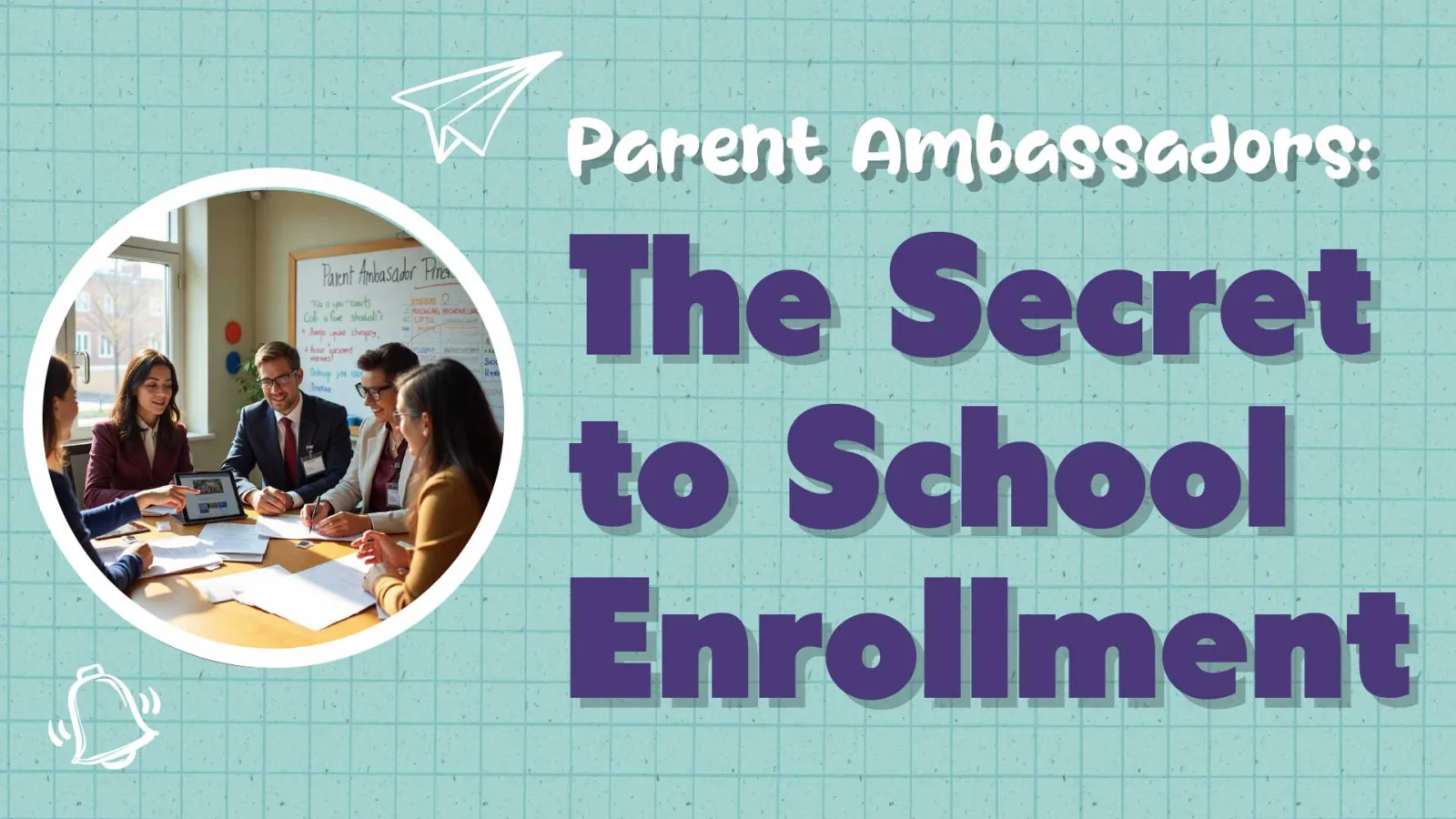
Let's face it. No marketing campaign, glossy brochure, or polished website can match the honest excitement of a happy parent. In a crowded private school market, word of mouth is still the gold standard for enrollment marketing. A parent ambassador program puts that channel to work. It turns your most eager families into real partners in your school's growth.
At the fictional Greenfield Academy, Director of Admissions Jordan Grayson saw a big jump in applications after launching a structured parent ambassador program. "Parents trust other parents far more than they trust us," Grayson admits, with rare candor. "Our ambassadors provide that crucial peer perspective that resonates with prospective families."
Maybe you're launching a new program. Maybe you're trying to revive one that's gone quiet. Either way, this guide gives you the framework. And for private schools engaged in school marketing in Seattle, WA, where school choices abound, a strong ambassador program can be the edge you need.
How Do You Structure an Effective Parent Ambassador Program?
A good parent ambassador program starts with its structure. Without clear rules, even your most eager parents will have a hard time speaking for your school well.
Ambassador Selection: Finding Your Perfect Advocates
Not every eager parent makes a good ambassador. Look for these traits when you recruit:
- Authentic belief in your school's mission and values
- Strong communication skills across different contexts
- Diverse perspectives representing various grades, programs, and demographics
- Reliability and follow-through on commitments
- Positive community presence both online and in-person
Pro tip: Build an application process that includes a short interview. It tells parents the role matters, and it helps you find the ones who are truly committed to the cause.
Diversity Considerations: Representing Your Whole Community
A strong ambassador program reflects the full range of experiences at your school. Make diversity a priority by:
- Recruiting ambassadors from different cultural, socioeconomic, and religious backgrounds
- Including families with students who have diverse learning needs
- Ensuring representation from various grade levels and program areas
- Involving both long-time families and relative newcomers
- Considering family structures beyond the traditional (single parents, grandparents raising children, etc.)
"The biggest strength of our program is how it showcases different pathways to success at our school," explains Grayson. "When prospective families meet ambassadors who truly reflect their own backgrounds and concerns, the connections are immediate and powerful."
Training Framework: Equipping Your Ambassadors for Success
Even parents who know your school best need coaching to speak for it with care and accuracy.
Build a full training program that covers:
- School history, mission, and distinguishing features
- Key talking points and messaging guidelines
- Answers to frequently asked questions
- Appropriate handling of difficult questions
- Boundaries for personal sharing
- Communication etiquette and privacy protocols
"Our biggest mistake was assuming parents already knew how to talk about our school," notes Jordan Grayson. "Once we implemented formal training, the quality of interactions skyrocketed."
Responsibility Outline: Clarifying Expectations
Nothing kills a volunteer's drive faster than fuzzy expectations. Write a "job description" that spells out:
- Time commitment (hours per month)
- Expected participation in events
- Communication responsibilities
- Content creation requirements
- Reporting procedures
- Term length (typically one academic year)
Be realistic. These are volunteers with busy lives. A program that asks too much will lose people fast.
Support Systems: Providing Ongoing Resources
Even well-trained, eager ambassadors need steady support to do well. Put these systems in place:
- Regular check-ins with your admissions or marketing team
- Updated talking points as school initiatives evolve
- Templates for emails or social media posts
- Access to marketing materials and school swag
- Clear points of contact for questions
- Digital portal with resources and updates
Recognition Plans: Showing Appreciation
Let's be honest. Parent ambassadors aren't in it for the glory. But thanks still matter, especially if you want them to stay involved for the long haul.
Ways to say thanks that work well include:
- Personalized thank you notes from leadership
- Ambassador spotlights in school communications
- Exclusive "insider" events with administration
- Small tokens of appreciation throughout the year
- End-of-year celebration recognizing contributions
- Priority registration for popular school events
Remember: Recognition should fit your school's values and culture. What works at a progressive, arts-focused school might fall flat at a traditional college prep academy.
What Activities Should Parent Ambassadors Engage In?
Once the structure's in place, it's time to put your ambassadors to work where they'll do the most good.
Event Participation: Creating Personal Connections
Nothing beats face-to-face time for building trust. Send ambassadors where they'll count most:
- Open houses and admission events
- New family orientations
- Community-building activities
- Parent coffees and information sessions
- School fairs and external recruitment events
For example, if you're marketing a school in Seattle, WA, it can pay off to send ambassadors to neighborhood events in your key feeder communities.
Content Creation: Sharing Authentic Perspectives
Today's parents do a lot of research before they even ask for information. Real content from current parents gives them the social proof they're looking for.
Content your ambassadors create might include:
- Blog posts about the parent experience
- Video testimonials highlighting school impact
- Social media takeovers showing "day in the life" moments
- Quotes for marketing materials
- Responses to online reviews and forums
"Our parent-written blog posts consistently outperform professionally created content in both engagement and conversion metrics," reports Grayson.
Testimonial Sharing: Leveraging Personal Stories
Stories sell. Train ambassadors to share specific, vivid stories about their family's experience, not generic praise.
Strong testimonials should:
- Address the common concerns of prospective families
- Highlight differentiating aspects of your school
- Include concrete examples and outcomes
- Feeling authentic rather than scripted
- Connect emotionally while remaining credible
Prospective Family Connection: Providing Peer Perspectives
Pair ambassadors with prospective families who share their interests, backgrounds, or needs. These connections might look like:
- Email or phone conversations
- Coffee meetups near the prospect's neighborhood
- Guided campus tours from the parent perspective
- Invitations to non-admission community events
- Follow-up after formal admission activities
Social Media Advocacy: Extending Digital Reach
Parents now do much of their school research online, and they do a lot of it. So what your ambassadors say online matters a great deal.
Train ambassadors to:
- Share school posts with personal commentary
- Post about positive experiences (with appropriate privacy guidelines)
- Engage positively with school content
- Participate in relevant community groups and forums
- Respond thoughtfully to questions about local education options
For the most reach online, try these more advanced moves:
- Create ambassador-specific hashtags that track their social sharing
- Develop "share packages" with pre-approved images and suggested captions
- Schedule coordinated social media campaigns around key enrollment periods
- Provide ambassadors with social media training specific to each platform
- Use ambassador-generated content in your school's official social channels
"Our digital-savvy ambassadors have become micro-influencers in our community," notes Grayson. "Their authentic content receives engagement rates nearly three times higher than our official posts."
For schools focused on community outreach, ambassadors can be a real asset in local Facebook groups, where parents often ask which school to pick.
What Challenges Do Parent Ambassador Programs Face?
Even well-built programs hit snags. Deal with these early, and you'll make your program stronger and dodge the usual traps.
Ambassador Burnout: Preventing Volunteer Fatigue
Parent volunteers are juggling a lot. To prevent burnout:
- Set realistic time expectations from the start
- Create systems for ambassadors to step back temporarily during busy periods
- Rotate high-demand responsibilities among team members
- Check in individually with highly active ambassadors
- Monitor engagement levels and intervene before exhaustion sets in
"We lost three fantastic ambassadors in our first year because we asked too much too quickly," admits Jordan Grayson. "Now we carefully track involvement and proactively offer breaks before burnout occurs."
Messaging Consistency: Keeping Everyone On-Brand
Eager parents sometimes go off-script, and your message starts to drift. Head that off by:
- Providing regular refresher training
- Creating accessible reference materials for key talking points
- Establishing clear boundaries on topics that require referral to staff
- Modeling appropriate responses to common questions
- Conducting occasional "mystery shopper" assessments
Maintaining Momentum: Sustaining Long-Term Engagement
Many programs start strong but fade over time. Keep the momentum going through:
- Setting clear short-term goals that provide quick wins
- Celebrating milestones and achievements visibly
- Refreshing activities and responsibilities periodically
- Soliciting and implementing ambassador suggestions
- Creating leadership opportunities within the ambassador team
Measuring ROI: Proving Program Value
Showing the hard value of your program can be tough. Make your case stronger by:
- Establishing clear baseline metrics before program launch
- Implementing systematic tracking of ambassador touchpoints
- Surveying new families about influence factors in their decision
- Calculating cost-per-enrolled-student comparisons
- Documenting both quantitative and qualitative outcomes
How Do You Manage a Successful Parent Ambassador Program?
Even a well-built program with ideal people needs good management to succeed over the long term.
Communication Protocols: Maintaining Consistent Contact
Set up clear ways to keep ambassadors in the loop without burying them:
- Monthly email updates with upcoming opportunities
- Private social media group for quick updates
- Quarterly in-person or virtual meetings
- Clear process for questions and feedback
- Emergency communication procedures for sensitive situations
"We learned the hard way that sporadic communication leads to disengaged ambassadors," notes Grayson. "Our monthly rhythm keeps everyone connected without becoming burdensome."
Resource Provision: Equipping for Success
Give ambassadors the tools they need through:
- Digital resource library with key information
- Talking points that evolve with school initiatives
- Templates for common communications
- School-branded items for events
- FAQs addressing common inquiries
Activity Tracking: Monitoring Engagement
What gets measured gets managed. Track what ambassadors do through:
- Event participation records
- Content contribution documentation
- Prospective family connections made
- Digital advocacy metrics
- Time committed to program activities
This data helps you spot your stars, along with those who may need more support or a reminder or two.
Success Measurement: Proving Program Value
Administrators love metrics. Show your program's impact through:
- Conversion rates for ambassador-influenced families
- Surveys of new families about ambassador impact
- Engagement metrics on ambassador-generated content
- Retention rates among ambassador families
- Cost-effectiveness compared to other marketing channels
For schools focused on school marketing in Seattle, WA, track which neighborhoods and communities have the highest conversion rates. That helps you sharpen your geographic targeting.
Program Optimization: Continuous Improvement
No ambassador program is perfect out of the gate. Use these steps to keep making it better:
- Regular feedback sessions with ambassadors
- Annual program review with leadership
- Benchmarking against peer institutions
- Experimentation with new engagement strategies
- Responsive adaptation to changing market conditions
Case Study: Greenfield Academy's Ambassador Evolution
When Greenfield Academy first launched its parent ambassador program, it focused mostly on open houses. That helped, but the results were modest.
After a full rebuild, they put these in place:
- A formal application and selection process
- Quarterly training sessions with updated messaging
- Personalized matching with prospective families
- Digital content creation opportunities
- Recognition events with the head of school
The results were dramatic:
- Significant increase in applications
- Higher yield rate (accepted students who enrolled)
- Impressive satisfaction ratings from prospective families
- Reduced marketing costs per enrolled student
- Stronger overall parent community engagement
"Our ambassadors have become our most effective marketing channel," says Jordan Grayson. "But more importantly, they've strengthened our entire school community by articulating and celebrating what makes Greenfield special."
Implementation Timeline: Getting Your Program Off the Ground
If you're just starting an ambassador program, this timeline lays out the path:
3-4 Months Before Launch
- Form planning committee with key stakeholders
- Research successful programs at peer institutions
- Draft program structure and essential materials
- Secure budget and resource commitments
2-3 Months Before Launch
- Finalize selection criteria and application process
- Create training materials and program handbook
- Develop tracking systems and success metrics
- Announce upcoming program to parent community
1-2 Months Before Launch
- Accept applications and conduct interviews
- Select initial ambassador cohort
- Schedule and conduct training sessions
- Prepare first wave of engagement opportunities
Launch Month
- Officially announce ambassadors to school community
- Begin with 1-2 simple, high-success activities
- Collect early feedback and make adjustments
- Celebrate early wins and participation
Ongoing Management
- Monthly: Communication check-ins and opportunity sharing
- Quarterly: In-person meetings and refresher training
- Bi-annually: Program evaluation and strategic adjustments
- Annually: Recognition events and ambassador renewal
Conclusion: Building Community While Boosting Enrollment
The best parent ambassador programs go beyond marketing. They build community while they drive enrollment. When you give parents a way to share their real experiences, you create strong advocates. You also deepen your ties with the families you already have.
Starting fresh or reviving an old program? Either way, structure, training, and steady management are what make it work. Get those right, and your ambassadors won't just tell your school's story. They'll help shape its future.
For schools engaged in school marketing, parent ambassadors give you the real voice that sets your school apart in a crowded market.
Ready to turn your parent community into your most powerful marketing asset? Our team specializes in building custom ambassador programs that reflect your school's unique culture and goals. Contact us today to learn how we can help you build a program that drives enrollment and strengthens your community.