Remember when choosing a school meant driving around the neighborhood and asking the lady next door about her kids' teachers? Those days went the way of dial-up internet. They're about as useful to today's parents as they sort through K-12 private school choice.
Today's parents don't just look up schools. They run full-scale online investigations that would make a private detective proud. They cross-check online reviews, study social media feeds, and comb websites for old facts. They join Facebook groups where they pick apart everything from cafeteria menus to teacher turnover rates. It's a brave new world where a school's Instagram might matter as much as its test scores.
The stakes couldn't be higher. For parents, picking the right school is one of the biggest choices they'll make for their children's future. For schools, knowing how today's tech-savvy parents research and weigh their options isn't a nice extra. It's how a school survives as the fight for families gets harder each year.
Online research has changed the way families choose schools at the root. That shift brings new chances and new problems for parents and schools alike. Doing well now means knowing what parents want to learn, but also how they find it, how they judge it, and how they use it to make a choice that will shape their kids' schooling.
The Evolution of Parent Research Behavior
Not too long ago, school choice was fairly simple. Most parents sent their kids to the neighborhood school. They might drive by a few others, and they leaned hard on word of mouth from other families nearby. There wasn't much to go on, and most of the research happened offline, in casual talk.
Then the internet changed everything. All at once, parents could see more about schools than ever before: test scores, teacher credentials, curriculum details, and what other parents thought. What began as a trickle of online school lists and basic websites is now a flood of touchpoints. Parents move through it as easily as they scroll through social media.
The change has been dramatic. According to the National School Choice Awareness Foundation's January 2024 survey, 72% of parents considered new schools for their children in the past year, up from just 52% in its 2022 survey. That's a jump of 20 percentage points. Even more telling, 64% of parents say they wish they had more information about education options for their children. They can find more about schools than ever, yet they still feel they don't know enough to choose.
| School Choice Steps | Considered a new school | Searched for a new school | Enrolled in a new school |
|---|---|---|---|
| All parents | 72% | 63% | 44% |
| Black parents | 76% | 67% | 47% |
| Hispanic parents | 66% | 57% | 38% |
| White parents | 73% | 64% | 43% |
The COVID-19 pandemic sped this shift up fast. As schools moved online and parents got more involved in their kids' daily lessons, families came to expect more openness and better online contact. Parents who had never looked past their local public school were suddenly looking at virtual learning, private schools, and homeschooling. Almost all of that research happened online.
Research from McKinsey finds that shoppers in every industry now want speed and ease right away. They spend their time and money in different ways than they did just five years ago. That change in habits has shaped how parents research schools. Online-first is now the norm, not the exception.
Today's parents don't only use online tools. They expect them. They want full websites, active social media, online applications, and fast replies when they ask a question. Schools that haven't kept up aren't only missing chances. They're pushing families away, because parents read a weak online presence as a red flag about the school's quality and its outlook.
Mapping the Digital Parent Journey
To see how parents research schools online, you have to map their path from first awareness to final choice. That path is rarely a straight line. Still, most parents move through three clear stages, and each one has its own touchpoints and habits.
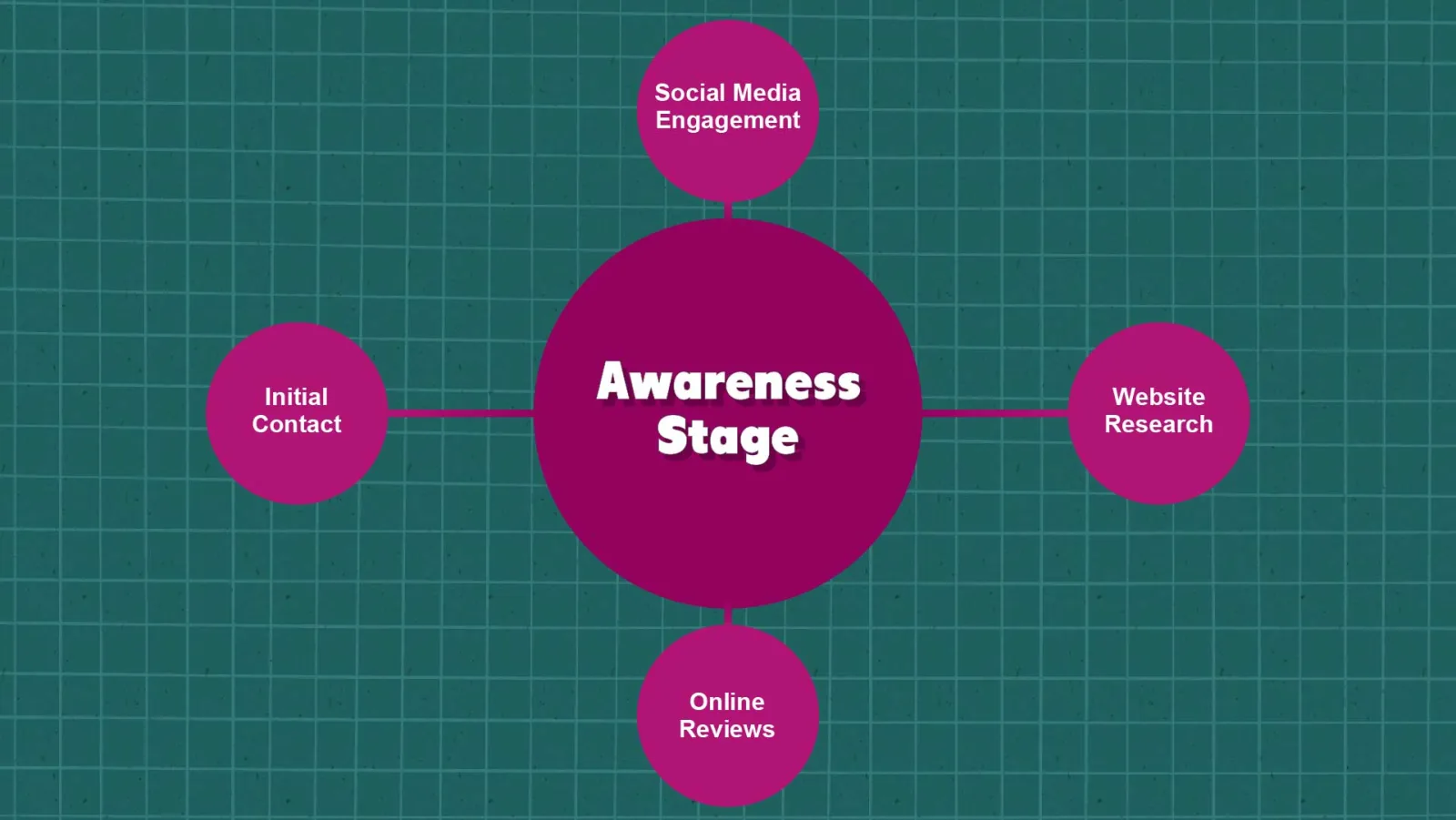
Awareness Stage: When Research Begins Online
The journey usually starts with a broad online search. Parents who are unhappy with their current school, facing a move, or just looking around start with general searches like "private schools near me" or "best schools in [city]." This stage is about gathering facts and finding options, not judging them closely.
In this stage, parents use search engines as their main tool. They scan online directories and review sites, and they start to follow schools on social media. They're not ready to talk to schools yet. They're still working out what's even out there in their area.
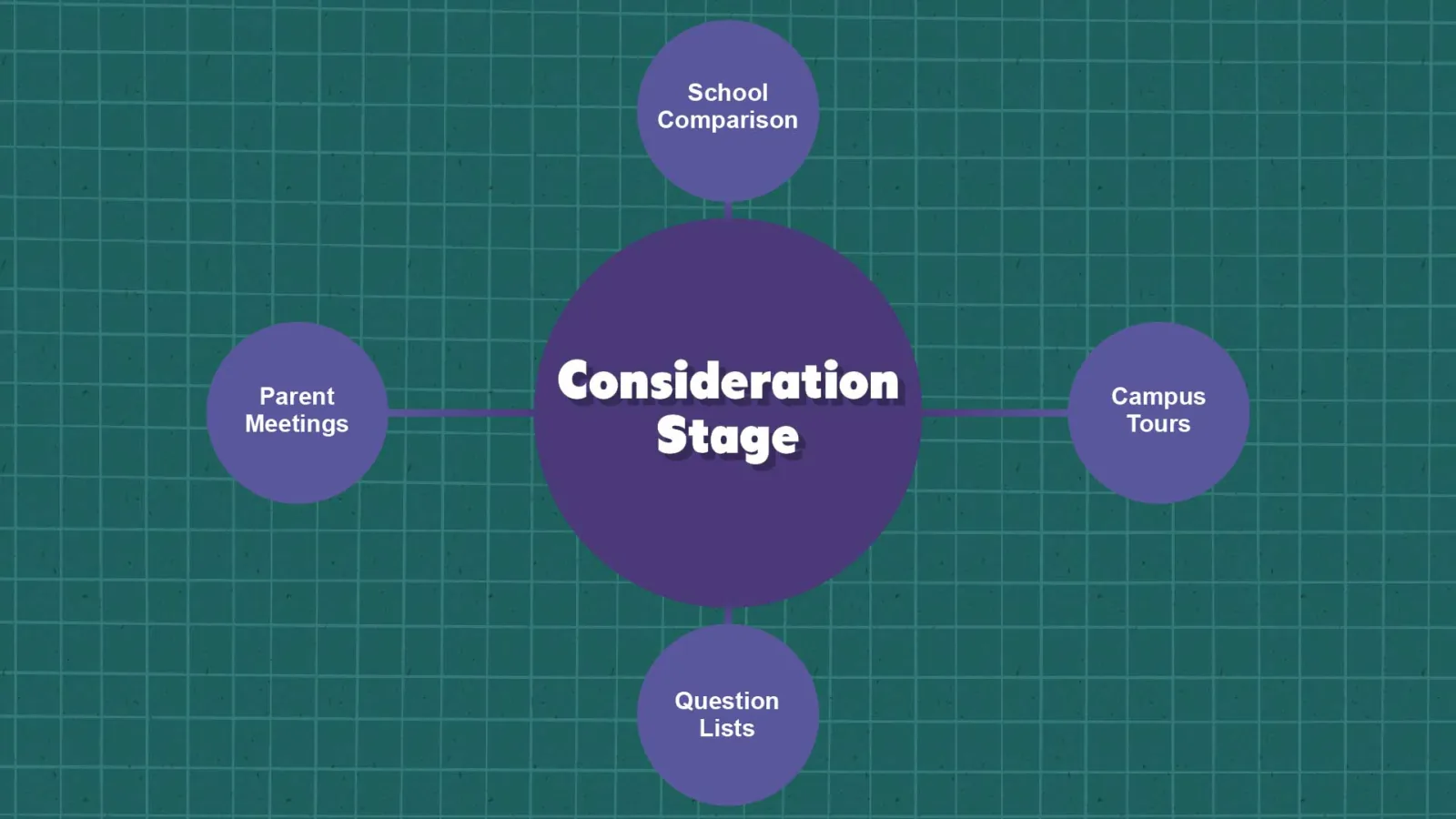
Consideration Stage: The Deep Research Phase
Once parents have a shortlist, they start the deep research. This is where the real work begins. It's also where a school wins or loses its chance to earn a family's interest.
Parents in this stage dig into school websites. They look for details on curriculum, faculty, student outcomes, and school culture. They read every page, study the photo galleries, and watch the promo videos. They want substance beyond the marketing copy. They want to know what their child's day would really look like.
Online reviews carry real weight in this stage. Parents comb sites like GreatSchools.org, Niche.com, and Google Reviews, and they read both good and bad feedback from other families. They pay the most attention to parents whose kids have needs like their own, whether that's faster-paced classes, learning support, or after-school interests.
Social media matters more and more here too. Parents join Facebook groups about school choice in their area. They ask questions on neighborhood sites like Nextdoor, and they follow schools on Instagram to get a feel for daily life on campus. They want real glimpses of the school community that go beyond the official marketing.
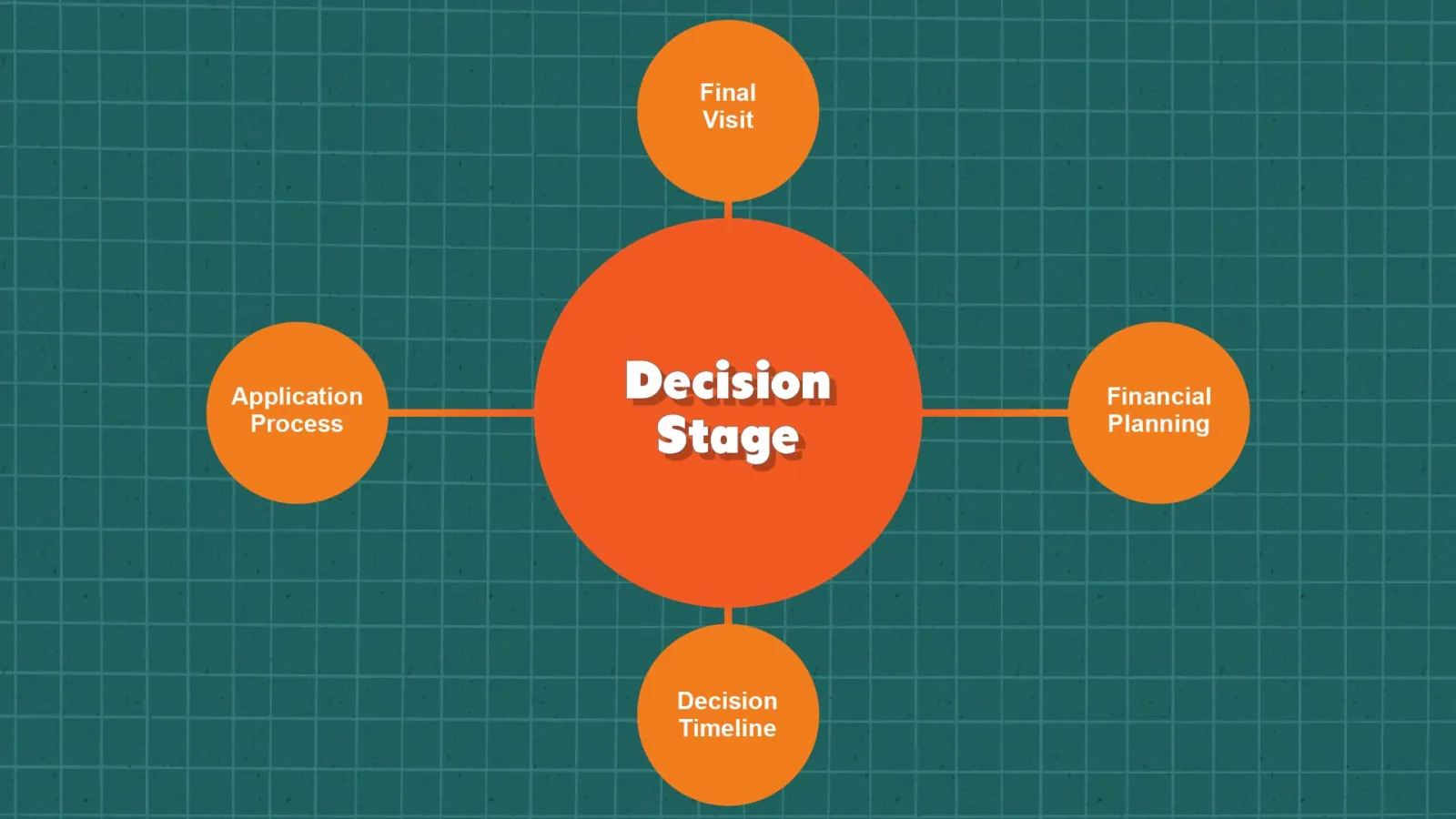
Decision Stage: Final Validation
In the final stage, parents do what you might call "digital due diligence." They aren't only gathering facts now. They're testing their first impressions and checking for red flags that could change their minds.
That means checking recent news about the school, confirming its accreditation, and reading the newest online reviews to make sure nothing big has changed since they first looked. Parents also tend to come back to the school's website again and again. Often they have a specific question, or they want to show the site to someone else in the family who has a say.
The decision stage is also when parents work hardest to make a personal link. They might reach out to current families on social media, join virtual info sessions, or book a campus visit. Even these old-school touchpoints now have an online side. After an in-person visit, parents often check the school's social media or website for more details.
Key Digital Touchpoints and Parent Behavior
Search Engine Behavior
Search engines are the main front door for parent research, so search behavior matters to parents and schools alike. Most parents start with local searches that include place terms like "near me" or a city name.
These search patterns say a lot about what parents care about. Early searches tend to be broad ("private schools," "best elementary schools"). Later searches get more specific ("[School Name] reviews," "[School Name] tuition," "[School Name] academics"). That shift shows parents moving from finding schools to judging them as their research goes deeper.
For schools, this search behavior matters a great deal. Parents who can't find basic facts about a school through a search engine will likely cross it off the list for good. Schools need websites built to rank for their own name and also for the plain terms parents are most likely to type when they search.
Social Media Influence
Official channels offer plenty of facts, yet social media is now a key part of parent research. Its pull on parent choices, though, is more complex than schools might expect.
McKinsey research finds that shoppers rate social media as their least trusted source for brand recommendations. Family and friends are still their most trusted source, and social media is where many of those trusted talks take place.
Parents use each platform in a different way as they research. Facebook groups work as forums where parents ask pointed questions and get tips from other parents. Instagram gives a visual peek at school life that helps parents judge culture and community. LinkedIn can connect parents with other professionals who went to a given school or have kids there.
The key lesson for schools is that social media success isn't about follower counts or viral posts. It's about real engagement with the parent community and a steady, true picture of the school's values and culture.
Online Review Platforms
Online reviews are now the online form of word of mouth, and it's hard to overstate how much they sway parent choices. A school with a low star rating can drop off a family's list before they ever visit the website.
Parents have gotten good at reading reviews. They look for specific feedback, weigh the reviewer's tie to the school, and judge the overall pattern of reviews instead of any one comment. Reviews with real detail about programs, teachers, or experiences count for more than vague praise or vague complaints.
The challenge for schools is that review sites like Google, Niche, and GreatSchools all work in different ways. Each has its own way to check reviews and its own rules for which feedback shows up first. Schools need to watch each platform and know how each one shapes what parents think.
School Website Expectations
A school's website is its digital front door, and parents expect a lot when they walk through it. Today's parents want sites that work on a phone, load fast, and are easy to find their way around. They want quick access to practical facts like tuition costs, admission requirements, and contact details.
But parents also expect depth. They want to read detailed curriculum information, learn about individual teachers, and get a clear sense of the school's philosophy of education. They're looking for proof of academic outcomes, samples of student work, and real testimonials from current families.
Most of all, parents expect the website to be current. Old facts, broken links, or stale content are a red flag that the school may be poorly run or behind the times. When parents are making choices about their children's future, every online touchpoint reflects on the school's quality and professionalism.
The Psychology of Digital Parent Decision-Making
Information Overload Challenge
All that information creates both chances and challenges for parents researching schools. Having detailed data about schools is mostly a good thing. Still, many parents say they feel swamped by how much there is to read online.
Too much information can lead to decision paralysis. Parents get so caught up in gathering more data that they struggle to make a choice. Some parents cope by setting time limits for research, building a clear way to compare schools, and leaning harder on trusted sources to filter what they read.
Schools can help ease the overload. They can lay out their online content in a logical way, make the site easy to move through, and offer personal info sessions. Those sessions let parents focus on the details that fit their own situation.
Trust and Credibility Online
Trust is still the biggest factor in how parents decide. Building it online takes different methods than building it face to face. Parents come to trust a school when its message is the same on every platform, its facts look professional, and it answers fast when they reach out with questions.
Online, the signs of credibility include a professional website, regular content updates, an active social media presence, and good reviews from verified sources. Parents are quick to spot mismatches. If a school's website says one thing but its social media shows another, parents start to doubt how genuine the school is and how much it cares about detail.
Trust in online research usually follows this order. Advice from family and friends counts the most. Online reviews from other parents come next, then official school information, and last of all, paid ads or promotional content.
Emotional vs. Rational Decision-Making
Parents gather plenty of hard data about schools, like test scores, teacher credentials, and college placement rates. Yet the final choice often comes down to feelings. Parents want to feel sure their child will be safe, happy, and able to thrive at the school.
Online research gives parents the hard facts they need to justify a choice. The emotional bond, though, often forms through smaller moments online. It might come from seeing photos of engaged students, reading notes from happy families, or watching how the school handles questions or concerns on social media.
The best school digital strategies strike this balance. They give full, factual information, and they also show what it feels like to be part of the school community.
Demographic Differences in Digital Research
Not all parents research schools online the same way. These differences matter for schools that are building targeted digital strategies. They also matter for parents who want to see their own research biases and blind spots.
Generational Patterns
Millennials now make up a large share of parents with school-age children. They grew up online, and they turn to online sources by habit. They're heavy users of social media, they lean a great deal on online reviews, and they expect fast replies to online questions. This generation is also more likely to trust peer advice found on social media than traditional marketing.
Gen X parents, now in their 40s and 50s, take a more balanced approach. They use online tools a lot, but they often pair them with old-school steps like phone calls to schools and in-person visits. They tend to be thorough. They work through several sources, one by one, before they decide.
Baby Boomers are fewer in number among today's parents. Even when they start their research online, they still prefer phone calls and face-to-face meetings. They're more likely to see a school's website as a starting point than as a full source, and they put more value on talking directly with school staff.
Socioeconomic Factors
Family income shapes how parents research online. Higher-income families tend to research many schools in depth. They often spend months comparing private schools, charter schools, and top public school districts. They're more likely to pay for premium access to school rating sites and to hire education consultants who add to their own online research.
Budget-minded families focus their online research on value. They look at financial aid, scholarships, and what they get for the cost. They're more likely to reach out to schools on social media with specific questions about affordability and payment options.
Location plays a role too. Urban parents have more schools to choose from, so they do more side-by-side research. Rural parents often have fewer choices, but they may look at options like online schooling or private schools that draw from a wider area.
School Type Preferences
Parents who are looking at different kinds of schools research in different ways. According to EdChoice, private school parents list a safe environment as their top priority (50%), followed by academic quality (47%). Public school parents, by contrast, put location (56%) first in their choice.
Top 3 Reasons for School Enrollment by School Type
| District School Parents | Percentage | Private School Parents | Percentage |
|---|---|---|---|
| Location | 56% | Safe environment | 50% |
| Academic quality | 29% | Academic quality | 47% |
| Safe environment | 27% | Class size | 31% |
Those different priorities lead to different research habits. Private school parents spend more time looking into school culture, discipline policies, and community values. They're more likely to read detailed reviews and to look for the school's philosophy of education and its approach to character development.
Parents weighing public schools focus more on logistics, like bus routes, before- and after-care programs, and how close the school is to home. Their online research tends to be more practical and less extensive. They're often looking at one neighborhood school instead of comparing several.
Implications for Schools and Marketing Directors
How parents research online has big effects on how schools should handle marketing and communication. Schools that adapt well to this new reality will have a real edge in attracting and enrolling families.
Digital Presence Essentials
Your school's website isn't just a digital brochure anymore. It's your main enrollment tool. Parents expect full, current information that answers their questions without making them call or send an email. That means detailed curriculum information, faculty profiles with credentials, clear tuition and fee details, and real examples of student work and school life.
Mobile-friendly design isn't optional anymore. Parents research on their phones during commutes, lunch breaks, and other short gaps in their day. A website that doesn't work well on a phone will lose families before they even learn about your school's programs.
Page speed shapes how parents see you. If your website loads slowly, many parents will move on to other schools. A fast, responsive site signals that your school is well run and good with tech.
Content Strategy That Resonates
The content that lands best with parents is real, specific, and speaks to their actual concerns. Generic marketing copy about "excellence" and "preparing students for success" doesn't set your school apart from hundreds of others making the same claims.
Instead, parents want to see specific examples of how your school serves students. They want to read about the science teacher who stays after school to help students with robotics projects, the literature class that publishes a student anthology every year, or the support program that helped a struggling student find a passion for math.
Student and parent testimonials carry real weight, but they need to be specific and believable. A quote from "Sarah, Class of 2023" about how much she "loved the school" is worth far less than a detailed story from "Sarah Johnson, Class of 2023." In that story, she tells how the school's internship program helped her find her interest in environmental science and get into her top-choice college.
Review Management Strategy
Online reviews weigh heavily on parent choices, but many schools take a hands-off approach to them. Schools need an active plan to get happy families to share their stories online. They also need a plan for handling negative reviews in a professional way.
The best approach is to ask happy parents, on a regular basis, to share their stories on review sites. That doesn't mean pressuring families or asking for fake reviews. It means making it easy for happy families to post their real experiences when they feel moved to do so.
When negative reviews do show up, schools should respond calmly and helpfully. A thoughtful reply that admits the concern and explains what the school is doing about it often carries more weight with future parents than the bad review itself.
Social Media Strategy
Social media success for schools isn't about going viral or having thousands of followers. It's about real engagement with your community and a steady, true picture of your school's values and culture.
The best school social media strategies focus on stories that help parents see what daily life at the school is like. That might mean behind-the-scenes looks at class activities, highlights of student wins, or features on dedicated teachers and staff.
Consistency matters more than perfection. Regular posts about real school life are worth more than the odd polished video or photo shoot. Parents want to see that your school is active, engaged, and has good things going on week after week.
Implications for Parent Researchers
For parents working through the flood of online research, knowing the common traps and best practices can help you make better-informed choices. It can also keep you from drowning in facts or freezing up when it's time to decide.
Research Best Practices
Good online research needs a system. Start by naming your non-negotiables, the things a school must have before you'll consider it. That might be location, cost, specific academic programs, or a certain philosophy of education.
Build a research framework so you judge every school the same way. It might include categories like academic quality, school culture, extracurricular offerings, and practical points like location and cost. A clear structure keeps you from being swayed by flashy websites or marketing that doesn't speak to your priorities.
Set time limits for each stage of your research. It's easy to spend endless hours reading reviews and comparing schools, but at some point more research stops paying off. Give yourself firm deadlines for each stage, and stick to them.
Information Verification Strategies
Not everything online is current or correct. School websites sometimes carry old facts, and online reviews may miss recent changes in leadership, faculty, or programs. Always check important facts against more than one source.
Check the dates on school information, especially for tuition costs, admission requirements, and program descriptions. If something seems too good to be true, or doesn't match other sources, contact the school directly to clear it up.
Be especially careful with reviews that seem too positive or too negative, lack specific details, or seem to come from people with little tie to the school. Look for patterns across reviews instead of fixing on single comments.
Avoiding Digital Research Pitfalls
One of the biggest mistakes parents make is leaning too hard on online ratings and rankings. They can be useful starting points, but they often miss the things that matter most for your own child's needs and learning style.
Don't let perfect be the enemy of good. No school will excel at everything. Waiting for the "perfect" school often means missing application deadlines or enrollment spots at schools that would be a great fit for your child.
Remember that your child's needs and interests may differ from those of the families leaving reviews. A school that wasn't the right fit for one family might be perfect for yours, depending on your child's personality, learning style, and interests.
Future Trends in Digital Parent Research
Online research keeps changing, and a few new trends will likely shape how parents research schools in the years ahead.
Emerging Technologies
Virtual and augmented reality are starting to give parents more lifelike ways to experience schools remotely. Virtual campus tours that let parents "walk through" classrooms and common areas keep getting better. They may cut the need for in-person visits early in the research.
Artificial intelligence is starting to help match families with the right schools based on their specific needs and wants. These systems can weigh family wishes, student needs, and school traits to suggest schools that might be a good fit. That could help parents sort through the huge number of options in some areas.
Real-time chat tools are getting better too. They let parents connect right away with school staff, current families, or other prospective parents. These tools can answer questions on the spot and help parents feel part of the school community even before they enroll.
Evolving Parent Expectations
More and more, parents expect openness about every part of how a school runs. That includes academic outcomes and college placement rates. It also includes teacher retention, discipline policies, and how the school handles problems or concerns.
Personal touches matter more now, too. Parents expect schools to share facts that fit their own child's needs and interests. That might mean custom info packets, personal campus tours, or introductions to current families whose kids have similar needs or interests.
Parents also expect faster replies to their questions and quicker access to facts. Schools that can't answer quickly may lose families to rivals that can.
Privacy and Security Considerations
As parents learn more about online privacy, schools need to be clearer about how they collect, use, and protect the family data they gather online. Clear privacy policies and secure data handling are becoming basic requirements, not nice-to-have features.
Parents also worry more about their children's digital footprints and how schools handle student information online. Schools need to balance the wish to show off student achievements and school life with respect for each family's privacy wishes.
Actionable Strategies and Takeaways
For Marketing Directors
Audit Your Digital Presence Regularly: Review your school's website, social media, and online reviews every quarter. Look for old facts, broken links, and messages that don't match across platforms.
Develop a Systematic Review Strategy: Make a plan to get happy families to share their stories online. That might mean following up with families after good experiences, giving them easy links to review sites, or adding review requests to your regular parent communication.
Invest in Mobile-First Design: Make sure your website works perfectly on mobile devices. Test load speed, navigation, and how easy the content is to read on many devices and screen sizes.
Create Content That Answers Parent Questions: Write blog posts, FAQ sections, and info pages that answer the questions parents ask most often while they research.
For Parent Researchers
Develop a Research Framework: Build a clear way to judge schools that covers both rational factors (academics, cost, location) and emotional ones (culture, community, fit).
Use Multiple Information Sources: Don't rely only on school websites or online reviews. Pair your online research with talks with current families, school visits, and direct contact with school staff.
Set Research Boundaries: Set time limits for each stage of research so you don't get stuck in analysis paralysis. Give yourself deadlines for first-round research, school visits, and the final choice.
Trust Your Instincts: Careful research matters, but don't ignore your gut about a school. If something feels off while you research, look into it further or think about other options.
For School Leaders
Invest in Digital Infrastructure: Set aside budget and staff time to keep your online presence professional, current, and complete. That covers website upkeep, social media management, and keeping watch on your online reviews.
Train Your Team: Make sure staff know how to communicate well online and represent the school the right way.
Monitor and Measure: Track numbers like website traffic, social media engagement, and online review ratings. They show how your online presence is doing and where it needs work.
Stay Current: Keep up with changing parent expectations and digital trends. What worked for parent communication five years ago may not work today.
Conclusion
The shift to online school research is one of the biggest changes in education marketing and family decision-making in decades. Today's parents can learn more about schools than ever before. They also face a new problem: sorting through the huge amount of data online.
For schools, success in this new world takes more than just a website and a social media presence. It takes a full grasp of how parents research, what facts they put first, and how they make choices online. Schools that can clearly show their value online while keeping real ties with prospective families will have a real edge in enrollment and community building.
For parents, the key to good online research is balancing careful digging with practical choices. The goal isn't to find the perfect school through online research alone. It's to use online tools to spot schools worth a closer look, then make informed choices based on full facts from more than one source.
Looking ahead, online and traditional research methods will likely blend even more closely. Virtual reality tours, AI-powered school matching, and real-time chat tools will keep making the parent research experience better. Still, the basic need for real information, open communication, and true bonds between schools and families won't change.
Online research has changed how families choose schools at the root. It has also opened new ways for schools to reach prospective families and for parents to make better-informed choices about their children's education. Understanding and adapting to this new reality isn't a nice extra. It's what success takes for schools today.
Ready to sharpen your school's digital presence for today's research-savvy parents? Contact us to talk about strategies that help you connect with families at every step of their online research and turn online interest into enrollments.
Frequently Asked Questions
How much time should parents spend researching schools online?
There's no set timeline. Many families give first-round online research a few weeks, then set aside time for school visits and the final choice. It varies with the number of options and how complex your family's needs are. The key is setting limits so endless research doesn't delay your choice.
What are the most reliable online sources for school information?
The most reliable sources combine several views: school websites for official information, sites like GreatSchools.org and Niche.com for pooled data and reviews, and social media or parent groups for real community insight. Always check important facts against more than one source, especially costs, admission requirements, and program availability.
How can parents evaluate the credibility of online school reviews?
Look for reviews that give specific details about the reviewer's experience, mention both good and bad points, and come from people with clear ties to the school. Be wary of reviews that are all positive or all negative, lack specific details, or seem to come from people with little school experience. Focus on patterns across many reviews instead of single comments.
What digital red flags should parents watch for when researching schools?
Major red flags include outdated website information, slow or missing replies, steadily negative online reviews, few specifics about programs or staff, and no current photos or samples of student work. Also, be careful with schools that seem to dodge questions about costs, admission requirements, or academic outcomes.