Many K-12 private schools won't address the elephant in the room. They'd rather answer questions in person than talk about them on their website. That's a huge mistake, and it rests on a false belief.
Parents shopping for a school want answers about their child's education. The more of those questions a school can answer on its website, the more likely it is to rise to the top of the list of private schools those parents want to enroll their children in.
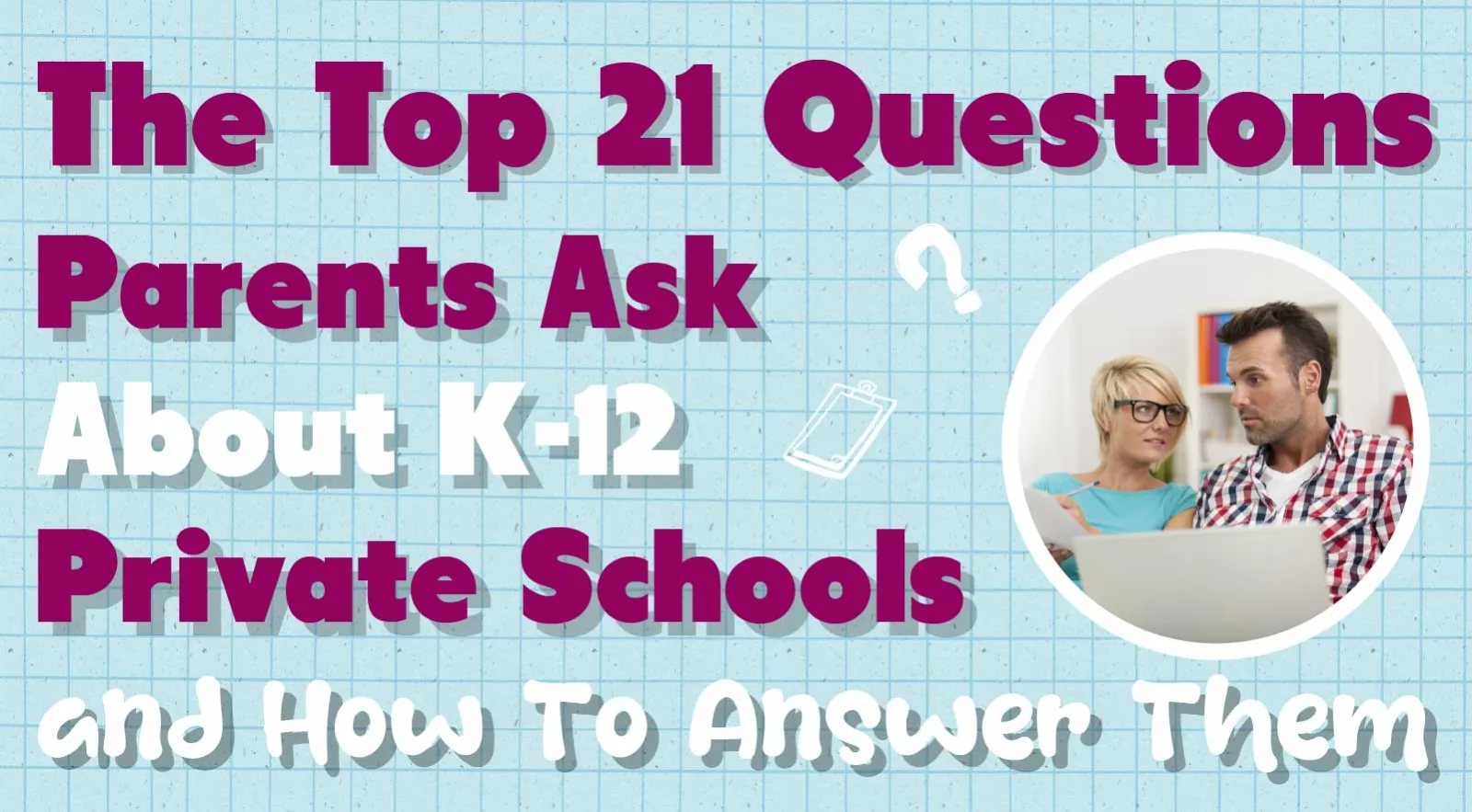
So here are twenty-one of the top questions parents want answers to. Some answers give the general picture for private schools. Others spell out what your school should explain on its own website.
Top 21 Questions Parents Ask About K-12 Private Schools
Question 1: Why Should I Choose a Private School over a Public School?
Answer:
K-12 private schools offer several advantages, including smaller classes, specialized programs, and a focus on academic excellence. They often have a more demanding curriculum, more one-on-one attention, and a supportive place to learn.
Question 2: What Is the Tuition Fee, and What Does It Cover?
Answer:
Private schools set their tuition fees based on location, facilities, and reputation, so fees vary. Tuition usually covers teaching, textbooks, tech tools, extracurricular activities, and access to specialized programs.
Question 3: What Is the School’s Academic Curriculum and Approach?
Answer:
K-12 private schools often build their own curriculum around their teaching philosophy. They may focus on certain subjects, offer advanced or faster-paced courses, or use other ways of teaching. Private schools are usually free to design their own curriculum, which leaves room for fresh ideas and lessons built to fit each student.
Question 4: How Are the Class Sizes and Student-Teacher Ratios?
Answer:
Private schools usually keep classes smaller and student-teacher ratios lower than public schools do. That means more one-on-one attention and more real time between teachers and students. Smaller classes can also build a close-knit community and a supportive place to learn.
Question 5: What Extracurricular Activities Are Offered?
Answer:
K-12 private schools often offer a mix of extracurricular activities to round out the academic program. These may include sports teams, art clubs, music programs, school plays, robotics clubs, community service projects, and more.
Question 6: What Support Services Are Available for Students With Special Needs or Learning Differences?
Answer:
Private schools should offer support services and accommodations for students with special needs or learning differences. Explain how the school handles individualized education plans (IEPs), specialized instruction, and access to support staff like learning specialists or counselors.
Question 7: How Does the School Handle Discipline and Behavioral Expectations?
Answer:
Each private school may have its own approach to discipline and behavior. Spell out the school's discipline policies, its code of conduct, and how it builds a positive, respectful place to learn. When parents understand how the school handles discipline, they can trust that their child will thrive in a place that rewards good behavior and builds character.
Question 8: How Does the School Handle Issues Like Bullying or Conflicts Among Students?
Answer:
It's essential to explain how the K-12 private school deals with bullying and conflicts between students. Talk about the school's policies, how it heads off problems, and the support it has in place to keep the school safe and inclusive.
Question 9: What Is the School’s Approach to College Preparation?
Answer:
Many parents may have long-term goals for their child to go to college. They'll want to know how the school gets students ready for it. Explain your college counseling, standardized test prep, and the school's track record of college placements.
Question 10: How Does the School Involve Parents in the Educational Process?
Answer:
Parent involvement plays a big role in a child's education. Explain how parents can take part in the school community, such as through parent-teacher groups, volunteering, or school events. Giving parents ways to get involved lets them take an active part in their child's education.
Question 11: How Does the School Ensure the Safety and Security of Students?
Answer:
Keeping students safe and secure comes first. Explain the school's safety rules, emergency plans, and the steps it takes to prevent and handle risks. That may include visitor check-in, security cameras, staff training, and plans for how the school will communicate. When parents understand the school's commitment to safety, they and their kids get peace of mind.
Question 12: What Is the School’s Philosophy or Mission Statement?
Answer:
K-12 private schools often have a clear philosophy or mission statement that guides how they teach. It may stress academic excellence, character, community service, cultural diversity, or religious faith. Knowing the school's mission helps parents judge whether it fits their goals and values for their child.
Question 13: How Are Students Assessed, and How Are Grades Determined?
Answer:
Private schools use different methods to track student progress and set grades. These may include tests, projects, presentations, essays, and class participation. Explain how the school grades students, including the use of an AI essay grader and grading criteria, so parents can see how student work is measured and reported.
Question 14: Are There Any Religious or Cultural Affiliations Associated With the School?
Answer:
Some K-12 private schools may have religious or cultural ties that shape their programs and values. Talk about the school's ties, if any, and how they show up in the curriculum and school life. Knowing the religious or cultural context helps parents judge whether the school fits their family's beliefs and values.
Question 15: What Are the Qualifications and Experience of the Teaching Staff?
Answer:
Explain the training and experience of the school's teaching staff. Don't be afraid to brag about their education, certifications, professional development, and years of work with students.
Question 16: Are There Any Transportation Services Provided?
Answer:
If the private school offers transportation, say so clearly on the website. Some schools may run buses or shuttles, while others may work with local transit providers. Knowing the options helps parents judge whether enrolling their child is practical.
Question 17: What Is the School’s Approach to Technology and Its Integration Into the Curriculum?
Answer:
K-12 private schools know how much technology can change education. Talk about how the school builds technology into the curriculum to help students learn, sharpen their thinking, and gain digital literacy. Explain how teachers use learning management systems to keep messages, homework turn-in, and progress tracking smooth.
Question 18: How Does the School Communicate With Parents About Student Progress and Events?
Answer:
Explain how the private school puts open, clear communication with parents first. Does it use channels like websites, social media platforms, and mobile apps to keep parents posted on their child's progress and upcoming events? Then talk about it. Does the school hold regular parent-teacher conferences and send newsletters and emails that build its bond with parents and give them a full picture of their child's learning? Then state that clearly on the website and in your communications.
Question 19: What Opportunities Are There for Students to Take Part in Community Service or Volunteering?
Answer:
Does the K-12 private school see the value of building civic duty and community involvement? If so, explain how it gives students real chances to take part in community service and volunteering.
Question 20: How Does the School Promote Diversity and Inclusion?
Answer:
Inclusive education is at the heart of many private schools. If the school works to create a welcoming, supportive place that celebrates diversity in all its forms, say so. Explain how the school uses inclusive teaching practices, organizes cultural events, and sets up affinity groups or diversity committees to tackle key issues and open dialogue. These efforts build a sense of belonging and help students become caring global citizens who understand and appreciate the richness of human diversity.
Question 21: What Is the School’s Homework and Standardized Testing Policy?
Answer:
K-12 private schools think hard about homework and standardized testing. They try to strike a balance between academic rigor and the growth of the whole child. Homework is meant to reinforce classroom learning and build independent thinking, so students get chances to practice and apply what they've learned.
On standardized testing, explain the school's policy and how it meets state or national requirements, if it does. Also stress that a full education goes beyond test prep. Talk about how the school focuses on each student's growth, character, and a well-rounded view of what they can do.
Conclusion
Obviously, there may be more, or a private school may not need to answer all these questions. Think of this list as a baseline, a place for K-12 private schools to start planning what to answer on the school's website.
If your school isn't doing the above yet, start today! If you need help, reach out to us. Our team at Cube Creative Design has experience helping K-12 private schools grow.