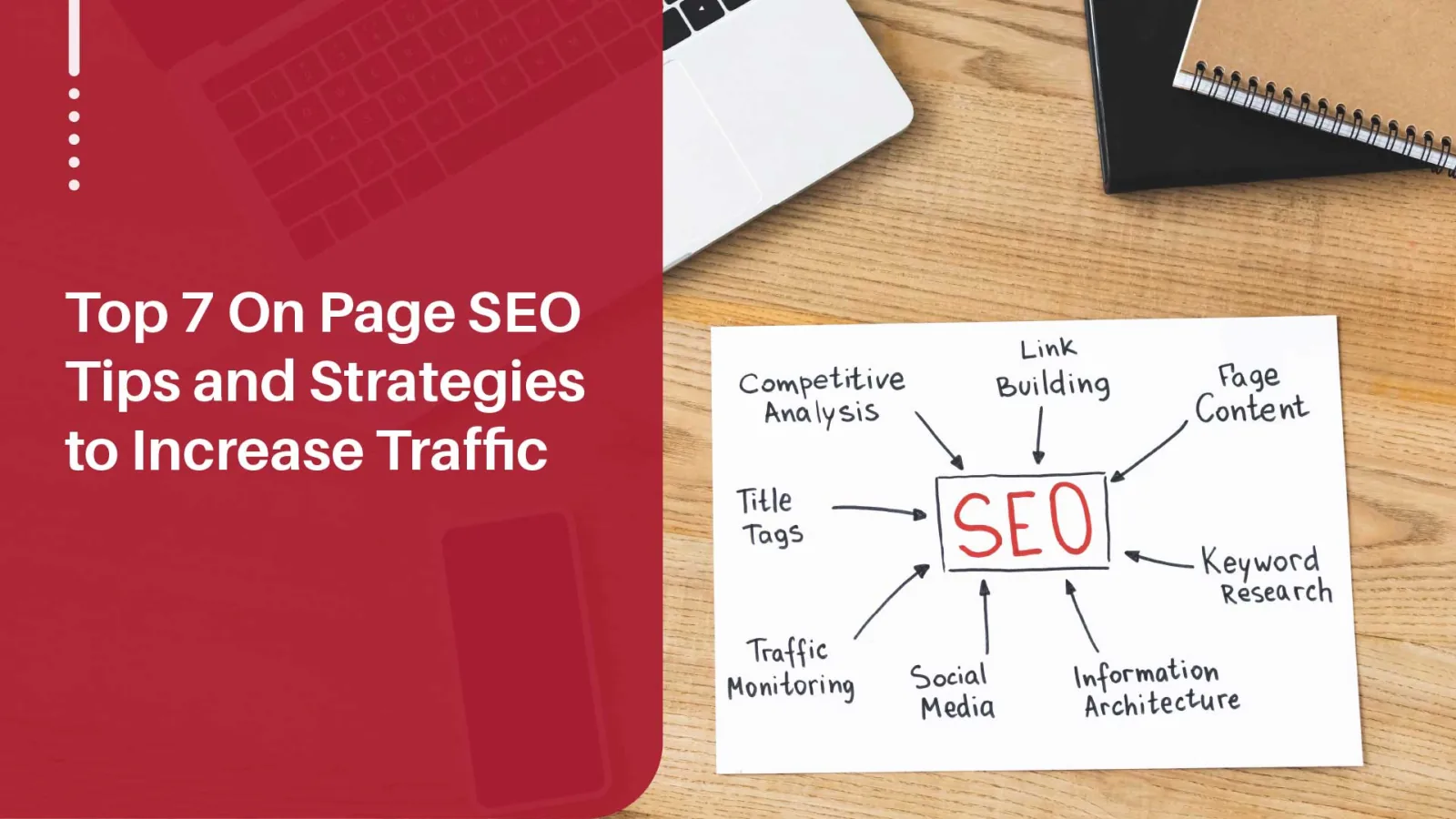
On-page SEO is one of the most important ranking factors in Google's algorithm. Knowing how to optimize your content and considering a few factors before posting can save you a lot of time, frustration, and money. On-page SEO is the practice of optimizing your content on a website. Optimizing your content includes many factors. Today, we will discuss the top on page SEO tips you need to know to properly optimize your site and improve search visibility.

Written By: Chad J. Treadway | October 02, 2023
Chad is our Chief Smarketing Officer. He will help you survey your small business needs, educating you on your options before suggesting any solution. Chad is passionate about rural marketing in the United States and North Carolina. He also has several certifications through HubSpot to better assist you with your internet and inbound marketing.

In today's digital age, the influence of social media is undeniable. From connecting people across the globe to shaping cultural trends, social media has become an integral part of our lives.
In this post we will cover several of the statistics that highlight the importance for small businesses and marketers to understand current trends and user behaviors to effectively engage their audience and grow their brands.

Written By: Hannah Kilpatrick | September 25, 2023
Hannah Kilpatrick Cube Creative DesignHannah Kilpatrick graduated from Western Carolina University in 2021 with a Bachelor of Science in Communication with a Minor in Marketing and a Concentration in Public Relations. She has been around social media since its creation. (Meaning, she was in the first grade when Facebook became available to the general public.) As our very own professional Gen-Z, Hannah is a whiz when it comes to social media creation and paid advertising.
Alt text, also known as “alternative text,” is a fundamental element of web accessibility and search engine optimization (SEO) that you cannot overlook.
Alt text helps make websites more inclusive and user-friendly and has a significant role in SEO. This post explores a brief history of alt text, its impact on web accessibility, SEO, user experience, and best practices in using them.

Written By: Adam Bennett | September 22, 2023
Adam is the president and founder of Cube Creative Design and specializes in private school marketing. Since starting the business in 2005, he has created individual relationships with clients in Western North Carolina and across the United States. He places great value on the needs, expectations, and goals of the client.

Internal links are key to enhancing your small business website's performance and visibility in the digital world. From creating a seamless user experience to impressing search engines like Google, internal links play a crucial role in shaping your website's structure and authority. In this blog post, we'll delve into the fascinating realm of internal linking and explore how it can transform your online presence. Discover how Google utilizes internal links, follows best practices, and reap the benefits of a well-crafted internal linking strategy. Are you ready to take your website to new heights? Let's dive in and unlock the potential of internal links for your website's success!

Written By: Janis Barlow | September 15, 2023
Janis is our Web Programming Specialist And Web Developer. She has been working with the web since its inception and has worked for household names such as Lockheed Martin and Wells Fargo.

Every website you visit accumulates data on your phone, stored as cookies and cache. You're likely familiar with cookies in the context of your phone and computer usage, but understanding these terms, learning to clear cookies, and recognizing when not to accept them is crucial. Allow me to elaborate on the significance of clearing cookies and cache on mobile phones.
Written By: Adam Bennett | September 13, 2023
Adam is the president and founder of Cube Creative Design and specializes in private school marketing. Since starting the business in 2005, he has created individual relationships with clients in Western North Carolina and across the United States. He places great value on the needs, expectations, and goals of the client.
In the vast world of online searches, a little-known hero called the “Meta Description” is crucial in guiding users to their desired web pages.
Picture this: you type a query into Google, and a list of websites appears. But wait, there's more! Beneath each website's title lies a concise yet captivating snippet – the meta description. This small summary is a sneak peek, offering a glimpse of what you can expect on the web page before you click the link.
But why should websites care about these seemingly unassuming snippets? Well, let's dive into how search engines and users leverage the power of meta descriptions for a more refined online experience.
Written By: Chad J. Treadway | September 08, 2023
Chad is our Chief Smarketing Officer. He will help you survey your small business needs, educating you on your options before suggesting any solution. Chad is passionate about rural marketing in the United States and North Carolina. He also has several certifications through HubSpot to better assist you with your internet and inbound marketing.
In today’s digital landscape, effective internet marketing and search engine optimization (SEO) are vital for businesses to thrive online. Among the key elements contributing to a website’s success, title tags significantly enhance SEO efforts and drive organic traffic.
Written By: Adam Bennett | September 04, 2023
Adam is the president and founder of Cube Creative Design and specializes in private school marketing. Since starting the business in 2005, he has created individual relationships with clients in Western North Carolina and across the United States. He places great value on the needs, expectations, and goals of the client.

Small businesses face challenges in standing out and converting visitors into clients in the vast digital world with countless websites. One crucial metric that can significantly impact a website’s success is “dwell time.”
But what is dwell time? Dwell time measures a visitor’s duration on a web page before returning to the search engine results page (SERP). This article will explore an expanded definition of what dwell time is, why it matters for small businesses and effective ways to increase it.
Written By: Chad J. Treadway | September 01, 2023
Chad is our Chief Smarketing Officer. He will help you survey your small business needs, educating you on your options before suggesting any solution. Chad is passionate about rural marketing in the United States and North Carolina. He also has several certifications through HubSpot to better assist you with your internet and inbound marketing.
Are you looking to boost your business’s visibility in local search results? Want to attract more clients in your area? Then it’s time to dive into the world of Local Search Engine Optimization (Local SEO) and Local Search Engine Marketing (Local SEM).
Search engines like Google play a crucial role in providing information about local businesses. Having a strong presence in search engine results pages is essential for reaching potential clients.
Local Search Engine Optimization focuses on optimizing your website to rank higher in local search results, ensuring that your small business appears when prospects search for local products or services. On the other hand, Local Search Engine Marketing utilizes paid search advertising to target a specific local audience, placing your small business front and center with search engine ads. Combining these powerful strategies allows you to take your business to new heights and outshine the competition.
In this article, we will discuss local search engine optimization and search engine marketing best practices for local small businesses.
Written By: Chad J. Treadway | August 25, 2023
Chad is our Chief Smarketing Officer. He will help you survey your small business needs, educating you on your options before suggesting any solution. Chad is passionate about rural marketing in the United States and North Carolina. He also has several certifications through HubSpot to better assist you with your internet and inbound marketing.

Are you looking to take your small business’s online presence to the next level? If so, then understanding the power of keyword research is essential. Keyword research forms the backbone of successful SEO campaigns, allowing you to uncover the valuable search queries people enter into search engines. By discovering the keywords your target audience is using, you can optimize your website’s content to align with their search intent and attract relevant organic traffic. But why is keyword research so important? It ensures that there is search demand for the topics you want to cover and provides valuable insights into your audience’s behavior and preferences.
You can enhance client acquisition and drive traffic growth by tailoring your content to address their needs effectively. If you’re ready to learn how to conduct keyword research, choose the right keywords for your small business, and explore advanced techniques and tools, then keep reading. You’ll discover practical tips and strategies to boost online visibility and achieve long-term success.
Written By: Chad J. Treadway | August 18, 2023
Chad is our Chief Smarketing Officer. He will help you survey your small business needs, educating you on your options before suggesting any solution. Chad is passionate about rural marketing in the United States and North Carolina. He also has several certifications through HubSpot to better assist you with your internet and inbound marketing.
Since the inception of the digital age, we’ve witnessed a complete transformation of the marketing landscape. For local small businesses, the rise of the internet has shifted our focus from traditional marketing channels to digital ones, and SEO copywriting has become an indispensable tool for small businesses. If done correctly, SEO copywriting can serve a dual purpose: attracting search engines and human readers.
Written By: Chad J. Treadway | August 11, 2023
Chad is our Chief Smarketing Officer. He will help you survey your small business needs, educating you on your options before suggesting any solution. Chad is passionate about rural marketing in the United States and North Carolina. He also has several certifications through HubSpot to better assist you with your internet and inbound marketing.

In today’s digital landscape, small local businesses face fierce competition for online visibility. To improve search engine rankings and attract potential clients, implementing local business schema markup can be a game-changer. In this blog post, we will explore the concept of local business schema and its impact on SEO and provide step-by-step instructions on how to add this structured data markup to your website.
Written By: Janis Barlow | August 04, 2023
Janis is our Web Programming Specialist And Web Developer. She has been working with the web since its inception and has worked for household names such as Lockheed Martin and Wells Fargo.