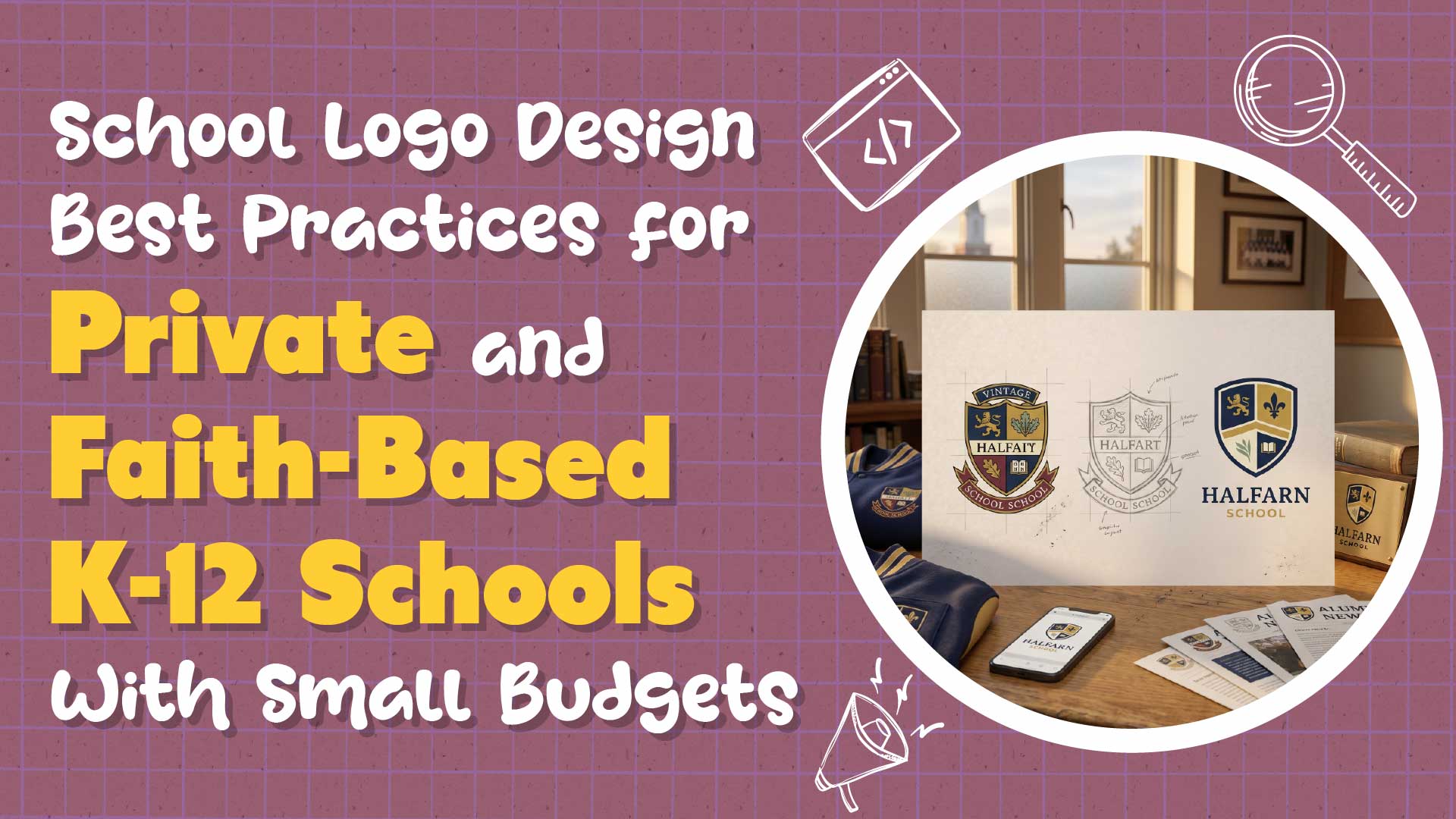
Your logo shows up on jerseys, report cards, the sign at the school entrance, every Facebook post, every parent newsletter, and the chest of a graduate's sweatshirt twenty years after they left. A good school logo is the smallest piece of your marketing and the one that travels the furthest. A bad one is a scar you see every time you pull into the parking lot. For faith-based and independent schools without a big budget, getting the logo right is the single highest-leverage brand decision available.
This guide is written for a principal at a 150-250 student faith-based or independent K-12 school with tuition around $3,000-$5,000 and a marketing budget of $5,000-$15,000. It covers the main types of school logos, the principles that separate a logo that ages well from one that has to be replaced in five years, how to handle a legacy crest or outdated mascot, the file deliverables you actually need, the cost range for getting it done professionally, the mistakes that small schools make most often, the trademark and legal basics, and how to roll out a new logo without a community revolt.

Written By: Adam Bennett | May 07, 2026
Adam is the president and founder of Cube Creative Design and specializes in private school marketing. Since starting the business in 2005, he has created individual relationships with clients in Western North Carolina and across the United States. He places great value on the needs, expectations, and goals of the client.
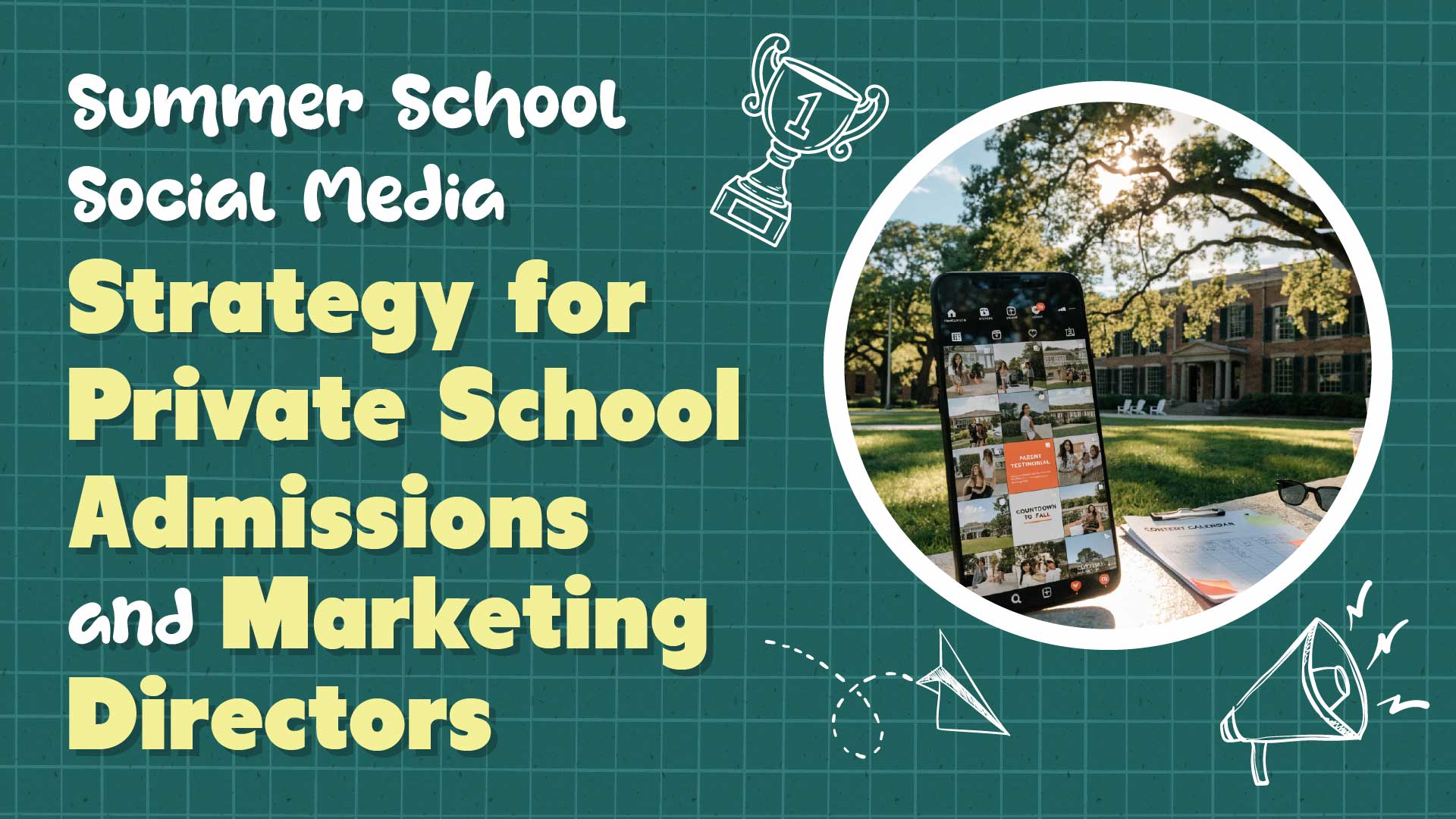
Every June, a school marketing team quietly checks out. The final school day happens, the faculty scatter, and the Instagram account goes from three posts a week to one post every three weeks. And every August, that same team wonders why back-to-school inquiries feel softer than last year. For private school admissions teams, the summer social lull is not a vacation; it is a visibility problem. The families researching right now are the ones who will start tours in September.
This guide is for a Director of Admissions and Marketing at a college-prep school serving 400-800 students with tuition between $18,000 and $35,000 and a marketing budget of $50,000-$250,000. It covers why summer social matters, the content pillars that carry a school through the quiet season, platform-specific tactics, a week-by-week calendar framework, the user-generated content strategies that work for schools, the metrics that actually matter, the paid social plays worth running between June and August, and the tools that make the whole thing sustainable with a small team.
Written By: Adam Bennett | May 07, 2026
Adam is the president and founder of Cube Creative Design and specializes in private school marketing. Since starting the business in 2005, he has created individual relationships with clients in Western North Carolina and across the United States. He places great value on the needs, expectations, and goals of the client.
Your Google Business Profile is the first thing most potential clients see when they search for pest control marketing services in their area. Not your website. Not your Facebook page. That little box on the right side of Google with your hours, reviews, and photos. If yours is half-filled out with a blurry logo and no reviews from the last six months, you're handing calls to the competitor whose profile actually looks like a real business.
The good news: fixing this costs nothing and takes less time than a single termite inspection. Here's how to turn your Google Business Profile into the hardest-working marketing tool your pest control company owns.

Written By: Chad J. Treadway | May 06, 2026
Chad is a Partner and our Chief Smarketing Officer. He will help you survey your small business needs, educating you on your options before suggesting any solution. Chad is passionate about rural marketing in the United States and North Carolina. He also has several certifications through HubSpot to better assist you with your internet and inbound marketing.
A regional pest control owner I talked to recently was frustrated. Terminix had just opened a new branch in his town and started buying every Google Ad slot above his organic listing. Orkin was running television spots that he couldn't afford to match. He felt like he was being squeezed from above by ad spend he couldn't compete with.
Three months later, after rebuilding his Google Business Profile from the template-driven pattern his previous agency had used and launching a 90-day review velocity push, his profile was outranking both nationals in the Map Pack for his city. His Facebook page had become the place homeowners asked for pest recommendations. His phone was ringing off the hook for jobs the nationals were also bidding on. Same town. Same competition. Different strategy.
This post is about that strategy. It covers the structural weaknesses of national pest control chains, the specific advantages pest control companies can press as independent operators, and the tactics that move market share. I'll be specific about Terminix, Orkin, Rentokil, and Anticimex because those are the four biggest pieces of the national/regional consolidation, but the principles apply to any large competitor in your market.
Written By: Chad J. Treadway | May 06, 2026
Chad is a Partner and our Chief Smarketing Officer. He will help you survey your small business needs, educating you on your options before suggesting any solution. Chad is passionate about rural marketing in the United States and North Carolina. He also has several certifications through HubSpot to better assist you with your internet and inbound marketing.