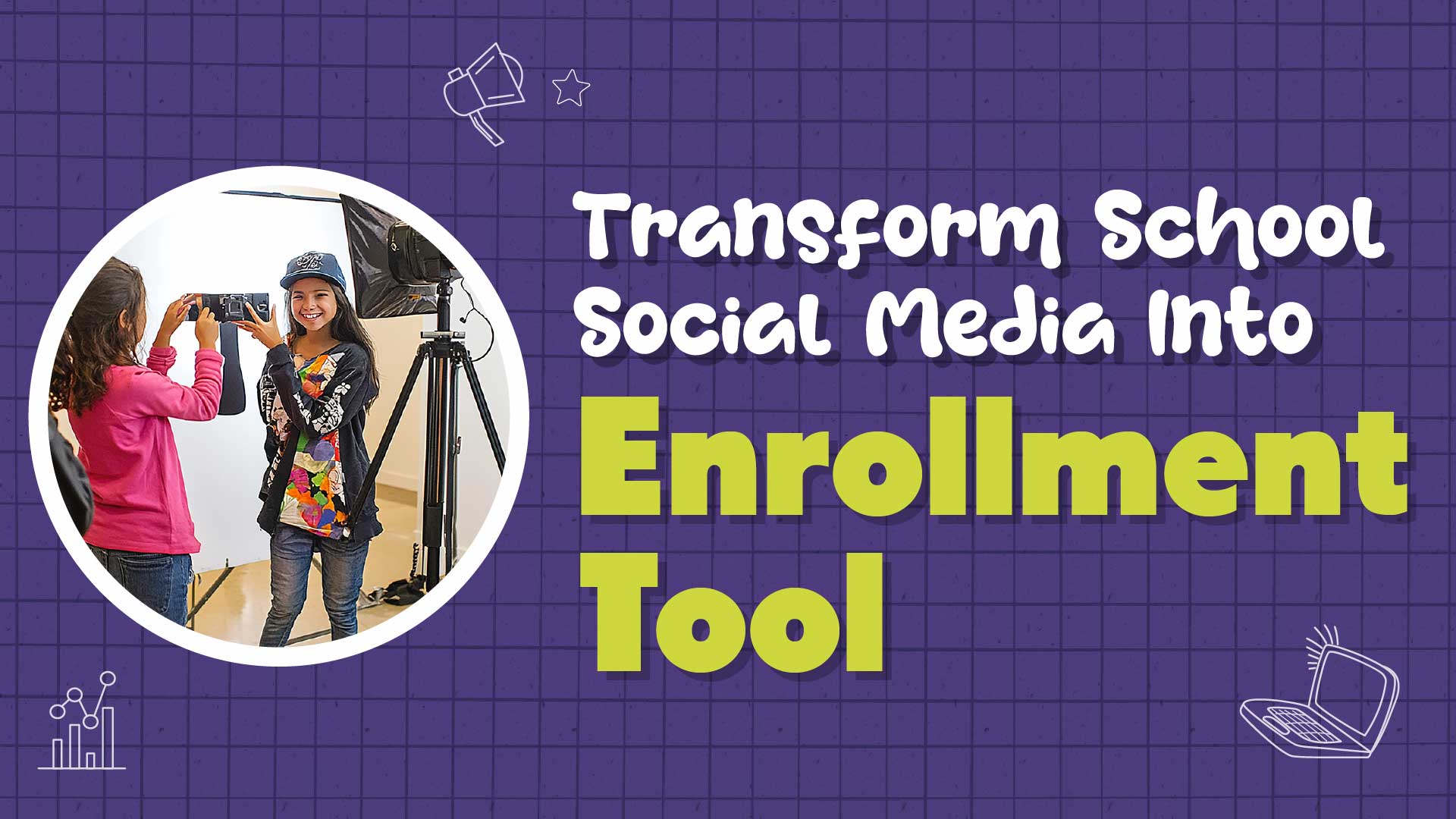
If your private school's social media strategy still revolves around posting occasional student achievement photos, you're missing families actively searching for schools like yours.
The education sector has become increasingly fragmented, with microschools, hybrid homeschools, and online academies redefining what schooling means. In this competitive environment, NAIS research confirms that the most common marketing challenge facing independent schools is "identifying three unique advantages that competitors would struggle to match and promoting awareness of the school among audiences"—making differentiation more critical than ever for school marketing leaders.
This creates a strategic shift from "presence" to "performance." Simply existing on social platforms is no longer sufficient. By 2026, schools must focus on quantifiable performance directly tied to institutional goals.
The data backs this up: Over half of independent schools report annual marketing budgets exceeding $70,000, with an additional 28% spending over $120,000. Such substantial investment creates an urgent and justifiable demand from leadership to see a clear return on investment.
This guide provides the comprehensive, evidence-based framework you need to architect a resilient strategy, connect with prospective families where they actually spend time, and prove the undeniable value of your social media efforts to school leadership.

Written By: Adam Bennett | December 03, 2025
Adam is the president and founder of Cube Creative Design and specializes in private school marketing. Since starting the business in 2005, he has created individual relationships with clients in Western North Carolina and across the United States. He places great value on the needs, expectations, and goals of the client.
It's peak pest season, and homeowners in your service area are frantically searching online for help with their pest problems. But your website isn't showing up in their search results. It's like having the best pest control equipment in town but forgetting to put your company name on the truck.
If you're running a pest control business, you know that timing is everything. When someone discovers bed bugs in their home or sees termite damage, they're not going to scroll through pages of search results – they're going to call one of the first companies they see. That's where proper SEO comes in.
SEO for pest control is different from other industries. You're not selling products nationwide or writing blog posts about the latest tech trends. You're providing critical services to specific geographic areas, often in time-sensitive situations. Your SEO strategy needs to reflect that.
This guide combines technical SEO (the nuts and bolts of how your website works) with semantic SEO (making sure your content matches what potential customers are actually searching for). Think of technical SEO as your foundation treatment – if you don't get it right, everything else you do is just treating the symptoms. And semantic SEO? That's your targeted treatment plan, ensuring you're reaching the right customers with the right solutions at the right time.
Whether you're dealing with seasonal surge searches for mosquito control or emergency calls for wasp nest removal, we'll show you how to make sure your website is properly optimized to capture that traffic and turn it into real customers. No fluff, no jargon – just practical, actionable advice that works as effectively as your best pest control methods.

Written By: Chad J. Treadway | December 01, 2025
Chad is a Partner and our Chief Smarketing Officer. He will help you survey your small business needs, educating you on your options before suggesting any solution. Chad is passionate about rural marketing in the United States and North Carolina. He also has several certifications through HubSpot to better assist you with your internet and inbound marketing.

The American Customer Satisfaction Index shows that U.S. customer satisfaction has remained stagnant at 76.9 out of 100 for two consecutive quarters in 2025 (Q2 and Q3), as the score declined for three consecutive quarters through Q2 2025.
Yet at the same time, Forrester's 2024 research found that customer-obsessed organizations report 51% better customer retention and 41% faster revenue growth compared to their competitors.
For home service businesses, this gap represents both a challenge and an opportunity. You might deliver exceptional plumbing repairs, pristine HVAC installations, or beautiful landscaping work, but if your customers can't easily find answers to their questions, struggle to reach you when they need help, or feel frustrated navigating your website, your technical excellence won't matter as much as it should.
Think of content marketing as the foundation under your customer service house. Without it, even the best service delivery sits on shaky ground. With it, you create an experience that turns one-time customers into loyal advocates who recommend you to their neighbors.
The good news? According to HubSpot's 2024 State of Customer Service, 89% of consumers are more likely to make another purchase after a positive customer service experience. Your content strategy directly shapes that experience, from the moment someone discovers you online to months after you've completed their service.
Let's explore three specific content marketing strategies that measurably improve customer satisfaction for home service businesses in 2025.
Written By: Chad J. Treadway | December 01, 2025
Chad is a Partner and our Chief Smarketing Officer. He will help you survey your small business needs, educating you on your options before suggesting any solution. Chad is passionate about rural marketing in the United States and North Carolina. He also has several certifications through HubSpot to better assist you with your internet and inbound marketing.
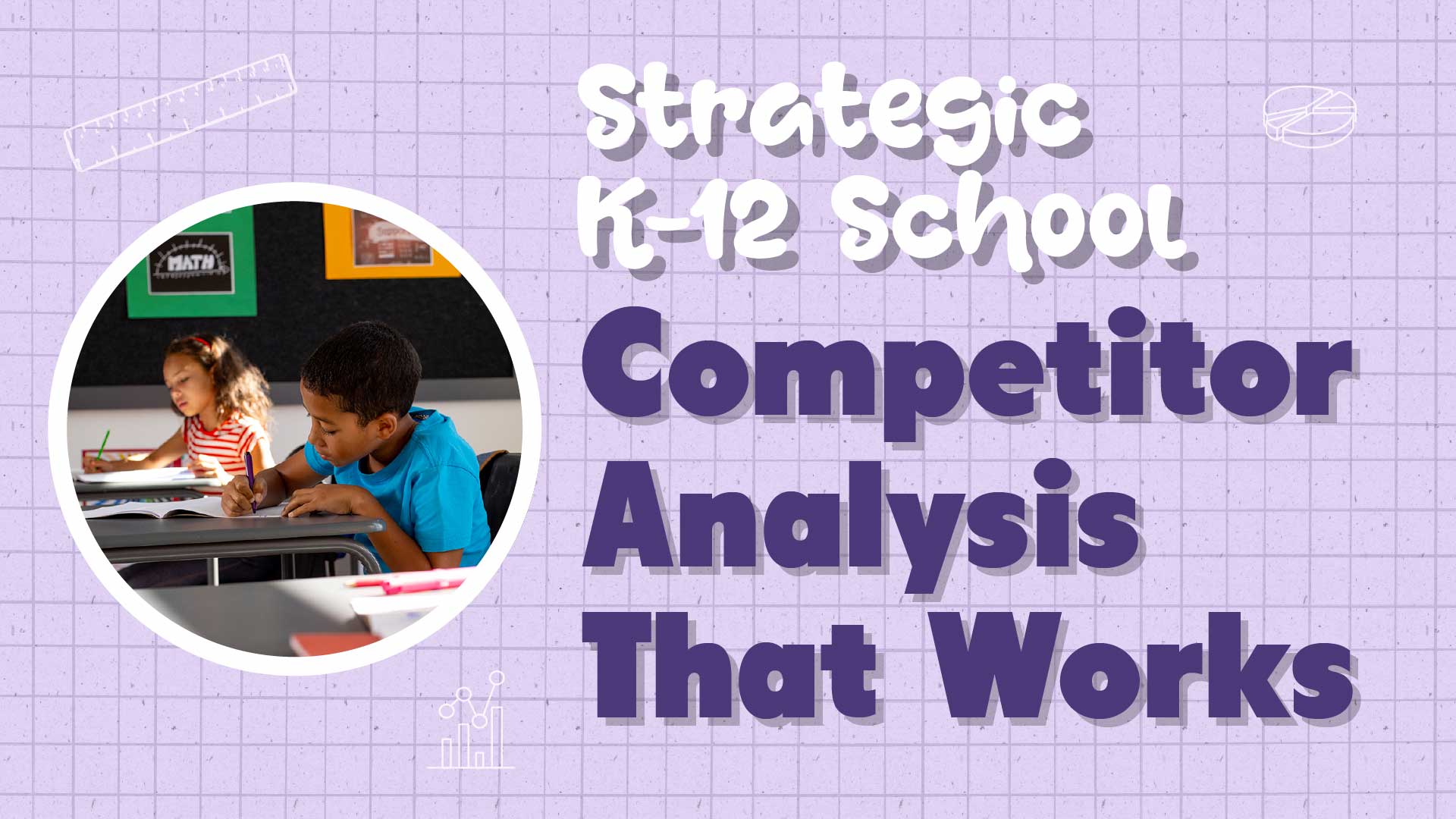
You know that school down the road? The one that somehow filled their kindergarten class three weeks before the deadline while you're still at 73% capacity? Yeah, that one.
They're not smarter than you. They probably don't have a bigger budget. And their Head of School definitely doesn't have a secret marketing degree you don't know about. But they are doing something right, and you need to figure out what that is before next enrollment season rolls around and you're explaining to the board why you missed targets again.
Here's the uncomfortable truth: In 2025's private school market, ignorance isn't bliss. It's a liability. K-12 Dive research found that among private schools reporting decreased enrollment, 47% attributed the dip to "competition." Not the economy. Not demographics. Competition. That competitor school you've been politely ignoring is actively eating your lunch.
This article gives you a systematic, completely legal framework for competitive intelligence. We're talking strategic market research, not corporate espionage. Think of it as the same thing Coca-Cola does with Pepsi, except with fewer lawyers and more parent tours. By the end, you'll know exactly what your competitors are doing, why it's working (or not), and most importantly, how to use that intelligence to carve out your own defensible position in an increasingly crowded market.
So let's talk about how to steal ideas legally. Because in a market this competitive, flying blind isn't noble. It's just negligent.
Written By: Adam Bennett | December 01, 2025
Adam is the president and founder of Cube Creative Design and specializes in private school marketing. Since starting the business in 2005, he has created individual relationships with clients in Western North Carolina and across the United States. He places great value on the needs, expectations, and goals of the client.