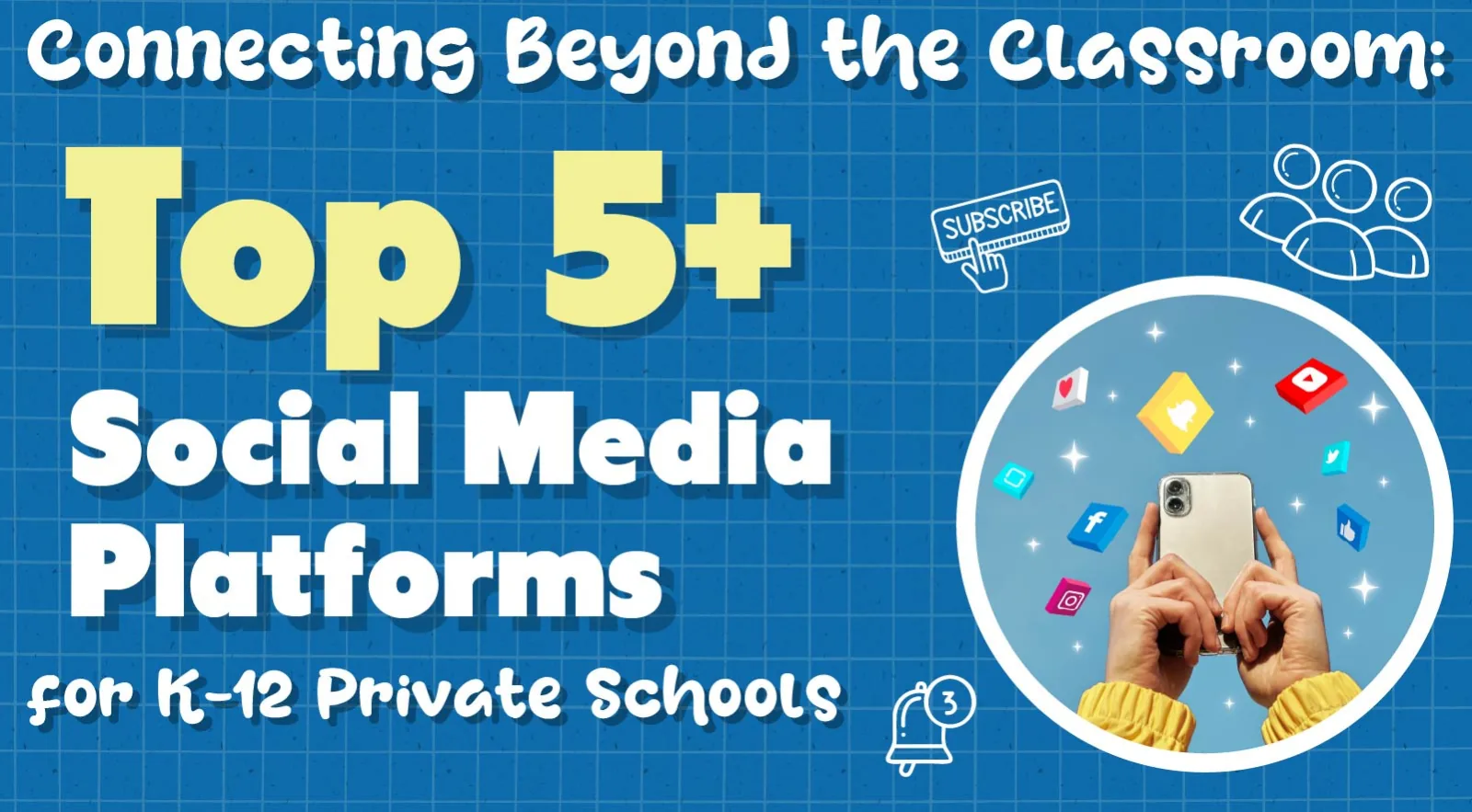
Social media platforms are now basic tools for K-12 private schools, since they're how you reach parents, students, alumni, and the wider community. Each platform has its own features and strengths: some help you talk to families, some show off school life, and some share useful resources. In this blog, we'll look at the benefits of these social media platforms and how K-12 private schools can use them well. We'll also cover how each one can help your school build a strong community, improve learning, and leave a lasting mark.
Connecting Beyond the Classroom: Top 5+ Social Media Platforms for K-12 Private Schools
1. Facebook
Facebook is a widely used social media platform with plenty of ways to engage. We recommend it for K-12 private schools because of its huge reach, and it also helps you build brand awareness, keep families informed, and get people talking.
Facebook's main strength is how easily it shares news. Your school can use its Facebook page to post updates on big events, announcements, and academic wins, and if you post useful, interesting content on a regular basis, parents and students stay informed and feel part of the school community.
Facebook also builds trust and openness through comments and groups. Parents and students can join discussions, ask questions, and share their thoughts, which gives your families a sense of community and an open line to the school. Schools like yours can set up Facebook groups for certain grade levels, after-school activities, or parent-teacher associations, and each group keeps the talk focused and makes it easy to work together.
Facebook's targeted ads are another big plus. K-12 private schools can use them to reach certain groups, like parents in the local area, and then promote school events, open houses, or enrollment campaigns to the people who matter most. Private schools can reach their ideal audience this way and enhance engagement and interaction.
Facebook also gives you free analytics tools like Facebook Insights. They show how each post performed and what your audience likes. Schools like yours can use that data to fine-tune your content plan and make smart choices that lift engagement and widen your reach.
Facebook lets you schedule posts ahead of time, too. That way you can plan your social media presence and keep a steady flow of content. A steady stream of posts keeps people engaged, and it keeps your school top of mind for parents and students.
To get the most out of Facebook, you'll need to learn how its features and algorithms work. K-12 private schools should stay active with their followers and answer comments and messages quickly. Give people a reason to join in, with thoughtful posts and questions that get them talking.
2. Instagram
Instagram is a social media platform built around visual content, and it's popular with teens as well as many of today's parents. It's a great place to engage students and show off school life through photos and videos.
Instagram's biggest strength is that it's visual. Since the platform is mostly about photos and videos, it's a natural fit for putting the K-12 private school experience on display and catching the eye of parents and students. You can use Instagram to share photos of campus events, student wins, class projects, and anything else that shows what makes your school different.
Hashtags are another key part of Instagram. When K-12 private schools push their own branded hashtags, more people get involved and more people notice. Branded hashtags make it easier for parents, students, and followers to find and engage with your school's content. K-12 private schools like yours can also run contests or challenges around a hashtag, which gets families posting their own content and pulls the whole community in.
Instagram's other features, like Stories, Highlights, and Reels, give private schools even more ways to reach their audience. Stories let you share short-lived content that disappears after 24 hours, which creates a sense of urgency, and it makes followers feel like insiders. Highlights let your school pick its best content and keep it up for longer. Reels let you share fun, engaging videos, from quick campus moments to event recaps, that land with your target audience.
Instagram can also help K-12 private schools come across as real and welcoming. When you share real testimonials from students, parents, and faculty, you build trust and show the good your programs do for students. Instagram gives K-12 private schools a place to tell their own story, show their values, and point out the caring community they offer parents and students.
Used the right way, with clear guidance, Instagram can help in the classroom as well. Teachers can set up private class accounts to connect with older students and parents, post student work, share project updates, and send homework reminders and how-to videos. Older students can use Instagram to find ideas and share their own work, and along the way they learn good digital citizenship by using it with care.
3. YouTube
K-12 private schools can use YouTube as a strong video platform to show off their activities and share learning content. It's also a great source of teaching videos for class activities, training, and extra help with coursework.
According to Demand Sage, YouTube has more than 2.58 billion monthly active users, based on DataReportal figures. That makes it one of the most widely used platforms there is, and a good way for your school to reach its target audience. It's very popular with children. In a 2020 Pew Research Center survey, 80% of parents with a child age 11 or younger said their child watches YouTube videos, and 53% said their child does so daily. When K-12 private schools set up a YouTube presence, they tap into a huge user base and meet parents and students on a platform they already know.
YouTube's biggest strength is its teaching value. K-12 private schools can make and gather videos that support their curriculum, add learning resources, and improve the school experience. Teachers can post how-to videos, virtual field trips, science experiments, or slide talks to back up class lessons. Students can then watch at their own pace, which helps the ideas stick and gives them a deeper grasp of the material.
YouTube also lets you show off student wins and highlight your school's activities. When you film and share shows, talks, and projects on YouTube, you can celebrate student success and build pride among your students, parents, and the wider community. Being seen and praised can push students further and tie them more closely to the school.
YouTube is visual, too, so K-12 private schools can share content in a way that's engaging and hands-on. Students often respond well to things they can see, and videos grab their attention and make learning more fun. You can create animated videos, learning vlogs, or group projects that get students involved and creative.
YouTube can also be a way to talk to parents. You can post helpful videos that answer common questions, share key updates, or give parents tips on how to support their child's education. Parents can watch whenever it suits them, which builds a stronger partnership between your school and your families.
4. Pinterest
Pinterest is a one-of-a-kind social media platform built on visual links. It gives parents useful ideas, such as at-home learning activities, study tips, and school project inspiration, and it's also a good place for teachers to find and share learning content.
Pinterest is all about visual content. Users find, save, and sort images and ideas on virtual pinboards. That visual focus makes Pinterest a great fit for your K-12 private school, since you can show off your activities, share learning resources, and engage parents and students with eye-catching content.
Pinterest's biggest strength is resource sharing. K-12 private schools can make boards for different subjects, class activities, learning materials, and after-school projects. When you gather and share high-quality resources, you help parents take part in their child's education and give students more chances to learn outside the classroom.
Pinterest also builds a sense of community among parents, students, and teachers. You can make shared boards where parents and students add ideas, tips, and suggestions for school events, projects, or study habits. This hands-on, everyone-pitches-in approach gets people engaged and strengthens the bond between your school and its community.
Pinterest also lets K-12 private schools show off who they are and what their culture is like. You can make boards that reflect your values, traditions, and achievements. That builds pride and belonging among parents, students, and faculty, and it can also draw in families who want a school with certain traits or a certain approach to learning.
Pinterest content also stays visible and easy to find for a long time. On other social media platforms, a post has a short shelf life, but on Pinterest users can save, share, and find pins for much longer. That means the content K-12 private schools post on Pinterest can keep reaching parents and students long after it first goes up.
5. LinkedIn
LinkedIn is a useful social media platform for professional connections, alumni engagement, and growth chances for teachers. It lets schools connect with peers and widen their professional networks.
LinkedIn is best known as a social media platform for professional networking and career building. It may not be the first platform you'd think of for reaching parents and students, but LinkedIn offers some real perks for K-12 private schools.
One of LinkedIn's best features is how it builds ties within the school community. You can set up a “company page” on LinkedIn to share your mission, values, and achievements. That gives you a way to engage parents, alumni, and students 16 and older (LinkedIn's minimum age) with news, success stories, and updates from school leaders. Connecting with parents and alumni on a professional platform like LinkedIn can strengthen your bonds and build a sense of community beyond the classroom.
LinkedIn also gives K-12 private schools a great way to network with their alumni. Alumni engagement is key to a strong school community and a lifelong bond with former students. Your school can use LinkedIn to start alumni groups, share job openings, and celebrate alumni wins. That keeps a strong network of graduates close, and those graduates can give back through mentoring, volunteering, or even the future enrollment of their own kids.
LinkedIn also gives K-12 private schools a place to promote their brand and attract new faculty. You can feature your best programs, point out faculty wins, and post job openings. That helps you draw in talented teachers who share the school's values and add to its academic strength.
Bonus: X (Formerly Twitter)
X, the platform formerly called Twitter, lets K-12 private schools share news, updates, and events quickly and well. It's a handy tool for connecting with parents, students, and the wider community, and it also gives teachers chances to grow as professionals. Short posts work well for real-time news, like weather closings, game scores, and event reminders, so families get the update the moment it happens.
Final Thoughts
Facebook has broad reach, Instagram has visual appeal, X has quick updates, YouTube has video, and Pinterest has resource sharing. Between them, K-12 private schools have plenty of chances to connect, share, and inspire. LinkedIn adds a professional network where your school can build ties, engage alumni, and attract top talent.
Simply put, these social media platforms give you endless ways to improve your private school's marketing and build a strong community among students, parents, and fellow teachers. Don't miss your chance to make a lasting impact. Contact us now to learn how to integrate social media into your school's digital marketing plans and choose the right platforms for your private school's success.