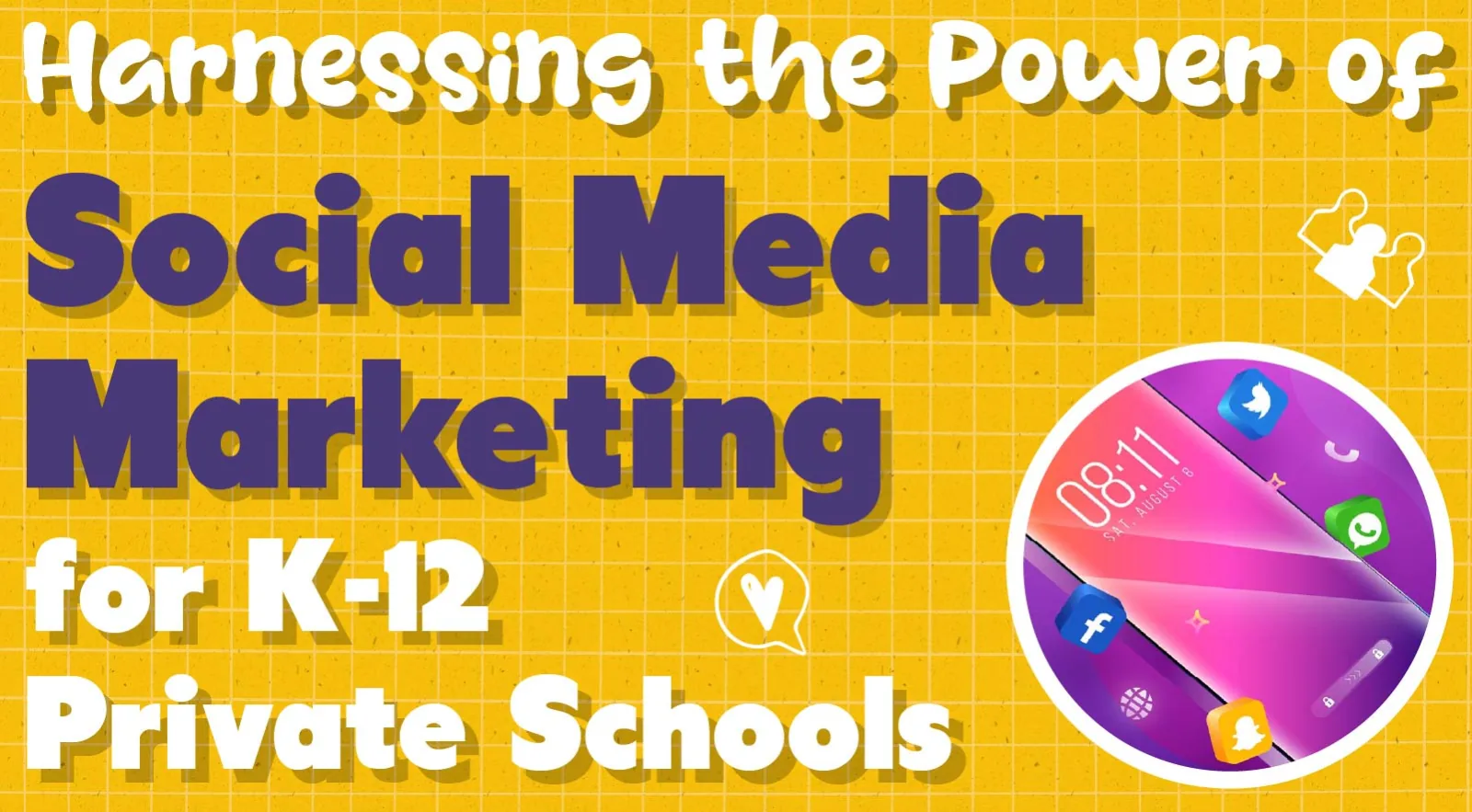
Social media is now one of the best tools a K-12 private school has for building awareness and getting the word out. On social platforms, you can show off your programs, campus life, and academic offerings to prospective students and their families.
A strong social media presence shapes your school's brand and builds awareness. Over time, that leads to enrollment growth and more revenue. It's time to put social media marketing to work. Use it to engage your target audience, build a sense of community, set your school apart from competitors, and gather useful feedback.
Now let's look at how to get the most out of social media marketing for K-12 private schools.
The Importance of Social Media Marketing for Private Schools
K-12 private schools need social media marketing to raise awareness and promote what makes them unique. With social media platforms, K-12 private schools like yours can show off your programs, campus life, and academic offerings to prospective students and their families. Social media marketing helps shape the school's brand, build awareness, and drive attendance. In the end, that leads to enrollment growth and more revenue.
Social media marketing also lets private schools engage with their target audience and build a sense of community. A private school page or group gives you a place to talk with current and prospective students, parents, alumni, and staff. Social media platforms like LinkedIn let you set up alumni networks. Those networks can add to the school's reputation and help create a positive school environment.
Social media marketing also helps private schools set themselves apart from their competitors. Schools can stand out in a crowded market with creative, tailored content that reflects the school's brand and what it offers. They can highlight their curriculum, extracurricular activities, post-secondary success, and the other factors parents weigh when they choose a private school for their children.
On top of that, social media marketing lets private schools hold two-way conversations and gather feedback from their audience. When schools engage with the community, create interactive posts, and review their data often, they can adjust their marketing strategies and keep getting better. This helps schools learn what their target audience needs and wants, then shape their offerings to fit.
Social Media Users Increase Every Day
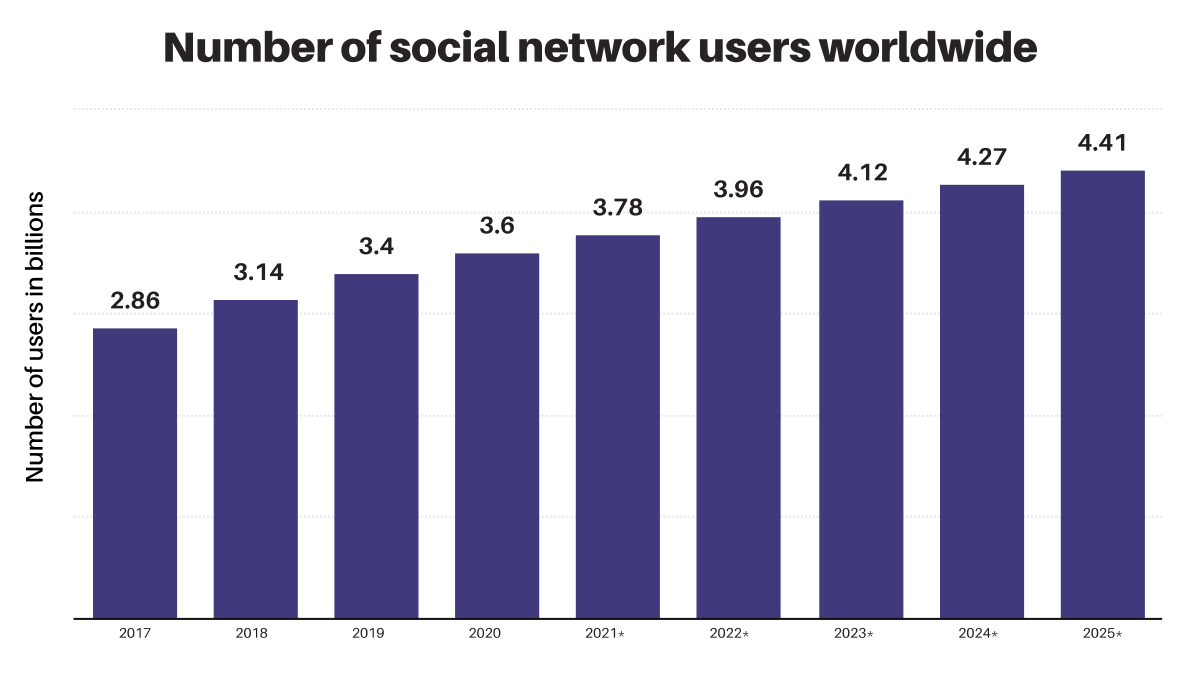
At the start of 2025, there were 5.24 billion social media user identities worldwide. (Source: DataReportal) Statista projects that number will keep rising through 2030. (Source: Statista) The more people use these platforms, the more prospective students and families you'll find there. But you'll need a solid social media marketing strategy to reach your audience well.
Social Media Users Are Spending Hours on the Platforms
Social media is now a big part of many people's lives. People use it to talk, to have fun, and to share news and ideas. It lets them keep up with friends and family, follow news and events, find new interests, and engage with all kinds of content. How much time people spend on social media platforms depends on things like age, location, and personal taste. Still, the typical internet user spends 2 hours and 21 minutes a day on social media, according to GWI data in DataReportal's Digital 2025 report. (Source: DataReportal)
Users Will Search Social Media for Private Schools and Programs
Social Browsers are Engaged with Brands
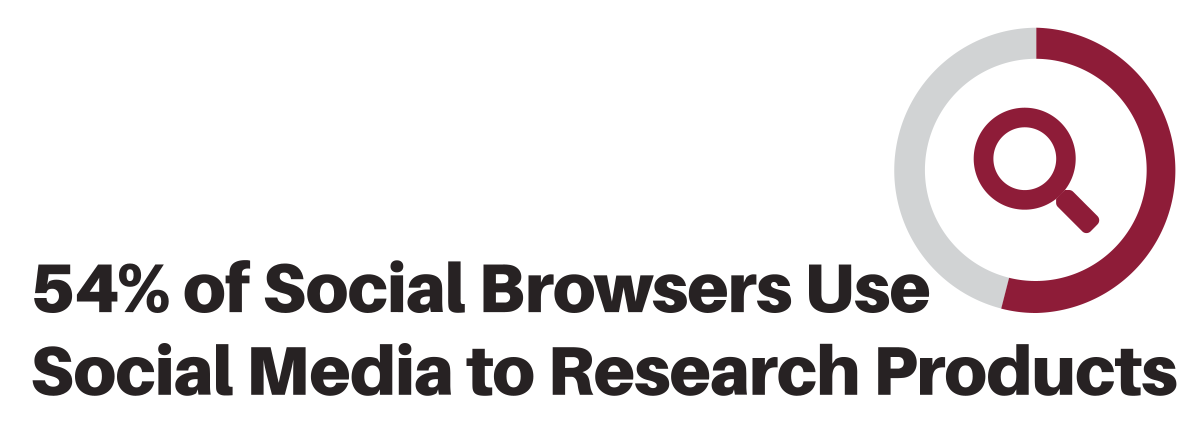
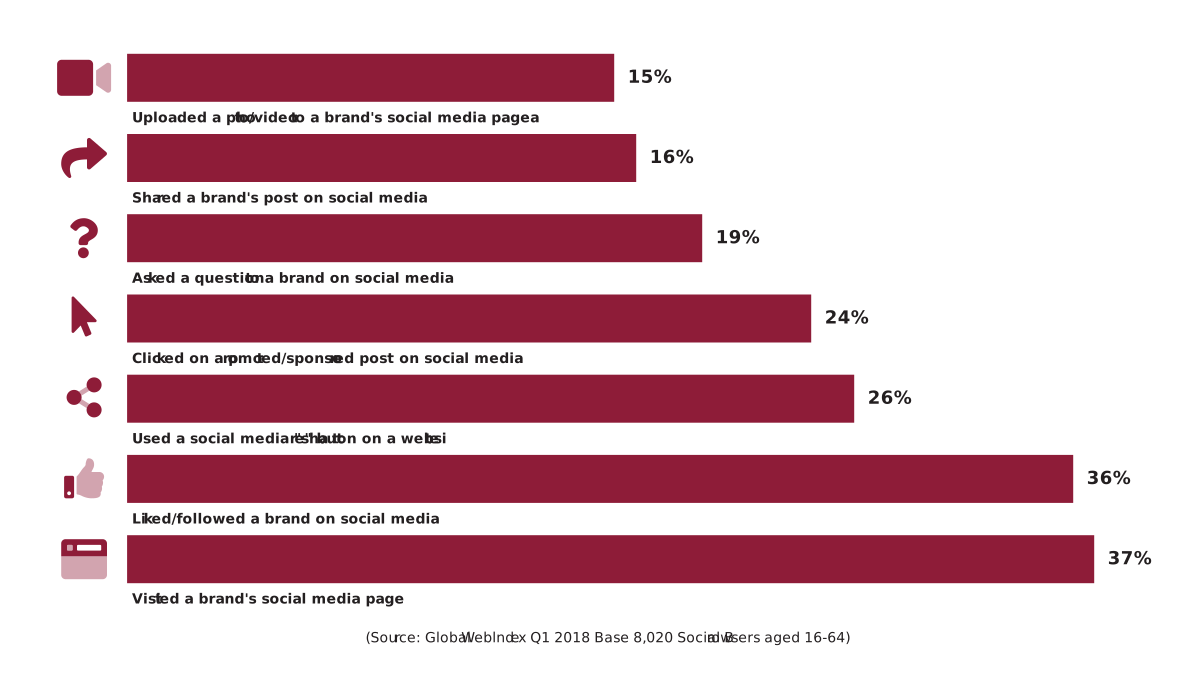
In early 2018, GlobalWebIndex surveyed 8,020 "Social Browsers," internet users aged 16-64 who scroll social media without posting. It found that 54% of them use social media to research products. In the past month, 37% had visited a brand's social media page and 36% had liked or followed a brand.
With numbers like that, a private school can put social media to work to raise awareness among students and their parents. People tend to follow schools that share their values. Schools that stay active and engage with their users will gain more traction.
What Are the Main Benefits of Each Social Media Platform?
Did you know there are hundreds of social media channels on the internet, with more coming out each day? Still, five stand out for their popularity and their number of active users.
Currently, the top ones private schools should consider are:
- The largest age group on Facebook is 25-34 years old. (Source: Sprout Social)
- Facebook has a large user base, with 3.07 billion monthly active users. (Source: Statista)
- Extensive reach and ability to promote brand awareness, facilitate communication, and encourage interaction
- Efficient for sharing information and providing updates on important events, announcements, and academic achievements
- Encourages trust and transparency through comment sections and groups, fostering a sense of community and open communication
- Targeted advertising capability to reach specific demographics and enhance engagement
- Offers analytics tools and scheduling options for optimizing content strategy and maintaining a consistent presence
- Instagram reaches 86% of Gen Z social media users, second only to YouTube, and its users interact with short-form video like Reels more than any other post type. (Source: Sprout Social)
- Largest age group: 25-34 (33.9%) (Source: Statista)
- It’s a strong visual platform for engaging students and highlighting school activities through photos and videos
- Use branded hashtags for increased community involvement and awareness
- Diverse features like Stories, Highlights, and Reels for creating engaging and entertaining content
- Establish authenticity and a sense of belonging by sharing real testimonials from students, parents, and faculty
- Educational benefits within the classroom, allowing teachers to engage with students, showcase work, and provide additional resources
YouTube
- YouTube has 2.58 billion monthly active users and is a social network and a streaming service. (Source: Sprout Social)
- YouTube appeals to a wide range of age groups. Its largest age group is 25-34, at 21.3% of users. (Source: Sprout Social)
- Users primarily visit YouTube for entertainment purposes, such as watching videos, rather than specifically engaging with brands.
- Powerful video platform for highlighting activities and sharing educational content
- Educational potential by creating and curating videos that complement the curriculum and enhance the learning experience
- Showcase student achievements and highlight school activities to foster pride and connection
- Visual and interactive nature to deliver content engagingly and interactively
- Communication tool for parents, providing informative videos and updates conveniently
- Pinterest has a predominantly female user base. (Source: Sprout Social)
- It’s a visual platform for highlighting activities, sharing educational resources, and engaging with parents and students
- It’s also a resource-sharing platform for supporting parents’ involvement and providing additional learning opportunities
- Foster a sense of community through collaborative boards and interactive participation
- Showcase unique identity and culture, attracting prospective families seeking specific characteristics
- Potential for long-term visibility and discoverability of content
- LinkedIn’s largest age group: 25-34 (33.4%) (Source: Statista)
- Supports professional connections, alumni engagement, and accessing professional development opportunities for educators
- Foster connections within the school community and engage parents, students, and alumni
- Networking opportunities for alumni engagement and lifelong connection
- Promote the school's brand and attract potential faculty members
- Expand professional networks and access career opportunities for educators
Benefits of Social Media for Brand Building at Private Schools
Humanize Your Private School
One of the most important benefits of social media for private schools is the chance to make real human connections. Introduce your followers to the people who make up your school community. Show them how current students gain from what you teach. Being genuine builds trust, which shapes how people see you and draws new students and their families. Social media is a great place to show your school's values, put the well-being of your students and parents first, and show how your academic programs work in real life.
Establish Your Private School as a Thought Leader
According to the 2021 Edelman Trust Barometer, business was the most trusted of the four institutions studied that year, ahead of government, non-governmental organizations, and the media, with a 61 percent trust level globally. People turn to companies for insights and information, and there's no better place to deliver it than on social media.
Keep Your Private School Top of Mind
Seven out of ten Facebook users say they visit the site daily, according to a 2021 study by the Pew Research Center. The same study found that 49% of Facebook users visit the site several times a day. Each time a student or parent logs into social media, you have a chance to connect with them. Keep your social media posts engaging, educational, and relevant to your school community. Do that, and you'll stay top of mind. Your school will be the first choice when students and their families are ready to make school decisions.

Benefits of Social Media for Private School Enrollment and Growth
Increase Website Traffic
Social posts and sponsored posts both work well for sending visitors to your school's website. Posting fresh content, like educational blog posts, is a great way to draw readers the moment you publish. Joining social media conversations can also raise your school's profile, catch new users' attention, show off your expertise, and drive traffic to your website. Give real value while you promote what your school offers. You can also use UTM tracking tags to track the engagement and ROI of your social posts. Hootsuite has a great post about them that you can find here.
Generate Leads
Social media gives potential students and their families an easy, low-pressure way to show interest in your private school and its programs. Lead generation is a big benefit of social media for schools. Many social networks offer ad formats built just to collect leads. Use social media well, and you can attract prospective students and their parents, build real connections, and guide them toward enrollment.
Raise Enrollment
As more people use social media and social sales tools expand, social networks will matter more and more for finding school programs and the right school. Tying your social marketing to your enrollment goals is a must. Social media platforms let you show off your school's unique programs, facilities, and achievements, which draws the eye of prospective students and their families.
Benefits of Using Social Media for Content Creation and Distribution
Promote Content
Sharing your blogs, articles, and other educational content on social media is a great way to put useful information in front of new people. Well-researched, relevant posts let you show your expertise, make your school a trusted educational resource, and expand your following. A solid content marketing strategy and smart social media promotion can drive engagement and build a loyal online community.
Source Content
Social media offers two primary methods for private schools to acquire content:
- Source Ideas: Engage with your followers and ask them what educational topics they want to learn more about. Conduct surveys, polls, and discussions to gather valuable insights and create content that resonates with your audience's interests and needs.
- User-Generated Content (UGC): Encourage your students and their families to share their experiences, achievements, and positive moments related to your school. Use hashtags and contests to collect user-generated content, which can be shared on your social media platforms. UGC increases brand awareness and fosters a sense of community among your school's stakeholders.
Benefits of Social Media for Private School Communication
Reputation Management
Your students and their parents are already talking about your school on social media, whether you're there or not. When you watch social posts about your school, you can quickly highlight praise and respond to any concerns or negative comments. Managing your school's reputation on social media ahead of time helps keep a positive image, build trust, and handle issues before they get worse.
Student and Parent Engagement
Social media platforms let you talk directly with your students and their parents, and they let them interact with your school. Unlike traditional channels, social media allows two-way conversation, which drives engagement and builds stronger relationships. Stay active on social media, answer comments and questions, and share useful information. Do that, and you can improve the whole student and parent experience.
Customer Service and Support
Students and their families expect schools to be on social media, and they often turn to social accounts for customer support. About three-quarters of consumers expect a brand to reply on social media within 24 hours or sooner, according to the 2025 Sprout Social Index. (Source: Sprout Social) Social media platforms give students and parents a quick, easy way to get help, ask questions, and get a fast answer. You can answer questions quickly and give helpful guidance, which lifts how happy your school's community is with its whole experience.
Benefits of Social Media for Gaining Insights
Learn More About Your Students
Social media gives you a lot of real-time data about your students. When you study social media insights and demographic data, you learn a lot about your student body's preferences, interests, and behaviors. That lets you shape your academic programs, services, and communication strategies to better meet your students' needs.
Gauge Sentiment Around Your Private School
Watching social media conversations about your school shows you how people see your brand. Knowing the good and bad things people feel about your school helps you spot areas to improve, address concerns, and show off the best parts of your programs. When you stay on top of social media sentiment, you can manage your school's reputation and make sure your message matches what your students and their families expect and experience.
Keep an Eye on the Competition
Watching your competitors on social media gives you a clear look at their strategies, offerings, and brand image. When you track their activity and engagement, you can find ways to stand apart, keep up with industry news, and compare your school's results with theirs. With that knowledge, you can make smart choices and stay competitive in the education market.
Stay on Top of Industry News
Social media is a handy, real-time source of industry news and trends. Listen to social media conversations and follow the right education thought leaders and groups, and you'll stay current on changes that may affect your school. That lets you adapt your academic programs, curriculum, and teaching methods so you stay at the front of new ideas in schools.
Benefits of Social Media for Proving ROI: Reporting and Analytics
Proving return on investment (ROI) is hard for a lot of marketers. But social media tracking and analytics tools show you the impact of your social media work. Track key metrics like followers, engagement, website traffic, and conversions. Then you can measure how well your social media efforts work and make data-driven choices. With UTM tracking tags and other analytics features, you can tie conversions back to social media and see the value it brings to your private school.
Social Media Is for Building Relationships, Not Just for Promotion
Treat social media as a place to build relationships and engagement with students and their families. Don't just post promotions. Aim to make real connections and give your audience value. Answer their questions, address their concerns, and show what makes your private school unique. When you engage with your followers often and keep a positive online presence, you build brand loyalty and credibility. You also make your school the top choice for quality education.
In Conclusion
As a private school administrator, you're always looking for ways to raise your school's profile and attract students and their families. Social media is a powerful tool. It lets you engage with your target audience, expand your reach, promote your programs, and build your school's unique voice. Put its benefits to work, and you can make your school's value clear, nurture relationships, and drive enrollment. If you're looking for expert help with social media marketing for your K-12 private school, feel free to contact us. We at Cube Creative Design specialize in helping private schools succeed with social media.