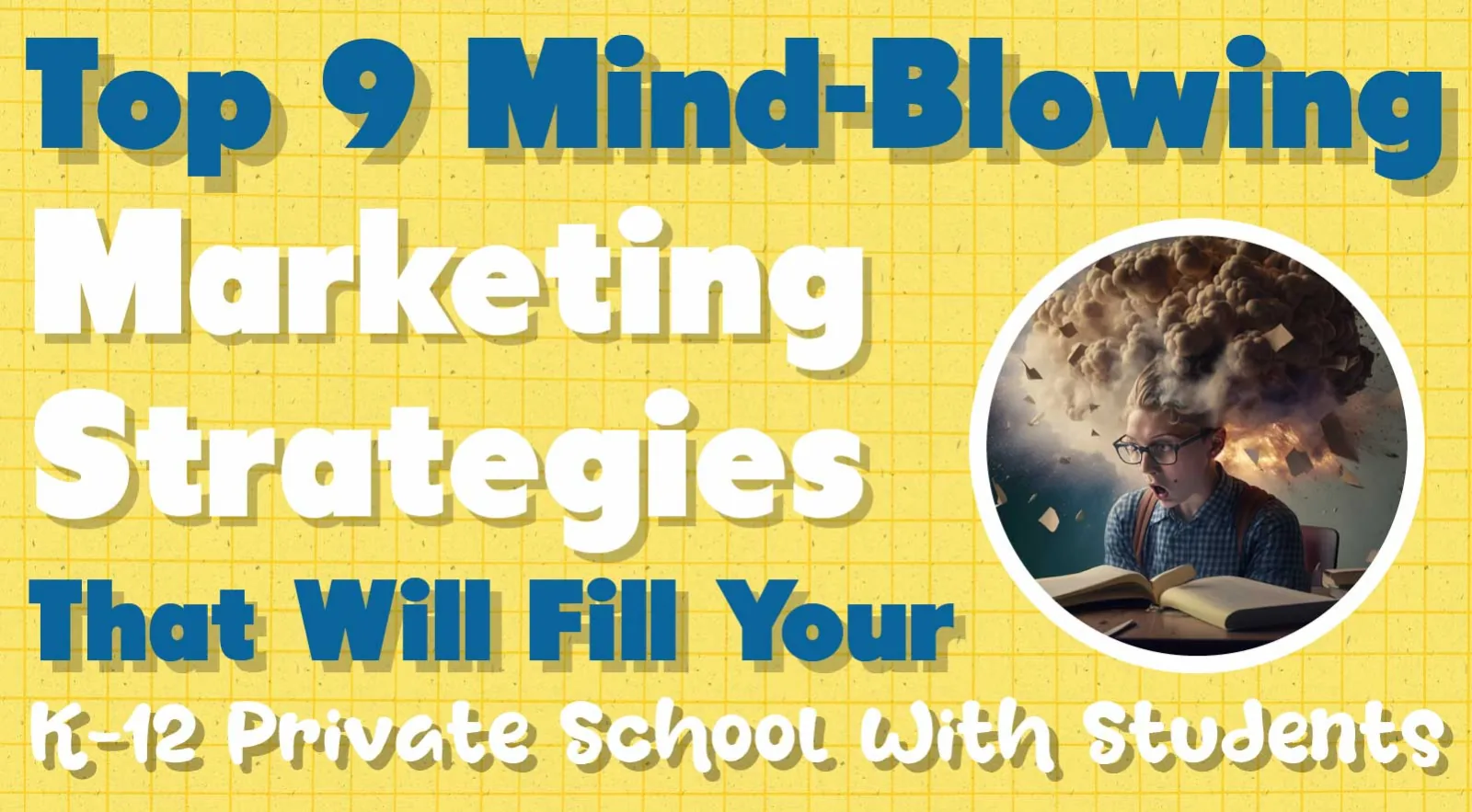
Want more students and higher enrollment at your K-12 private school? Then careful planning and thorough research aren't optional. Digital marketing gives private schools more ways to reach new families and keep current ones. When you understand what parents and students need and worry about, you can build marketing strategies that speak to those points. That's how you reach the right students and their families.
Here are the top nine private school marketing strategies to increase student enrollment in K-12 private schools.
The Top 9 Marketing Strategies That Will Fill Your K-12 Private School With Students
Marketing Strategy #1: Planning and Research
A key part of private school digital marketing is planning and research. Start by mapping the enrollment journey. Know exactly how prospective parents and students move through your enrollment process. Spot each step, and answer the needs and questions that come up along the way. Do that, and you'll build a smooth path that lifts enrollment.
Lead qualification is the other big piece of planning and research for enrollment. Set up ways to judge the fit of each lead before you spend real time and money on it. That way your effort goes to families who truly care about your school and are the most likely to enroll.
When you plan your digital marketing strategies, top-of-the-funnel work matters a lot. Private schools should focus on getting known and sparking interest among prospective parents and students. You can do that through channels like search engine optimization (SEO) and social media platforms like Facebook, Instagram, and LinkedIn. A helpful website that's easy to use does its part too.
Plan your middle-of-the-funnel strategies, too. This is where you nurture leads and guide them through the enrollment process. Give families useful content at this stage to build trust and keep them coming back. Helpful blog posts, case studies, testimonials, and virtual tours can show what makes your school different and why it's worth it.
While you're planning, tune your enrollment steps to turn interested families into enrolled students. That means simpler paperwork, clear enrollment details that are easy to find, and one-on-one help for parents and students. Make the process as smooth and quick as you can, and schools like yours will convert more families.
Good planning and research also show you how to raise enrollment through advocates. Happy current parents can be your best brand fans. Ask them to share their stories through testimonials, social media, and referrals. This social proof helps build credibility and trust among prospective parents, which raises the odds of enrollment.
Marketing Strategy #2: A Stronger Digital Presence
Optimizing the website content and making good use of online platforms are key to a stronger presence online and more student enrollments. Done right, it helps schools like yours connect with prospective families and gives them a smooth visit to your website.
Search engine optimization (SEO) is a big one. It helps your school show up higher on the search engine results pages (SERPs). Good SEO comes down to a clear site structure, proper tags, and the right keywords. Do those well and you can outrank rival schools and pull free search traffic to your site. Your private school website should also load fast and be mobile-friendly, or responsive, so every visitor has a good time on any device.
A strong presence on social media is the next piece. Private schools can use social media marketing to back up their brand, promote events, and build a sense of belonging. Good content, such as blogs and videos, helps more parents and students see your brand. Paid ads on social media let you tailor your message and aim it at just the people you want.
To improve your campaigns, track and study your website traffic and how people use the site. Tools like Google Analytics and Google Tag Manager show you what users do, so schools can fine-tune their plans based on data. Keep checking how your digital marketing performs, because that's how you spot weak spots and make the changes that increase enrollment.
Paid ads can back up your unpaid efforts by letting private schools reach a chosen audience with a clear message. Online ads raise your visibility and bring in leads. Still, you need to fit the plan to your school's goals and point out what sets it apart. Otherwise you're just one more school in a crowded market.
Marketing Strategy #3: Inbound Marketing
You should also consider inbound marketing techniques to attract prospective parents and increase student enrollment at your K-12 private school. This approach means making useful content that speaks to their needs. Once you know what prospective parents and students want, and what bugs them, you can write content that hits home and shows your school's value.
Use the enrollment journey you mapped in strategy #1 to guide your inbound content. Match each blog post, guide, or email to the questions families have at that stage, and your school builds trust and nurtures relationships with future students.
Marketing Strategy #4: Word of Mouth and Ambassadors
Happy parents who act as ambassadors and share their stories are a strong marketing tool to increase student enrollment in K-12 private schools. Word of mouth and personal advice carry real weight, and they can shape how prospective families see a school.
As a private school administrator, you can give parents good reasons to refer new students. Referral programs or incentives can reward parents who successfully refer a new student to the school. A reward shows you're grateful, and it nudges parents to talk up the school to their friends, family, and coworkers.
Private schools need a culture that gets people talking. You get there with a great education, open and honest contact with parents, and a warm, close-knit school for students and parents. When parents see the good the school does for their kids' learning and well-being, they're more likely to tell others.
Schools can also develop ambassadors. These include current parents, alumni, and well-known local leaders who care about the school and its mission. Build ties with these people and give them chances to meet prospective families, and your school can tap your ambassadors' networks to reach more people and build your name.
Social media gives ambassadors an easy way to share their stories and advice with lots of people. Schools can ask them to write testimonials, join online chats, and share school posts on their own social accounts. Email newsletters can also keep ambassadors up to date on school news and events, so they can pass the right details along to their friends.
Marketing Strategy #5: Digital Marketing Campaigns
Your campaigns need free, organic content that shows what makes your K-12 private school unique. That can include helpful SEO, blog posts, fun videos, and eye-catching social posts. Keep putting out useful content, and your school can become a known expert in the field and build trust with prospective families.
Online ads, such as pay-per-click (PPC) ads, are a strong tool for reaching the right people. You can use Google Ads and social media ads to reach the groups and people who want a K-12 private education. Smart ad placement and strong ad copy can grab the attention of prospective families and bring in leads.
Beyond organic content and ads, think about email marketing campaigns. Build an email list of families who've shown interest and send them useful, personal emails on a set schedule. You'll build trust, share updates, and point out the perks of your programs. K-12 private school email marketing keeps your school top of mind for prospective families and nudges them to take the next step in the enrollment process.
Marketing Strategy #6: Strong Leadership and Branding
Strong leadership and branding are key to the success of marketing strategies aimed at increasing student enrollment in K-12 private schools. A school's leaders set the tone and vision, and they build trust among parents, students, and the community. A strong leader with vision can share the school's values, mission, and what sets it apart, and that builds a brand people remember.
On branding, private schools should keep every piece of marketing and every touchpoint on brand. A brand that hangs together leaves a lasting mark and earns trust from prospective families. That brand includes a well-designed logo, a mascot, the same look everywhere, and a clear tone of voice. Schools can stress their core values, teaching philosophy, and academic excellence to stand apart in a crowded market.
Schools should also promote their strong leadership as a selling point. Point out your leaders' training, background, and wins, because that gives parents faith that your school offers a positive, enriching place for their kids. Show your leaders' commitment to academic excellence, innovation, and community engagement, and your private school stands out as a place with a clear vision and a strong base for student success.
Marketing Strategy #7: Community Engagement
Community engagement is a key part of marketing strategies for K-12 private schools that want to increase student enrollment. One smart approach is to partner with local groups and businesses. Work with rec centers, youth clubs, sports teams, and arts groups, and you'll show that you care about a well-rounded education. Joint events, workshops, or charity drives let schools prove they share community values, and they give prospective families a firsthand look at the school's warm, upbeat feel.
Outreach, volunteering, and service projects are other ways to get involved. Events that help the local community show that your school takes social responsibility seriously, and they teach your students empathy and civic duty. These efforts build local ties and put the school's mission into action.
Online platforms are a good way to reach the community, too. Active social media accounts let schools share stories, wins, and upcoming events, which builds a sense of community and shows off the busy, happy life inside the school. You can also share your school's work in town.
Talking with people on social media also helps. Reply to comments and invite people into online discussions, and you'll build an inclusive and welcoming online community.
Marketing Strategy #8: Maintaining Communication
Steady contact with prospective families is a key part of marketing strategies for K-12 private schools that want to increase student enrollment. With good ways to stay in touch, schools can keep families engaged, answer their questions, and give them what they need to make a smart choice.
Start with a helpful website that's easy to use, and update it often with fresh content, such as school news, event details, and admissions facts. That keeps prospective families up to date on what your school offers.
Social media platforms like Facebook, Instagram, and X (formerly Twitter) let you share good content, show off the school's wins, and talk with your town. Steady updates, photos, and videos build a bond and keep current and future families tuned in.
Email marketing campaigns are another smart strategy. You can capture leads and nurture them through personal email workflows. Share useful facts, answer questions, and point out what's unique about your programs, and you'll keep prospective families in the loop. Email newsletters can also be a standard tool to keep families posted on events, key deadlines, and school news.
Beyond screens, private schools should make face-to-face contact a priority. Phone calls, one-to-one emails, and in-person meetings with families add a human touch and answer each family's concerns. Virtual or in-person open houses and info sessions also build direct ties and let families learn more about the school's values and programs.
Strong parent-teacher communication matters, too. Clear channels, such as parent-teacher meetings, newsletters, and online portals, keep families up to date on their child's progress and let parents take an active part in their child's education. Strong ties with current families can also spark good word of mouth and support, which further helps the school's enrollment efforts.
Marketing Strategy #9: Retention Strategies
Student retention belongs at the center of K-12 private school marketing strategies if you want to keep and increase student enrollment. Good retention strategies help schools build a strong sense of belonging, create a tight-knit school, and reach their admissions and enrollment goals.
One key strategy is to show testimonials from current families. When you share the stories and feedback of current students and their parents, you give social proof and back up the value of what you teach. Put testimonials on the school's website, social media, and other marketing pieces. They point out the school's strengths and build trust with prospective families.
Community events are another smart retention strategy. Family picnics, talent shows, or culture nights give students, families, and staff a chance to connect and build bonds. These events add to a sense of belonging and build a warm, open school culture.
Satisfaction surveys are a great way to get feedback from students and families. Ask for input often on parts of school life, such as academics, extracurricular activities, and overall satisfaction. Then you can spot what needs work and make the needed changes. When you deal with concerns and act on feedback, you show you're always trying to get better, and the student experience improves as a result.
Final Takeaways
To increase student enrollment at your K-12 private school, you need careful planning, thorough research, and smart execution. Put these top nine marketing strategies to work, and you can attract prospective families and build a thriving educational community.
If you're looking for help putting these marketing strategies to work and reaching enrollment success for your K-12 private school, we're here to help. Contact us today to see how we can help with a personalized marketing plan. We'll support you as you develop and carry out effective marketing strategies built for your unique needs. Together, we can create a thriving educational community and attract the next generation of students to your school.