It's Monday morning, and you're staring at your enrollment numbers for next year. They're not quite where you want them to be. Sound familiar? As an admissions director or head of school, you're not just an educator. You're also a marketer, whether you signed up for that job or not.
Let's face it: private school enrollment marketing isn't getting any easier. Competition is up, parents want more, and the web keeps changing fast. The old "if you build it, they will come" approach just doesn't cut it anymore. But here's the good news: you don't need a Fortune 500 marketing budget to make a real dent.
In this guide, we'll walk through how to raise your private school enrollment, whether you're working with a small budget or a large one. We'll skip the fluff and stick to what works, backed by practical examples and a clear plan.
Who This Guide Is For:
- Admissions Directors seeking fresh, actionable marketing strategies
- Heads of School looking to improve their enrollment funnel
- Marketing Staff wanting to stay ahead of the curve
- Board Members interested in understanding modern enrollment marketing
School Marketing Budget Guide: Small to Large Institutions
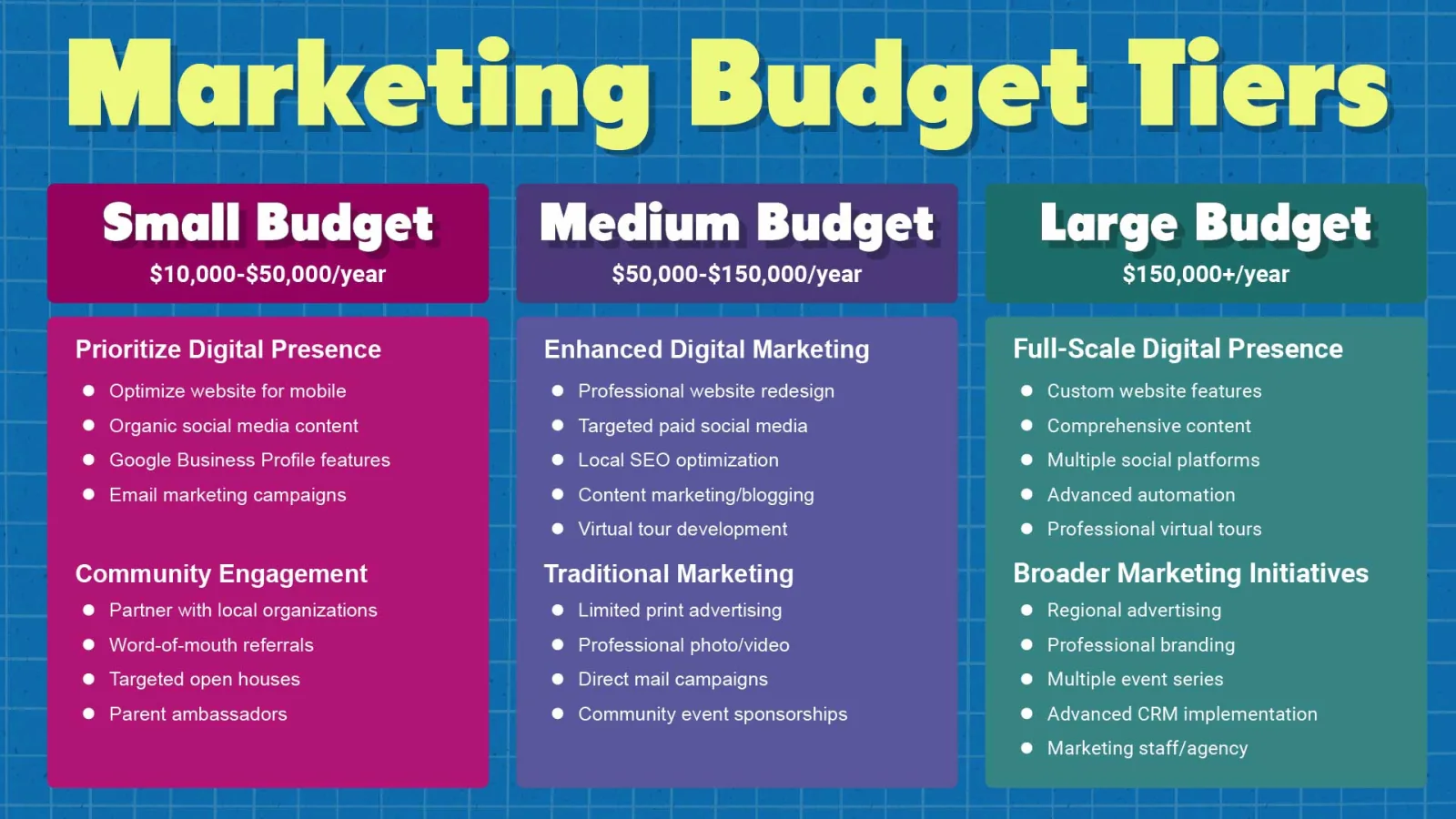
Let's talk money. Let's be honest, your marketing plan rests in large part on what you can afford. But here's the twist: often it's not how much you spend that counts, but how well you spend it.
Small Budget ($10,000-$50,000/year)
When every dollar counts, focus is your best friend. With a smaller budget, you'll want to:
Prioritize Digital Presence
- Tune up your existing website for mobile users
- Focus on organic social media content
- Use free Google Business Profile features
- Build email marketing campaigns
Community Engagement
- Partner with local organizations
- Encourage word-of-mouth referrals
- Host small, targeted open houses
- Engage current parents as ambassadors
Medium Budget ($50,000-$150,000/year)
With a mid-range budget, you can start to widen your reach and still keep costs in check:
Enhanced Digital Marketing
- Professional website redesign
- Targeted paid social media campaigns
- Local SEO optimization
- Content marketing and blogging
- Virtual tour development
Traditional Marketing
- Limited local print advertising
- Professional photography and video
- Direct mail campaigns
- Community event sponsorships
Large Budget ($150,000+/year)
With a larger budget, you can run a full plan on every front:
Full-Scale Digital Presence
- Custom website with advanced features
- Comprehensive content strategy
- Multiple social media platforms
- Advanced marketing automation
- Professional virtual tours and videos
Broader Marketing Initiatives
- Regional advertising campaigns
- Professional branding
- Multiple event series
- Advanced CRM implementation
- Marketing staff or agency support
Budget Allocation Best Practices
No matter your budget size, here's how to split your spend:
Digital Marketing (40-50% of budget)
- Website maintenance and updates
- SEO and content creation
- Social media management
- Email marketing
- Online advertising
Traditional Marketing (20-30% of budget)
- Print materials
- Direct mail
- Local advertising
- Event marketing
Technology & Tools (15-20% of budget)
- CRM system
- Marketing automation
- Analytics tools
- Virtual tour platforms
Miscellaneous & Emergency (10-15% of budget)
- Unexpected opportunities
- A/B testing
- Professional development
- Market research
Digital Marketing Strategies for Private School Enrollment
Your digital presence isn't just important. It's make-or-break. Let's break down the must-haves for any private school's digital plan.
Website Optimization
Your website often gives parents the first impression of your school. Here's what matters:
Mobile-First Design
- Over 60% of U.S. searches happen on mobile devices (Source: Semrush)
- Fast loading times (under 3 seconds)
- Easy navigation on smaller screens
- Click-to-call functionality
Key Features
- Clear calls-to-action
- Easy-to-find admission information
- Virtual tour integration
- Parent testimonials
- Faculty highlights
- News and events calendar
Content Marketing Strategy
Content isn't just king. It's the whole kingdom. Let's break down the kinds of content that actually drive enrollment:
Blog Post Types That Drive Enrollment
- Student Success Stories
- Recent graduate achievements
- Alumni spotlights
- Current student projects
- College acceptance announcements
- Parent Experience Posts
- First-year family testimonials
- Parent volunteer highlights
- Community involvement stories
- "Day in the Life" features
- Educational Insight Articles
- Teaching methodology explanations
- Curriculum deep dives
- Educational technology updates
- Learning outcome studies
Content Calendar Planning
Your content calendar should follow the admission cycle:
|
Season |
Focus Areas |
Content Types |
|---|---|---|
|
Fall |
School Culture |
Event coverage, student life |
|
Winter |
Academic Excellence |
Program highlights, faculty profiles |
|
Spring |
Enrollment Process |
Application tips, FAQ content |
|
Summer |
Community Impact |
Summer programs, achievement recaps |
Private School Social Media Marketing: Platform-by-Platform Guide
Social media isn't optional. It's a must. Here's your playbook, one platform at a time:
Instagram Strategy
- Stories and Reels
- Behind-the-scenes campus life
- Quick faculty introductions (60 seconds)
- Student achievement spotlights
- Event highlights and recaps
- Live Q&A sessions
- Feed Posts
- Professional campus photos
- Student artwork and projects
- Sports victories and performances
- Infographics about programs
- Community service highlights
- Best Practices
- Post 4-5 times per week
- Stories daily
- 2-3 Reels per week
- Use location tags
- Implement branded hashtags
Facebook Strategy
- Parent Community Building
- Private parent groups
- Event announcements
- Policy updates
- Volunteer opportunities
- Classroom snapshots
- Content Mix
- 40% educational content
- 30% community news
- 20% event promotion
- 10% direct enrollment messaging
- Engagement Tactics
- Live virtual tours
- Parent Q&A sessions
- Faculty "office hours"
- Student achievement celebrations
LinkedIn Strategy
- Professional Content
- Faculty achievements
- Educational philosophy posts
- Industry leadership articles
- School rankings and awards
- Alumni success stories
- Thought Leadership
- Educational trends analysis
- Teaching methodology insights
- Technology integration stories
- Leadership team perspectives
TikTok Strategy
- Content Types
- Student life snippets
- Campus traditions
- Academic achievements
- Sports highlights
- Arts performances
- Best Practices
- Keep videos under 30 seconds
- Use trending sounds
- Student-led content
- Behind-the-scenes looks
- Authentic moments
Email Marketing Campaigns
School email marketing reaches families who already asked to hear from you, and it costs little to send. Here's how to get the most from it:
Welcome Sequence Design
Day 1: Welcome Email
- Personal introduction
- Next steps overview
- Quick wins (downloadable resources)
- Social media links
Day 3: School Values
- Mission statement
- Teaching Philosophy
- Student success stories
- Community Impact
Day 7: Program Overview
- Academic offerings
- Extracurricular activities
- Support services
- Faculty highlights
Day 14: Parent Resources
- Application process guide
- Financial aid information
- FAQ document
- Contact information
Nurture Campaign Examples
Early Interest Campaign
Week 1: Introduction to School Values
Week 2: Academic program highlights
Week 3: Student life showcase
Week 4: Parent testimonials
Week 5: Application process guide
Week 6: Financial aid information
Application Stage Campaign
Day 1: Application received confirmation
Day 3: What to expect next
Day 7: Interview preparation tips
Day 14: Campus visit information
Day 21: Follow-up and support
Event Promotion Framework
Open House Sequence
- Save the Date (3 weeks prior)
- Registration Open (2 weeks prior)
- Event Details (1 week prior)
- Day-Before Reminder
- Same-Day Instructions
- Post-Event Thank You
- Next Steps
A/B Testing Strategies
Elements to Test
- Subject lines
- Send times
- Call-to-action placement
- Image usage
- Message length
- Personalization elements
Testing Matrix
|
Element |
Version A |
Version B |
Metrics |
|---|---|---|---|
|
Subject |
Question |
Statement |
Open rate |
|
CTA |
Button |
Text link |
Click rate |
|
Images |
With |
Without |
Engagement |
|
Time |
Morning |
Evening |
Response rate |
School Enrollment Email Marketing: Campaign Templates & Examples
- Welcome sequence design
- Nurture campaign examples
- Event promotion emails
- Re-engagement campaigns
- A/B testing strategies
- Segmentation strategies
Mobile Marketing for School Enrollment: Best Practices
If you're not thinking mobile-first, you're already behind. Here's what you need to know:
Mobile Application Process
- One-click inquiry forms
- Mobile-friendly application portals
- Digital document uploads
- Mobile payment options
Text Message Marketing
- Event reminders
- Application status updates
- Open house RSVPs
- Emergency communications
School Website SEO: Local Search Optimization Guide
Getting found online isn't magic. It's method. Here's your SEO game plan:
Local SEO Optimization
- Google Business Profile optimization
- Local keyword targeting
- Area-specific landing pages
- Local directory listings
Content Strategy
- Regular blog updates
- FAQ pages
- Program descriptions
- Student success stories
Understanding the Parent Decision Journey
The path from first interest to enrollment is complex and emotional. Let's break down each stage and how to help parents at every step.
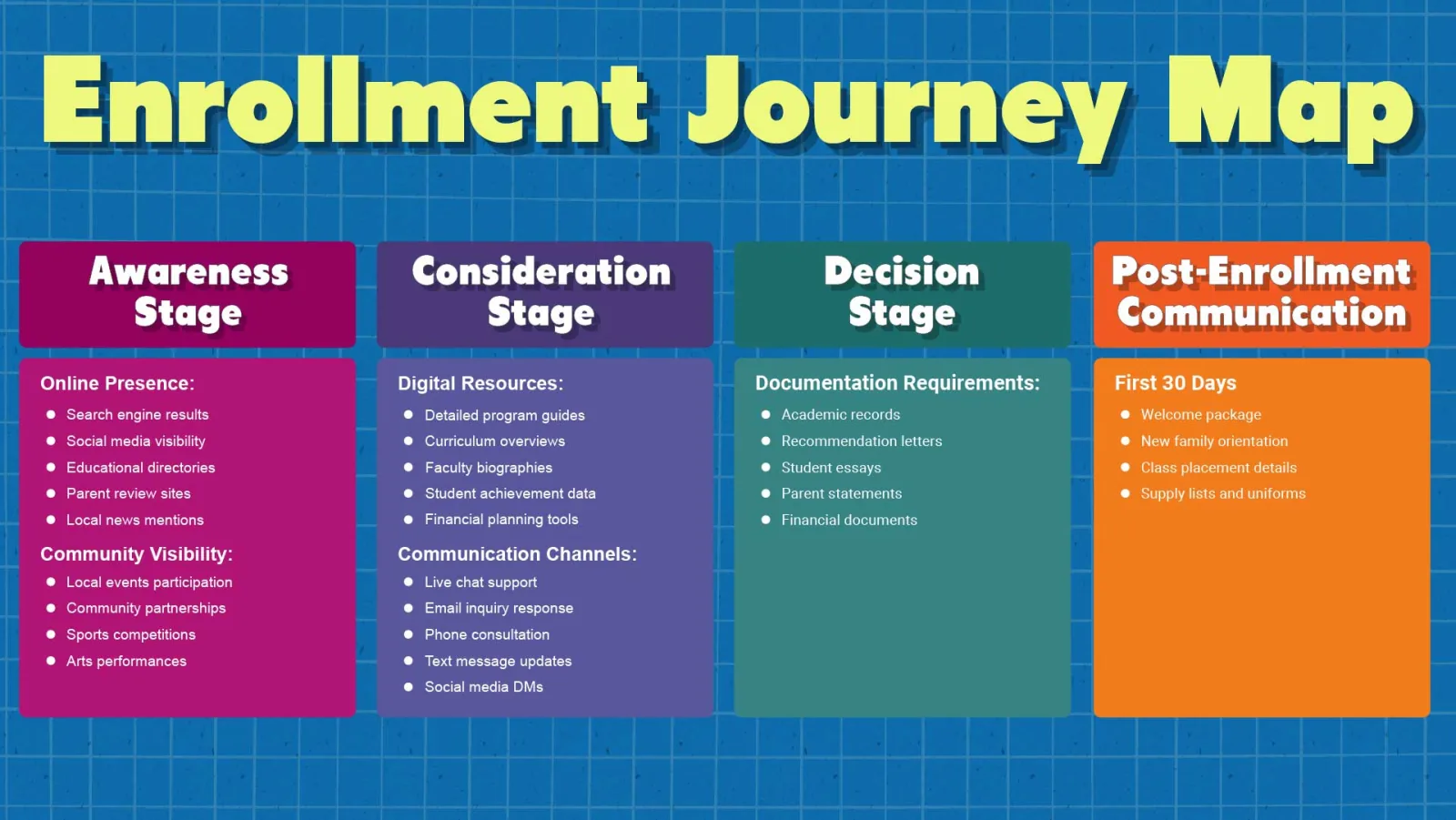
Awareness Stage Touchpoints
Initial Research Phase
- Online Presence
- Search engine results
- Social media visibility
- Educational directories
- Parent review sites
- Local news mentions
- Community Visibility
- Local events participation
- Community partnerships
- Public achievements
- Sports competitions
- Arts performances
First Impressions Matter
Key Touchpoint Checklist:
- Website homepage optimization
- Google Business Profile accuracy
- Social media profiles updated
- Recent reviews management
- Virtual tour availability
Consideration Stage Engagement
Information Gathering
- Digital Resources
- Detailed program guides
- Curriculum overviews
- Faculty biographies
- Student achievement data
- Financial planning tools
- Communication Channels
- Live chat support
- Email inquiry response
- Phone consultation
- Text message updates
- Social media DMs
Decision Support Materials
|
Resource Type |
Purpose |
Delivery Method |
|---|---|---|
|
Program Guide |
Curriculum Details |
PDF Download |
|
Tuition Calculator |
Financial Planning |
Interactive Tool |
|
Parent Testimonials |
Social Proof |
Video/Written |
|
FAQ Document |
Common Concerns |
Web/PDF |
|
Campus Map |
Facility Overview |
Interactive/PDF |
Decision Stage Support
Application Process
- Documentation Requirements
- Academic records
- Recommendation letters
- Student essays
- Parent statements
- Financial documents
- Support Services
- Application workshops
- Essay writing tips
- Interview Preparation
- Campus visit coordination
- Financial aid guidance
Decision Timeline Management
Typical Timeline:
Week 1-2: Application submission
Week 3-4: Document review
Week 5: Student assessment
Week 6: Family Interview
Week 7-8: Decision making
Week 9: Offer extended
Week 10-12: Enrollment completion
Post-Enrollment Communication
Welcome Journey
- First 30 Days
- Welcome package
- New family orientation
- Parent mentor assignment
- Class placement details
- Supply lists and uniforms
- First Semester
- Regular check-ins
- Parent association introduction
- Volunteer opportunities
- Community events
- Academic progress updates
Integration Support
|
Timeframe |
Activity |
Purpose |
|---|---|---|
|
Week 1 |
Welcome Event |
Community Introduction |
|
Month 1 |
Parent Coffee |
Social Integration |
|
Month 2 |
Progress Check |
Academic Adjustment |
|
Month 3 |
Community Event |
Deeper Engagement |
|
Month 6 |
Satisfaction Survey |
Feedback Collection |
Retention Marketing Strategies
Ongoing Engagement
- Academic Success
- Regular progress updates
- Learning milestone celebrations
- Parent-teacher communications
- Student achievement recognition
- Educational resource sharing
- Community Building
- Family events calendar
- Volunteer opportunities
- Parent education workshops
- Community service projects
- Social gatherings
Retention Metrics Tracking
Key Indicators:
- Parent satisfaction scores
- Student engagement levels
- Academic performance
- Extracurricular participation
- Parent involvement rates
- Re-enrollment intentions
Annual Touchpoints Calendar
- Fall Semester
- Back-to-school events
- Parent-teacher conferences
- Fall festivals
- Sports events
- Holiday performances
- Spring Semester
- Academic showcases
- Re-enrollment meetings
- Spring performances
- Field days
- Year-end celebrations
School Enrollment Marketing Tools: AI and Technology Guide
AI isn't just a buzzword. It's a core part of lean enrollment marketing. Let's look at the AI tools that can change how you run admissions.
CRM System Comparisons
Popular Platforms for Private Schools
|
Platform |
Best For |
Price Range |
Key Features |
|---|---|---|---|
|
Blackbaud K-12 |
Large Schools |
$$$$ |
Complete ecosystem, deep integration |
|
SchoolAdmin |
Mid-size Schools |
$$$ |
Admission-focused, user-friendly |
|
Ravenna |
Competitive Markets |
$$$ |
Selective admission tools |
|
TADS |
Budget-conscious |
$$ |
Essential features, affordable |
|
OpenApply |
International Schools |
$$$ |
Multi-language support |
Feature Comparison Matrix
Essential Features Checklist:
- Inquiry tracking
- Application management
- Document collection
- Communication automation
- Event management
- Reporting tools
- Parent Portal
- Mobile Accessibility
- Integration capabilities
- Data security compliance
Marketing Automation Platforms
Budget-Based Solutions
Small Budget ($10k-$50k)
- MailChimp
- Constant Contact
- Brevo (formerly Sendinblue)
- ActiveCampaign
- Moosend
Medium Budget ($50k-$150k)
- HubSpot
- Pardot
- Act-On
- SharpSpring
- Klaviyo
Large Budget ($150k+)
- Marketo
- Salesforce Marketing Cloud
- Adobe Marketing Cloud
- Oracle Eloqua
- Acoustic Campaign
Implementation Strategies
30-60-90 Day Plan
First 30 Days:
- System setup
- Data migration
- Team training
- Basic automation setup
Days 31-60:
- Advanced workflow creation
- Integration testing
- Template development
- Reporting setup
Days 61-90:
- Advanced personalization
- A/B testing
- Performance optimization
- Analytics refinement
Social Media Management Tools
Platform Selection Guide
Content Creation Tools
- Canva Pro (visual content)
- Later (Instagram planning)
- Buffer (scheduling)
- Hootsuite (management)
- Sprout Social (analytics)
Video Content Tools
- Adobe Premiere Rush
- InShot
- Videoleap
- Kapwing
- WeVideo
Analytics and Monitoring
Key Metrics to Track
- Engagement rates
- Reach and impressions
- Click-through rates
- Conversion tracking
- Audience growth
- Response times
- Share of voice
Reporting Framework
Weekly Reports:
- Engagement Summary
- Top performing content
- Audience growth
- Key conversations
- Action items
Monthly Reports:
- Trend analysis
- Campaign performance
- Competitor comparison
- Strategic recommendations
- ROI calculations
Analytics and Reporting Platforms
Data Visualization Tools
Google Analytics 4 Setup
- Event tracking
- Conversion goals
- Custom dimensions
- Audience segments
- Attribution modeling
Additional Analytics Tools
- Tableau (advanced visualization)
- Power BI (Microsoft integration)
- Looker (Google integration)
- Databox (dashboard creation)
- Klipfolio (real-time metrics)
- Luzmo (or other DataBrain alternatives)
Tracking Solutions Matrix
|
Metric Category |
Tools |
Purpose |
Integration |
|---|---|---|---|
|
Website Analytics |
GA4, Hotjar |
User behavior |
CRM, automation |
|
Social Analytics |
Native tools, Sprout |
Engagement |
Content planning |
|
Email Performance |
Platform analytics |
Communication |
CRM |
|
Enrollment Data |
CRM analytics |
Pipeline |
Financial systems |
|
ROI Tracking |
Custom dashboards |
Performance |
All systems |
Virtual Tour Technologies
Platform Comparison
360° Tour Platforms
- Matterport ($$$)
- ThreeKit ($$)
- 3DVista ($)
- Kuula ($)
- CloudPano ($)
Implementation Considerations
Technical Requirements:
- Camera equipment
- Hosting Platform
- Bandwidth requirements
- Mobile Optimization
- VR compatibility
Content Planning:
- Key campus locations
- Seasonal variations
- Special facilities
- Classroom activities
- Event spaces
Best Practices
Tour Structure
- Welcome message
- Campus overview
- Classroom visits
- Special facilities
- Student spaces
- Parent resources
- Call-to-action
Interactive Elements
- Information hotspots
- Video testimonials
- Photo Galleries
- Department information
- Schedule tour button
- Contact forms
- Download options
Chatbots and Automated Responses
- 24/7 basic inquiry handling
- Appointment scheduling
- Document requests
- Common question responses
Personalization Tools
- Dynamic website content
- Customized email sequences
- Behavioral targeting
- Interest-based communications
Data Analytics and Reporting
- Enrollment trend analysis
- Marketing campaign performance
- Lead source tracking
- ROI measurement
Case Study (Fictional): Greenfield Academy's Enrollment Plan
Initial Challenges
Greenfield Academy, a fictional mid-sized K-12 private school, faced common problems:
- Declining enrollment numbers
- Limited marketing budget ($75,000)
- Outdated website
- Minimal social media presence
- Strong local competition
Strategy Implementation
Here's a plan a school in that spot could follow:
Phase 1: Digital Foundation (Months 1-3)
- Website redesign with mobile-first approach
- SEO optimization for local search
- Social media account revamp
- Implementation of basic chatbot
Phase 2: Content Development (Months 4-6)
- Created virtual tour
- Developed student success stories
- Started weekly blog posts
- Launched parent testimonial campaign
Phase 3: Lead Generation (Months 7-12)
- Implemented targeted Facebook ads
- Started email nurture campaigns
- Hosted virtual information sessions
- Launched referral program
Results
After 12 months, a school following a plan like this could see:
- More inquiries
- Higher enrollment
- A better website conversion rate
- More social media engagement
Private School Marketing Strategy: 30-Day to 12-Month Plan
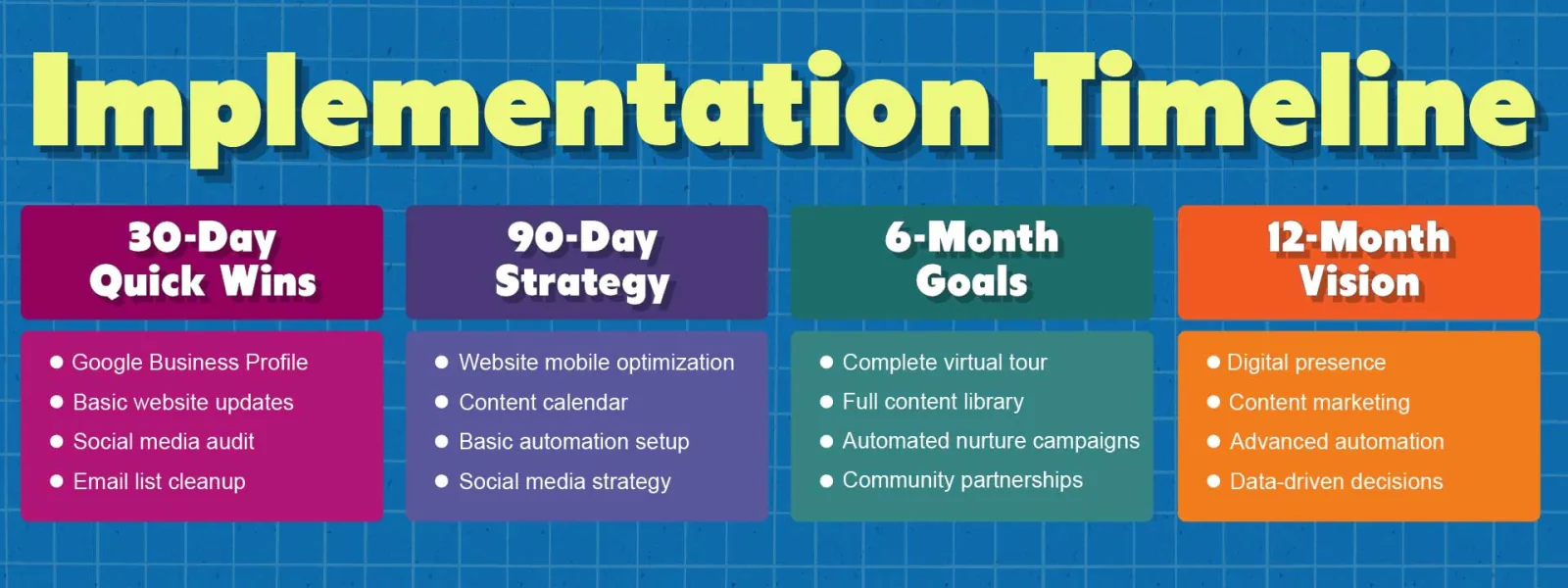
30-Day Quick Wins
- Google Business Profile optimization
- Basic website updates
- Social media account audit
- Email list cleanup
90-Day Strategy
- Website mobile optimization
- Content calendar development
- Basic automation setup
- Social media strategy implementation
6-Month Goals
- Complete virtual tour
- Full content library
- Automated nurture campaigns
- Community partnership program
12-Month Vision
- Comprehensive digital presence
- Strong content marketing
- Advanced automation
- Data-driven decision making
Measuring School Marketing ROI: Key Metrics & Goals
Key Metrics to Track
Enrollment Metrics
- Inquiry-to-tour conversion rate
- Tour-to-application rate
- Application-to-enrollment rate
- Overall enrollment growth
- Student retention rate
Digital Marketing Metrics
- Website traffic and engagement
- Social media reach and interaction
- Email open and click-through rates
- Online form submissions
- Virtual tour completion rates
Financial Metrics
- Cost per inquiry
- Cost per enrollment
- Lifetime student value
- Marketing spend per student
- Return on marketing investment
Setting Realistic Goals
Use these as sample starting targets, not industry benchmarks. Your market, tuition, and school size will change them.
|
Metric |
Small Budget |
Medium Budget |
Large Budget |
|---|---|---|---|
|
Monthly Inquiries |
20-30 |
40-60 |
80+ |
|
Conversion Rate |
2-3% |
3-5% |
5-7% |
|
Cost per Enrollment |
$500-1000 |
$1000-2000 |
$2000-3000 |
Private School Marketing FAQ: Expert Answers for Admissions Teams
Common Questions from Admissions Directors
How quickly can I expect to see results from digital marketing?
A: First results (more website traffic and inquiries) often show up within a few months. Big enrollment gains usually take 12-18 months, because families apply on a yearly enrollment cycle.
What's the most cost-effective marketing channel?
A: Channels you own, like email, organic social media, and content marketing, cost the least to run. Still, a mix of channels usually works best.
How do I compete with schools that have bigger budgets?
A: Focus on what sets your school apart, lean on parent advocates, and win in a few channels instead of trying to compete everywhere.
Board Member Concerns
How do we measure marketing success?
A: Success metrics include:
- Enrollment numbers
- Inquiry quality
- Website engagement
- Social media growth
- Parent satisfaction scores
What's the optimal marketing budget?
A: There's no single right number. It depends on school size, local competition, and enrollment goals. Set a starting budget, track your cost per enrollment, and adjust from there.
Budget Optimization Queries
Where should we allocate additional budget first?
A: Priority order:
- Website optimization
- Content creation
- Paid digital advertising
- Marketing automation
- Traditional Marketing
How do we reduce the cost per enrollment?
A: Focus on:
- Improving conversion rates
- Refining target audience
- Tuning marketing channels
- Using automation
- Building referral programs
Conclusion
Private school enrollment marketing keeps changing, but the basics stay the same. Know your audience, state your value clearly, and measure your results. Success today takes a balance of old-school relationship building and modern digital tools.
Remember, good enrollment marketing isn't about having the biggest budget. It's about smart choices based on your data and steady effort over time. Whether your budget is small or large, the key is to start with a solid base and build step by step.
Next Steps
- Assess your current marketing efforts
- Identify your budget category
- Create a 30-day action plan
- Set realistic goals and metrics
- Begin implementation
Ready to transform your school's enrollment marketing? Let's talk about your specific challenges and openings. Contact us for a free consultation and find out how we can help you hit your enrollment goals.