Attention, private school leaders and marketers! Are you ready to get the most out of your school's online presence and drive enrollment like never before? Social media marketing has become a must-have tool for private schools. It helps you reach your target audience, show what sets you apart, and, in the end, attract more students. If you're not putting social media to work, you're missing out on a lot. In this blog post, we'll explore the real benefits of social media marketing for private schools. Then we'll give you clear steps to build a winning social media campaign that sets your school apart from the competition.
Who Should Be Involved in Your School’s Social Media Marketing?
Building and running a successful social media marketing strategy for your private school takes more than one person. Here are the key players who should be part of your social media marketing team.
1. School Leadership
Your school's leaders, including the principal, administrators, and board members, should set the overall direction and goals for the school's social media marketing. They should give guidance on the school's brand, values, and message. Their job is to make sure all social media content fits the school's mission and vision.
2. Marketing and Communications Team
Your school's marketing and communications team should take the lead in building and running the social media marketing strategy. They should create content, manage social media accounts, track results, and report on how well the school's social media efforts work.
3. Teachers and Staff
Teachers and staff can add a lot to your school's social media content. They can share what goes on in class, what students achieve, and what's happening at school events. Ask them to send in photos, videos, and stories that show what makes your school special and what your students have done.
4. Students
Getting students involved in your social media marketing can help you create real, engaging content that speaks to prospective students and their families. Think about starting a student social media team or club. Students can pitch content ideas, help make content, and even run parts of the school's social media presence, with the marketing team guiding them.
5. Parents and Alumni
Parents and alumni can be strong voices for your school on social media. They share their own stories and point others to your school. Ask them to engage with your school's social media content, share posts with their networks, and give testimonials or reviews you can feature on your social media channels.
6. External Partners
Depending on your school's resources and skills, you may choose to partner with outside agencies or consultants who focus on social media marketing for schools. These partners can give you insights, support, and guidance as you build and run your social media marketing strategy. They can also train your in-house team on best practices and new trends.
When you bring these key players into your school's social media marketing, you build a team that draws on the skills, views, and life stories of your whole school community. This approach helps you create better, more engaging social media content. It also builds a sense of ownership and pride in your school's online presence.
What Are the Key Benefits of Social Media Marketing for K-12 Private Schools?
1. Affordability
Social media marketing costs far less than traditional marketing channels. Building and managing content takes some investment. But the overall costs are much lower than print, radio, or TV ads. That lets private schools spend their marketing budgets more wisely and reach a wider audience without overspending.
2. Extensive Reach
With billions of users worldwide, social media platforms offer reach that's hard to beat. According to Statista, popular platforms like Facebook, YouTube, and Instagram boast user numbers in the billions. That reach gives private schools the chance to connect with a huge and diverse audience. You can raise brand awareness and attract potential students and their families from all kinds of backgrounds and places.
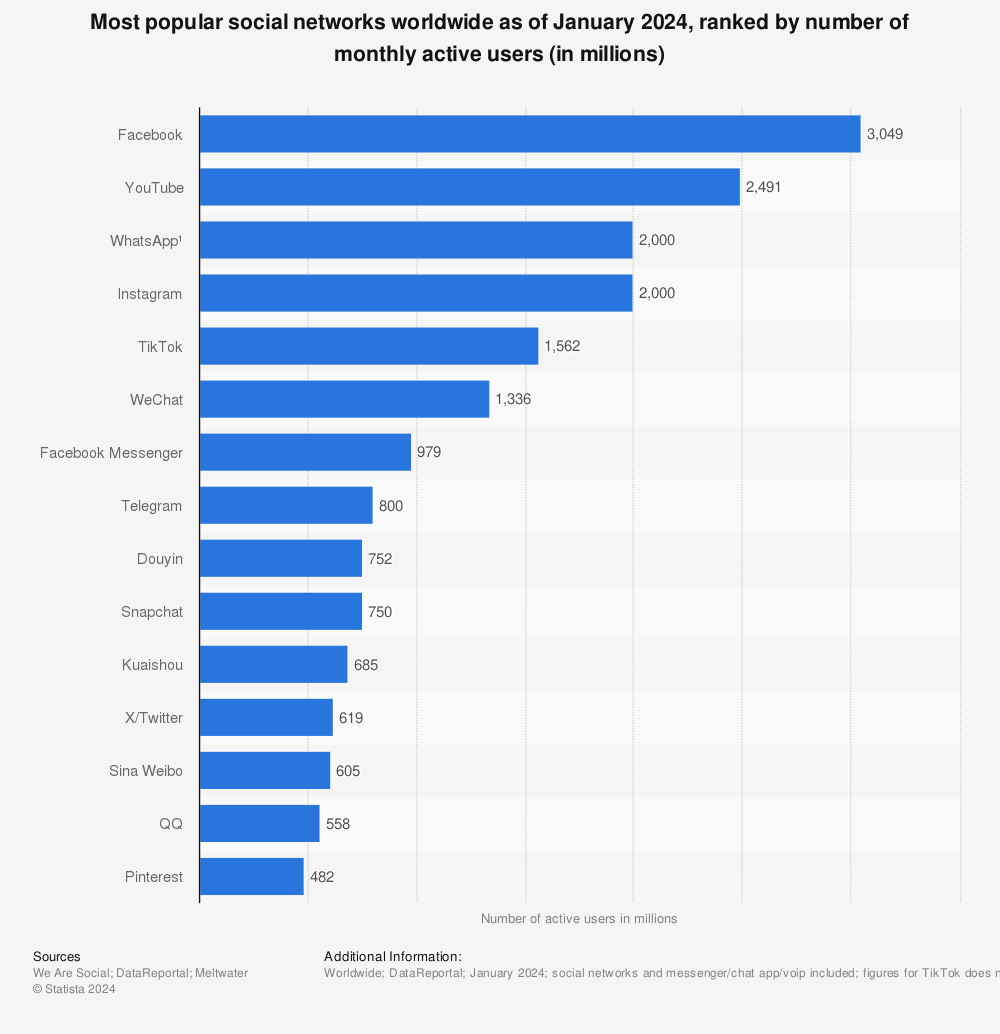
(Image Source: Statista)
3. Instant Publishing
Print has long lead times. Social media doesn't. Private schools can publish content the moment it's ready. That speed lets schools share timely updates and announcements and engage with their audience in real time. Maybe you're sharing a recent event, celebrating what students have achieved, or dealing with an urgent concern. Either way, social media gives schools a fast, clear way to talk with their community.
4. Engagement Opportunities
Social media platforms make two-way talk easy, which gives private schools real chances to engage with their target audience. Ask questions, invite followers to share user-generated content, and respond to comments, questions, or concerns. That's how schools build a sense of community and earn trust with prospective students and their families. Engaging with your audience shows your school cares about building relationships. It also creates a positive, interactive experience for your followers.
5. Driving Website Traffic
Social media can be a powerful tool for driving traffic to your school's website. Share blog articles, landing pages, and other website content on your social media channels, and include the right links. That way, you can get followers to visit your website and learn more about your school. More website traffic can lead to more engagement, more inquiries, and, in the end, more enrollment as prospective families explore your school's offerings and take their next steps toward a decision.
6. Staying Top of Mind
About half of U.S. adults visit Facebook and YouTube at least once a day, according to Pew Research Center. That makes posting new content on a steady basis key to staying top of mind with your target audience. When you post useful, engaging content often, your school's brand stays front and center as families weigh their options for school. That steady presence builds brand recognition. It also positions your school as a helpful resource and a trusted voice in education.
7. Access to Paid Advertising
Beyond organic posting, social media platforms offer paid advertising options that let private schools extend their reach and target specific audiences. Paid ads help schools reach families who might not have found them otherwise. That takes their marketing past the followers they already have. Each platform has its own ad tools and targeting options. Schools can tailor their ads to the audience they want based on things like demographics, interests, and behaviors.
8. Performance Tracking
Social media platforms come with built-in analytics tools that let private schools track how their marketing campaigns perform. Watch key metrics such as post engagement (likes, comments, shares) and ad campaign results (impressions, clicks, conversions). They show you how well your social media efforts work. Use this data to fine-tune your strategy, find areas to improve, and make data-driven choices that lift your overall marketing results.
9. Valuable Audience Insights
Social media platforms give private schools useful facts about their target audience, so they can make informed marketing choices. With social listening tools, schools can track and respond to talk about their brand. They can spot the questions and concerns their audience has and learn what kind of information their followers want. These insights can guide content creation. They help schools build targeted, relevant content that meets their audience's needs and interests, and that makes their social media marketing work better.
How Can K-12 Private Schools Create a Successful Social Media Marketing Strategy?
1. Define Your Goals
The first step in building a successful social media marketing strategy for your private school is to set clear goals. These goals may include raising brand awareness, driving website traffic, or getting inquiries and applications from prospective students and their families. Setting specific, measurable, achievable, relevant, and time-bound (SMART) goals is key to the success of your social media marketing. Our blog post on SMART goals for private schools gives tips and guidance on setting goals that match your school's overall marketing goals.
2. Identify Your Target Audience
To create content that speaks to your ideal students and their families, you need to know your target audience well. That means learning their demographics, interests, and behaviors, then shaping your message and content to fit. This article on creating buyer personas for private schools offers a full guide to finding and understanding your target audience. When you build detailed buyer personas, your social media marketing stays focused on the real needs, interests, and pain points of your ideal students and their families.
3. Choose the Right Platforms
With so many social media platforms out there, it's key to pick the ones that fit your goals and target audience. Focus on the platforms where your audience is most active and engaged. That's where your social media marketing will have the most impact. Think about each platform's user base, the type of content that does well there, and how much engagement you can expect from your audience on each one.
4. Develop a Content Strategy
A well-planned content strategy is the base of a successful social media marketing campaign. Create a content calendar to plan and organize your social media posts ahead of time. It keeps your content steady and consistent, from creation to posting. Include a mix of helpful, fun, and promotional content to keep your audience engaged and interested in your school. Add visuals like images, videos, and infographics to grab attention and lift engagement, since visual content tends to do better on social media platforms.
5. Engage With Your Audience
Social media is a two-way communication channel. Engaging with your audience is key to building relationships and a sense of community around your school. Respond to comments, questions, and concerns quickly and with a professional tone. That shows you're serious about great customer service and support. Encourage user-generated content by inviting followers to share their stories or join contests. It can raise engagement and build loyalty to your school. Celebrate what students achieve and show off school events. That gives your followers a glimpse into life at your school and reminds them why it's worth attending.
6. Monitor and Analyze Performance
To keep improving your social media marketing strategy, review your social media metrics often and check how well your efforts work. Use what you learn from analytics to refine your approach, find areas to improve, and tune your content for better results. Pay attention to metrics such as engagement rates, reach, click-through rates, and conversion rates. They tell you a lot about how your social media marketing campaigns perform. They also help you make data-driven decisions to improve your strategy over time.
7. Invest in Paid Advertising
Organic reach on social media platforms can be limited. Investing in paid advertising can help you expand your reach and target specific audiences better. Set a budget for social media advertising. Then test different ad formats, targeting options, and messages to see what works best for your school. Paid advertising works well for reaching new audiences, promoting specific events or programs, and driving targeted traffic to your website or landing pages. Keep watching and tuning your paid ad campaigns. That's how you get the most return on your investment and reach your social media marketing goals with less waste.
Addressing Common Objections to Social Media Marketing for K-12 Private Schools
Social media marketing has lots of benefits. Still, some private school decision-makers have concerns or objections that keep them from fully embracing this powerful tool. Let's tackle some of these common objections head-on.
"Social media is too time-consuming."
Yes, building and managing a social media presence takes time and effort. But the return on investment is well worth it. With a smart content calendar and tasks split among your team, you can simplify your social media work and make the most of your time.
Remember, consistency is key. Even just 30 minutes a day on your social media presence can make a big impact over time.
"We don't have the budget for social media marketing."
One of the biggest perks of social media marketing is its low cost compared to traditional marketing channels. Many social media platforms offer free tools and features. You can use them to create and share content, engage with your audience, and track your performance.
When you're ready to invest in paid advertising, you can start small and raise your budget as you see results. Even a modest investment in targeted ads can pay off big in reach and engagement.
"We're afraid of negative comments or feedback."
It's natural to fear negative comments or feedback on social media. But here's the upside. These moments give you a chance to show your school's responsiveness, openness, and commitment to customer service.
Set a clear process for handling negative comments, and train your team to respond with care and a professional tone. When you address concerns head-on and show you're willing to listen and improve, you can turn a bad moment into a good one.
Overcoming Common Challenges in K-12 Private School Social Media Marketing
Running a successful social media marketing strategy can bring its fair share of challenges, especially for private schools. But don't worry, we've got you covered! Let's look at some common obstacles and how you can tackle them head-on.
1. Limited Budgets
We get it, budgets can be tight. But the good news is that social media marketing is one of the most affordable ways to reach your target audience. Focus on organic content and make good use of user-generated content, and you can stretch your budget further.
Pro Tip: Set aside a small budget for paid advertising to extend your reach and target specific audiences. A little can go a long way!
2. Staff Expertise
Not everyone on your team may be a social media guru, and that's okay! Invest in training and resources to help your staff build the skills they need to run your social media presence well.
- Consider partnering with a social media marketing agency or consultant to guide your strategy and give ongoing support.
3. Time Constraints
Running a private school is no easy feat, and finding time for social media marketing can be hard. But trust us, it's worth making the time!
- Create a content calendar to plan and schedule your posts ahead of time. It saves you time and keeps your posting schedule steady.
- Delegate tasks among your team members and encourage them to share ideas and content to lighten the load.
Conclusion
Social media marketing can be a powerful tool for private schools. It helps them build their online presence, engage with their target audience, and drive enrollment like never before. Put the low cost, wide reach, instant publishing, engagement chances, and useful insights of social media platforms to work. Then your school can build a winning marketing strategy that sets you apart from the competition.
Remember, the key to success is to set clear goals, know your target audience, build a strong content strategy, and engage with your followers on a steady basis. Try a mix of content types, such as student spotlights, virtual campus tours, or behind-the-scenes glimpses into school life, to create engaging content your audience can relate to.
Put the power of social media to work with the tips in this blog post. You'll open up a world of chances for your private school and take your marketing to new heights.
If you're ready to start your social media marketing journey but need guidance or support along the way, don't hesitate to reach out to our team of experts. We're here to help you find your way through the fast-changing world of social media and build a custom strategy that meets your school's unique needs and goals.
Don't let your school get left behind in the digital age. Embrace the power of social media marketing and watch your enrollment soar. Contact us today to learn more about how we can help you reach your private school marketing goals!