Today’s business climate is crazy. As of the writing of this post, the business news channels are chopped full of lingering labor shortages, a new COVID-19 variant making its way around the world, and more and more talk about lingering inflation.
In February of 2021, The Small Business Credit Survey (SBCS) 2020 survey was released; they said that “Small businesses continue to face significant challenges amid the COVID-19 pandemic, including weak demand, heightened expenses, and limited credit availability.”
Here are a few key statistics from that report:

Written By: Chad J. Treadway | January 12, 2022
Chad is our Chief Smarketing Officer. He will help you survey your small business needs, educating you on your options before suggesting any solution. Chad is passionate about rural marketing in the United States and North Carolina. He also has several certifications through HubSpot to better assist you with your internet and inbound marketing.
Whether you have just started a small consulting business, are a general contractor, or just opened your repair shop, you are constantly looking for ways to attract business without breaking the bank. Here are my top eleven best strategies for both digital and offline to market your business while ultimately saving you money!
Written By: Chad J. Treadway | January 10, 2022
Chad is our Chief Smarketing Officer. He will help you survey your small business needs, educating you on your options before suggesting any solution. Chad is passionate about rural marketing in the United States and North Carolina. He also has several certifications through HubSpot to better assist you with your internet and inbound marketing.

Do people trust advertisements? Most Americans have at least some distrust of all forms of advertising. While as many as 46% of people say they find television ads somewhat trustworthy, less than one-in-five trust social media advertisements.
What does that mean for small businesses? Word-of-mouth referrals and your reputation matter as much or more than name and brand recognition.
Small businesses may not be able to compete with the advertising budgets of large corporations, but in an age of skeptics, they are in a position to capitalize on this shift in consumer behavior. If people value quality and integrity over commercials and gimmicks, honest content marketing is the key to growing your audience and positioning your small business as a trustworthy subject matter expert in your community.

Written By: Gary Buffaloe | January 07, 2022

If you are starting a small business or have been running one for a while and are ready to grow, it means you’re more than likely doing more than you can handle. Growing a small business has never been easy. It’s stressful. Professional help from a digital marketing agency can free you from the heavy burden of trying to market your business.
The key to growing your small business in today's complex and competitive market is a powerful digital presence. Because your clients are likely to Google your company and compare you with your competition, they tend to look more closely at your competitors if you’re not on the Internet or you have a weak online presence. Creating content, sharing it on social media, and managing your website takes expertise and plenty of time.
Unless you have enough time to do all of it, you can’t do it justice or get much value out of it. For a powerful and effective online presence, you might choose to partner with a digital marketing agency. While it can be hard to find a digital marketing agency that aligns with the budget of a small business, I want to provide you with a list of things you can look for in a digital marketing agency.

Written By: Adam Bennett | January 05, 2022
Adam is the president and founder of Cube Creative Design and specializes in private school marketing. Since starting the business in 2005, he has created individual relationships with clients in Western North Carolina and across the United States. He places great value on the needs, expectations, and goals of the client.
Small businesses frequently have a low marketing and advertising budgets in which to work with. This can make marketing your local small business extremely challenging. The good news is that you can often promote yourself to prospects and clients for free or insanely cheap.
This post covers 101 ways to advertise and market your local small business on a tight budget.
To make it easier, I have broken this list up into categories, just click any of the links below to be taken to that section.

Written By: Chad J. Treadway | December 22, 2021
Chad is our Chief Smarketing Officer. He will help you survey your small business needs, educating you on your options before suggesting any solution. Chad is passionate about rural marketing in the United States and North Carolina. He also has several certifications through HubSpot to better assist you with your internet and inbound marketing.
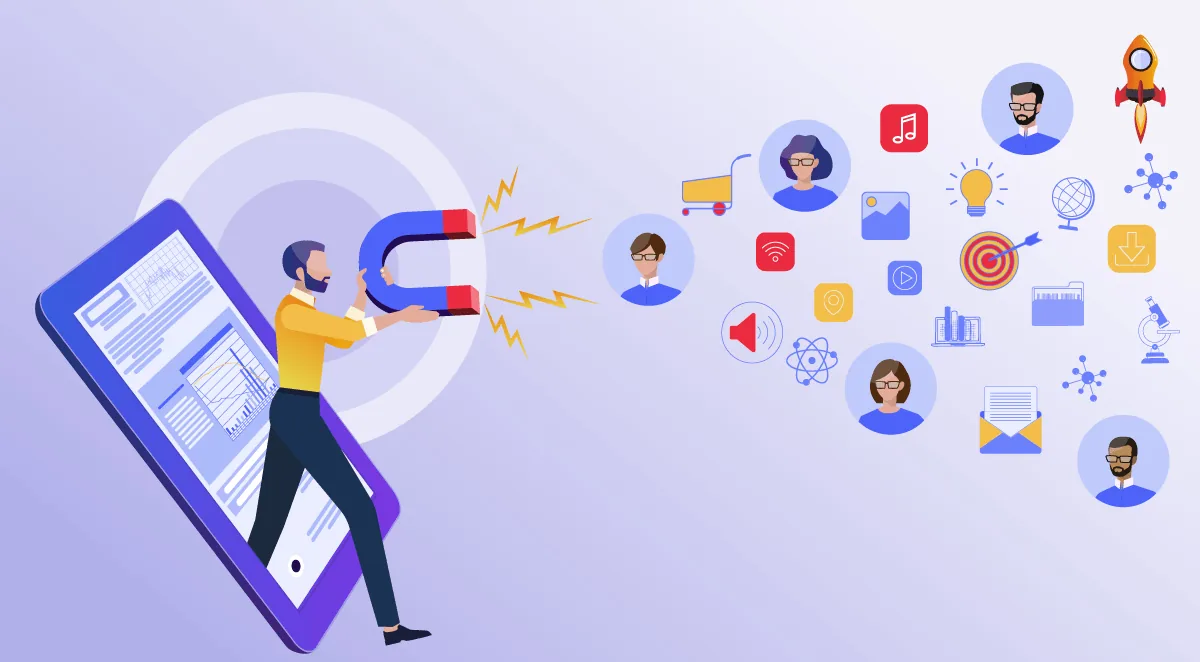
As a small business owner, you know the importance of building your brand recognition and attracting new clients. Just because your business may be smaller, but that doesn't mean that your client list has to be.
You may be asking yourself, what is lead generation, and how will it help my small business?
Lead generation is a simple concept that refers to the methods and procedures used by small businesses to generate interest in their products or services among prospects and then convert them into clients.
In other words, and as it relates to the online world, it is about getting people interested in your business enough to reach out, allowing you to sell the product or service, thus becoming a valued client.
You may also want to think about it as a process of identifying potential consumers based on their activities. This may include their intent level or how interested they are. Are they just “kicking the tires,” or do they have cash in hand and are ready to buy. If they are “just looking,” it becomes the process of guiding them through the funnel until they become clients.
You and I know that solid relationships with your clients are the heart of a successful small business. With the introduction of new digital and social technologies, the number of ways to generate new leads is constantly evolving as well.
Written By: Adam Bennett | December 20, 2021
Adam is the president and founder of Cube Creative Design and specializes in private school marketing. Since starting the business in 2005, he has created individual relationships with clients in Western North Carolina and across the United States. He places great value on the needs, expectations, and goals of the client.
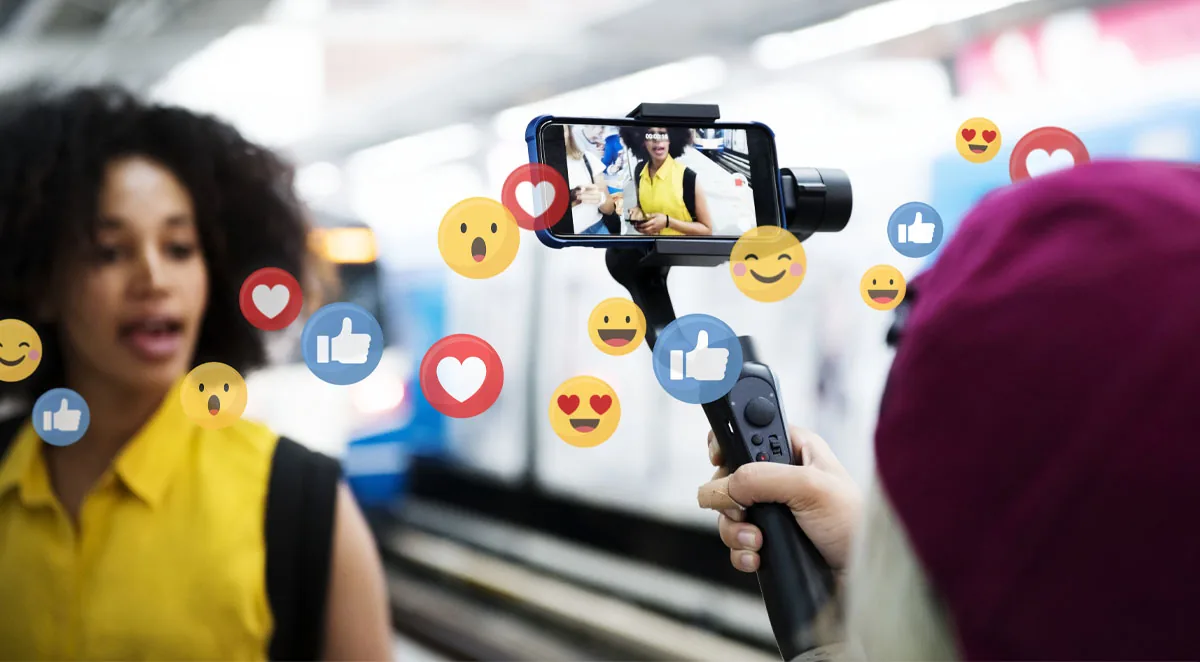
In today's marketing landscape, influencer marketing is one of the most potent marketing methods for small businesses, brands, and enterprises.
According to Linqia's The State of Influencer Marketing Report, 57% of respondents said: "influencer content outperformed brand-created content" in 2019.
While influencer marketing is still a growing industry, and the statistics have risen since then.
Working with influencers can assist your small business in overcoming common barriers to promotion, such as the use of advertisements.
In this post, I'll discuss six advantages of influencer marketing for small businesses.
What Exactly Is Influencer Marketing?
Sprout Social defines influencer marketing as,
a type of social media marketing that uses endorsements and product mentions from influencers–individuals who have a dedicated social following and are viewed as experts within their niche. Influencer marketing works because of the high amount of trust that social influencers have built up with their following, and recommendations from them serve as a form of social proof to your brand’s potential customers.
(Source: What is influencer marketing: How to develop your strategy)
If you want a completely different take albeit interesting take on social media influencers be sure to check this episode of the podcast Nice to Meet You. In this episode, Professor Burkhead's Unifier beams a Meerkat and a Social Media Influencer to his space station. As silly as it sounds it is an interesting take on them and is entertaining in the least.
The bottom line is that influencer marketing focuses on employing influential individuals (aka influencers) to transmit a company's message to relevant, broader markets.
It combines the use of traditional and modern marketing tactics. It combines the concept of celebrity endorsement with exclusive content and internet promotions.
As a small business owner, you will most likely want to work directly with one or more influencers to convey your message across their social media accounts.
Influencers can help link customers to companies by influencing others' attitudes and motivating them to take action on a given topic.

Written By: Hannah Kilpatrick | December 15, 2021
Hannah Kilpatrick Cube Creative DesignHannah Kilpatrick graduated from Western Carolina University in 2021 with a Bachelor of Science in Communication with a Minor in Marketing and a Concentration in Public Relations. She has been around social media since its creation. (Meaning, she was in the first grade when Facebook became available to the general public.) As our very own professional Gen-Z, Hannah is a whiz when it comes to social media creation and paid advertising.
Did you know that most business-to-business (B2B) researchers and buyers use the internet to acquire information about possible purchases; according to a report by Google, it is 89%! With so many prospective clients starting their search on the internet, businesses of all sizes need to push their sites to the top of search engines as quickly as possible. Of course, Google Ads provides an immediate solution as SEO efforts begin to take hold, but Google Ads also poses a unique challenge with its own set of considerations.
As part of your inbound marketing strategy, you may choose to run Google Ads. For the most part, inbound marketing focuses on organic traffic, whereas PPC offers an opportunity for instant gratification while your other strategies build.
Larry Kim of WordStream says this about PPC and Inbound Marketing:
PPC is absolutely a part of inbound marketing by my standards. My definition of inbound revolves around being somewhere with the answer when someone is looking for it, NOT sticking an advert for a product or service in front of their faces. That absolutely includes PPC!
(Source: News Flash: PPC Is Inbound Marketing )
Combining SEO and PPC will comprise approximately 90 percent of clicks across the web, so it’s no wonder that businesses are taking advantage of Google Ads!
While running and developing a Google Ads campaign is relatively straightforward. There are still great opportunities for mistakes. You must avoid them if you want your inbound marketing campaign to be successful.
Written By: Adam Bennett | December 08, 2021
Adam is the president and founder of Cube Creative Design and specializes in private school marketing. Since starting the business in 2005, he has created individual relationships with clients in Western North Carolina and across the United States. He places great value on the needs, expectations, and goals of the client.
Building brand awareness and exposure is critical for small businesses. Your business may not be able to bring in more prospects if they don't know you exist. Search engine optimization (SEO) is part of a strong foundation for local small business success and is one of the most effective methods for increasing the visibility of your small business.
When your prospects are searching for a product or service on Google, you need to be visible to them. That’s where local small business SEO can help you. In layman's terms, it is a tactic that can help your website appear at the top of search engine results pages (SERPs).
Written By: Chad J. Treadway | December 06, 2021
Chad is our Chief Smarketing Officer. He will help you survey your small business needs, educating you on your options before suggesting any solution. Chad is passionate about rural marketing in the United States and North Carolina. He also has several certifications through HubSpot to better assist you with your internet and inbound marketing.
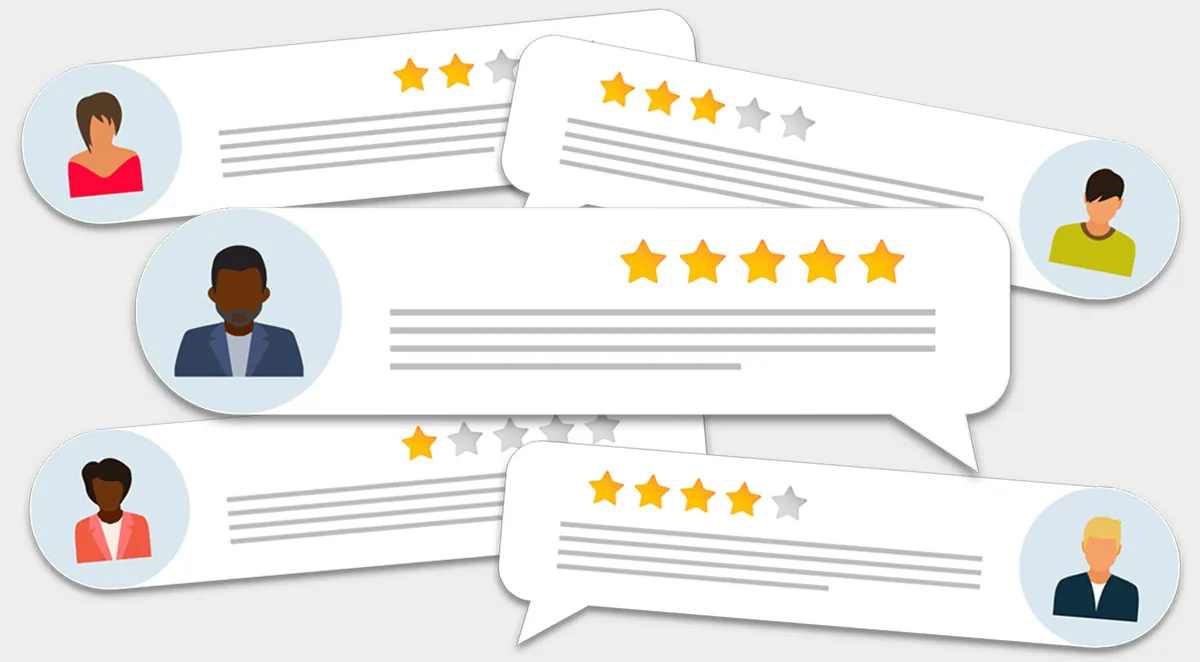
Before I answer the question posed in the title of this post, think let me ask you, dear reader, a couple of questions. Do you check reviews before you visit or reach out to a business? Have you ever found yourself favoring one business over another due to their online reviews?
I am sure you could answer yes to both of these questions. Now back to the question I posed in the title of this post and its accompanying answer, which is overwhelming YES! Yes, Google Reviews will help your both general SEO and Local SEO.
Now, this begs the question of how do these local businesses show up on the search results pages (SERPs) in the first place? Well, that’s Local Search Engine Optimization (SEO) at work.
In this article, I will help you better understand what local SEO is and its benefits. I’ll also show you how to use Google reviews SEO to improve your local rankings.
Written By: Chad J. Treadway | December 03, 2021
Chad is our Chief Smarketing Officer. He will help you survey your small business needs, educating you on your options before suggesting any solution. Chad is passionate about rural marketing in the United States and North Carolina. He also has several certifications through HubSpot to better assist you with your internet and inbound marketing.
Way back in 2012, when I started with Cube Creative Design, my business partner introduced me to podcasts. At the time, I resisted them because, frankly, I hated talk radio, and I thought that was all they were. People were going on and on about nothing! I, however, came around to the idea and started listing to a few here and there.
As time went by, I became more and more obsessed with them. I didn’t realize it at the time, but I was participating in “Automobile University.” Automobile University isn’t a university that you learn about automobiles but rather a phrase coined by Zig Ziglar. Zig Ziglar was an author, salesman, and motivational speaker who encouraged people to use their drive time to listen to “books on tape” or CDs. Podcasts were and still are a modern way of listening to relevant topics to me.
Now, like anything else, I have seen shows come and go, and as my position has changed over the years here at Cube Creative Design, so have my podcast choices. However, here is my current must listen to podcast list, along with links to the show themselves:
Written By: Chad J. Treadway | December 01, 2021
Chad is our Chief Smarketing Officer. He will help you survey your small business needs, educating you on your options before suggesting any solution. Chad is passionate about rural marketing in the United States and North Carolina. He also has several certifications through HubSpot to better assist you with your internet and inbound marketing.

Local search engine optimization (also called Local SEO) is like most other search engine optimization (SEO) techniques. It seeks to enhance the traffic to a site or a page on the Internet through targeted keyword usage in the search engines (Google, Bing, Duck Duck Go). However, the real key to local search engine optimization and the reason why it is one of the most effective strategies to marketing is that it can be done relatively easily.
Written By: Chad J. Treadway | November 29, 2021
Chad is our Chief Smarketing Officer. He will help you survey your small business needs, educating you on your options before suggesting any solution. Chad is passionate about rural marketing in the United States and North Carolina. He also has several certifications through HubSpot to better assist you with your internet and inbound marketing.